
Help: My Muse Is Gaslighting Me Again
What are we going to do about our inner critics?

What the AF? My muse is supposed to be on my side. But today she’s whispering smack in my ear. Telling me I’m a terrible writer, and nobody cares what I have to say about the price of tea in China. Or anything else, for that matter.
All that may be true, but isn’t she supposed to be my cheerleader? That’s what the famous poets of old used to say about their muses.
Writers like Robert Graves, for instance, would regale us with tales of the inspiration they received from this creature they called their muse. Not only did they inspire great poems, but they also washed their socks.
When I began writing, those icons of literature had a strong influence on me, but something about their muses always bugged me. It was always the men who had a muse. And I’d think, what am I, chopped liver?
My artistic soul doesn’t deserve nurturing and TLC? A little waiting on with tea and crumpets in front of the fire while I pen my memoirs?
Then I discovered the truth. Many of those old white men (there’s always an old white man in the ointment) didn’t believe women had muses. Or deserved them. And I figured out why.
We got stuck with our inner critics.
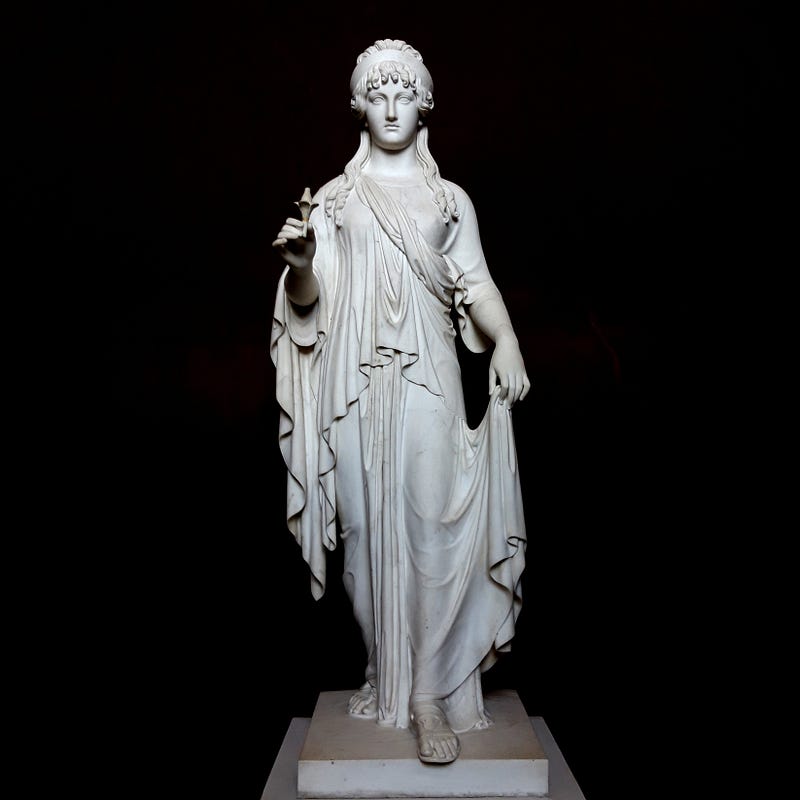
Oh, they might come disguised as a muse. Showing up one day all decked out in flowers and a long, flowy white dress whispering sweet nothings about how fab our story is about our favorite family cat when we were a kid.
But then, just as we start to outline an acceptance speech for our Pulitzer Prize award, whomp. She comes barreling in dressed head to toe in black leather with a whip in her hand.

“Oh,” she snarls, looking over my shoulder at my latest article. “You think Gen or Human Parts is going to accept that drivel?”
With that cruel laugh of hers, she gives my ego ten lashes with her whip and stabs my confidence with the heel of her stiletto for good measure.
I’m left bleeding over my keyboard, wondering what happened to the flowy dress and writing awards or, more likely, asking myself why I ever wanted to be a writer in the first place.
That’s when my muse sneaks out the door, notching her belt with another score.
Is it me? Am I the only one who gets gaslighted by my muse? This voice in my head that sounds like everyone’s favorite mother on some days, telling me I’m the most precious, most talented, creative writer, ever, and then snatching away every ounce of confidence the next.
Which muse do I believe?
Maybe the old white men were right. I looked up Muse on the internet to refresh my memory. And sure enough, muses were spawned by the gods, Zeus himself, in fact. They doted on men, and though unmarried, somehow they birthed all the artistic gifts. Perhaps abortion was illegal back in Roman-Greco times.
Tellingly, though, nowhere did it say the muses cut a sister a break. And why would the men want them to?
When you think how women doted on those male writers of old? They waited on them hand and foot, typing up those long poems and treatises on, what else, goddesses who inspire men. Well, you can understand why the old guys believed all that crappola about muses doting on their every thought.
Give me a classical break. If I had a bevy of beauties (the living, breathing kind, and trust me, the old white men ALWAYS had the living, breathing kind) taking care of my every whim, telling me I was a genius, scaring spouses into early graves so they could rule the roost and keeping the kiddies out of the way while I stared into the potted palms and wrote mesmerizing iambic pentameter all day? Trust me, I’d think I was a genius, too.
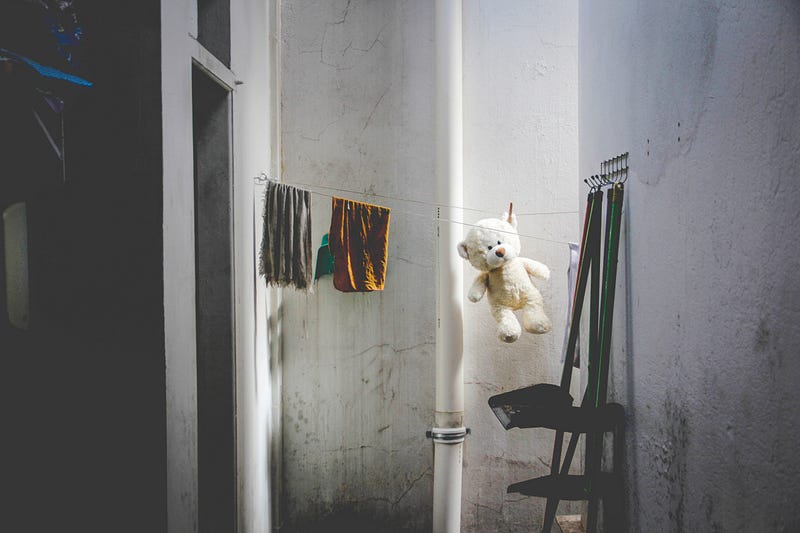
No, sir. It’s those of us who have to carve out time from earning a living in middle management, writing code, or driving for Amazon who are starved for a little muse action. We who shuffle child care, elder care, and plot twists while cooking dinner, helping with homework, and stretching a budget for a family of three to fit a family of five.
It would be one thing if we accomplished these tasks with a gloss and tidiness to out-do Marie Kondo. But the criticism that begins with the stack of laundry not folded and the dressing down from the idiot boss at work who doesn’t understand what you do in the first place naturally leaks onto the draft of the story you’re writing for Medium.
How could you not hear your inner critic when you sit down to write? Nothing seems to get completely done and dusted in your life. There are always loose ends that seem to be your fault for not being more organized, more attentive, less sleep-deprived. So why would your writing escape this merciless scrutiny?
Oh, sorry, you’re a male writer, and you don’t have a bevy of beauties waiting on you hand and foot? You’re asking why you didn’t get the memo about this muse that supposed to make your life easier?
Sorry, buddy, but you were born in the wrong century. We live in the era of the Imposter Syndrome, so pull up a chair and wait your turn for your ten lashes from that nasty creature living in your hippocampus.

I’ve been writing for longer than some of you have been alive. If there’s one thing I know about, it’s the voice in my head that wants to take me down at the moment I think I’ve learned something about dialogue. Or the moment I feel a tad good about myself because I like a story I wrote, or a page, or even a damn sentence.
For years, I believed all the nonsense my internal critic would blather on about my terrible writing, my arrogance in thinking I had the right to go after this dream of telling stories.
If I thought it, it must be true, right? Yet, I’ve been wrong about so many things, why would I believe the worst stuff about my abilities as a writer.? Even after I’d published my first book.
A question for the ages. Or maybe a muse with nothing better to do.
If I could go back in time, I’d hire a writing coach who would teach me how to ignore that voice in my head. I know by now, I can’t erase it. We all have one; maybe that’s why the old poets needed to invent a muse. To do battle with their inner critics while they wrote.

By now, I can recognize when mine is at work. I’ve learned to write through the noise in my head. I know eventually, it goes away, all those negative messages. They are stronger when I’m writing something risky, some piece that might expose a vulnerable part of me or my life.
Maybe that’s a protective mechanism, I don’t know. When it’s at work, I’ll give it a minute or two, and then continue writing. I’m on a level playing ground with this critic these days. Some days it distracts me, but not for long. Not like the old days when it could stop me from writing for months. I don’t have time for that anymore.
Dealing with this gaslighting is part of the writer’s path. We all have to do it, one way or another. The more vulnerable we feel, the louder we hear the messages. It doesn’t make them any truer, just more distracting.
Same as any other jerk trying to gaslight us.
I’m an editor and writer on Medium with Top Writer status. I’m also an editor for the publication, Rogues Gallery. I’ve published 55 titles on Amazon and edit for private clients. If you’d like to hire me as your editor for fiction, non-fiction, or business writing, please contact me here. If you’d like to read more of my work on Medium, click here to sign up for my newsletter. I’ll make sure you don’t miss a word. Thank you for reading.


