
Help! I’ve Fallen, And I Can’t Get Up
The Line You Hope You’ll Never Hear Mom Say
I was younger yesterday than I am today. I am younger today than I will be tomorrow. But neither of those facts negates the real truth — I am no longer young.
Even when I was younger, I wasn’t particularly strong, and these days the very idea of strength is laughable.
Still, when Mom fell, my first impulse was to try to lift her up.
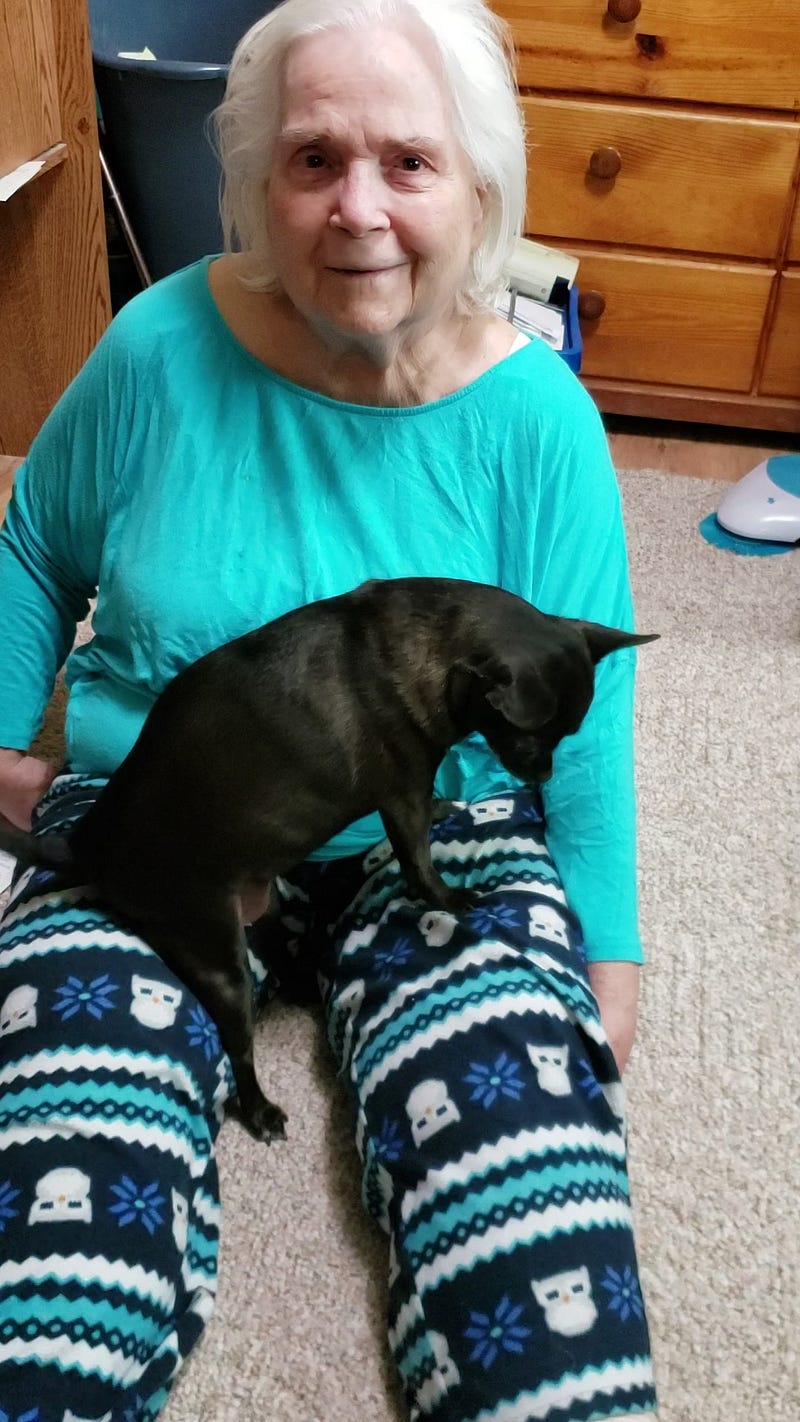
Mom is no longer young, either — obviously. At 84, she has mobility issues. She has been using a walker for a few years now. And her strength is nothing to write home about.
But sometimes she forgets she’s not invincible.
She’s supposed to call me to help her get out of bed. My room is right next to hers, and I am a light sleeper (when I sleep at all), so it shouldn’t be an issue.
But sometimes she gets this “I’ll do it myself” state of mind. She sits herself up, gets her walker, and heads for the bathroom. I am usually right behind her, admonishing her for not waiting for help and shaking my head as she assures me she’s fine, just fine.
This morning I heard her but was a little slow because I had gotten my feet tangled in between my blanket and my dog.
Fwump!
Blanket flies. Dog leaps out of the way. I’m through the doorway in a flash, but she’s down already.
Damn it!
It’s not our first rodeo — she has fallen a few times over the last couple of years. I try — stupid me — to lift her. “Don’t do that!” she cries. “You’ll hurt yourself.”
“Are you hurt? Besides your pride, I mean?” I back off a little to assess the situation.
“No, no.” She gives me a look filled with frustration and remorse. “I’m sorry.”
“I’m sorry,” I counter.
I run for my phone and call my brother, hoping against hope that he’ll be in town and not already on the road for his job.
“I’m in a meeting,” he says.
“Mom fell.”
“I’ll be there as fast as I can,” he promises, and I thank the powers that be that he wasn’t far from us.
Physical therapy has done her some good, it seems. Together, we wiggled and slid her from the room into the hallway where I propped her against the wall with pillows and a blanket until my brother arrived to get her on her feet.
“What are you doing down there?” he asks good-naturedly.
“Oh, I thought I’d give this a try,” Mom replies.
“You’ve got to quit sitting on the floor.”
“I know.”
My brother is very fit. He works hard. The guy lifts weights for fun. Thank God.
She’s on her feet and in the bathroom in short order.
I want to say she’s just fine, but of course, a fall leaves her — or anyone, for that matter — stiff and sore. She scraped her side on the stool she uses to get into bed. (It’s a carpeted step, actually.) She bumped her cheek against the closet door.
I, having stupidly tried to lift and maneuver her, am having my own pain issues this afternoon.
We’re going to be quite the pair by tomorrow.
I hate this, you know. I hate that she’s not the strong, steady woman I grew up with because she deserves better. She deserves to be able to do the things she wants to do without fear or pain. But that’s not always the way life happens, and the worst of it is — it all changed so fast!
When my kids were little, there was a commercial on television: “Help! I’ve fallen and I can’t get up!” It was for a product called Life Alert, a personal emergency alert system designed for senior citizens to wear in case they need to call for help and can’t get to a phone.
The kids thought it was funny. Of course, you could get up if you fell — what was the big deal? They fell down and got back up all the time. Anyone could do it.
Dumb kids.
When I first saw it, I didn’t think it was funny. I told my kids it was rude to laugh at the plight of the old lady — she could have been badly hurt. Not everyone was as tough as kids are.
But in the back of my mind, I did consider it a form of sensationalism, simply a dramatic way to sell a product. Overkill, if you will. What was the point in scaring older people like that?
My parents were still relatively young and active, not yet fifty. It occurred to me then that they would be getting older, but old enough to fall and not be able to get up?
Get outta here! That couldn’t happen!
Well…I was in my 20s, no more than a dumb kid myself. Forgive me.
“Help! I’ve fallen and I can’t get up!”
It’s not at all sensational or overly dramatic. It’s a reality that gets more real to me every single day.
The first time I fell and couldn’t get up, I wasn’t even fifty years old yet.
It is scary. And the point in emphasizing that scariness is that we all need a plan — just in case.
For my mother, part of the plan is me. And I do what I can; but it isn’t always enough, which is why I thank the powers that be daily for my siblings, who step up and help whenever possible.
We avoid even thinking about nursing home care. Having Dad in care even for a short time was terrible for all of us, but most of all for him.
Mom needs to be home. I need to be with her.
But I am seriously considering getting us each a little alert system to wear.
Just in case.
Because I do now know this much:
When she falls, I can’t lift her up.
If she falls again, my brother might not be available.
And…
If I fall, I might not be able to get up.
Fiddlesticks.
Ah, to be a dumb kid again…
Caring for our loved ones is a 24/7 job, and it isn’t easy. Many people my age are currently taking care of aging parents, and I applaud them all. I know this wasn’t where we saw ourselves being at this point in our lives, but when you love someone, you do what needs to be done.
Days like today do make me want to sit and cry — I am only human, after all. But we try to handle things with a little humor whenever we can, and Mom is probably the best of us at pulling that off.
Remember that there are resources out there. Don’t hesitate to use them if you need them.


