
Help End Racism Beyond an Instagram Post
It’s been two weeks since the murder of George Floyd. And like many, I’m wondering what more I can do to show my solidarity and support.
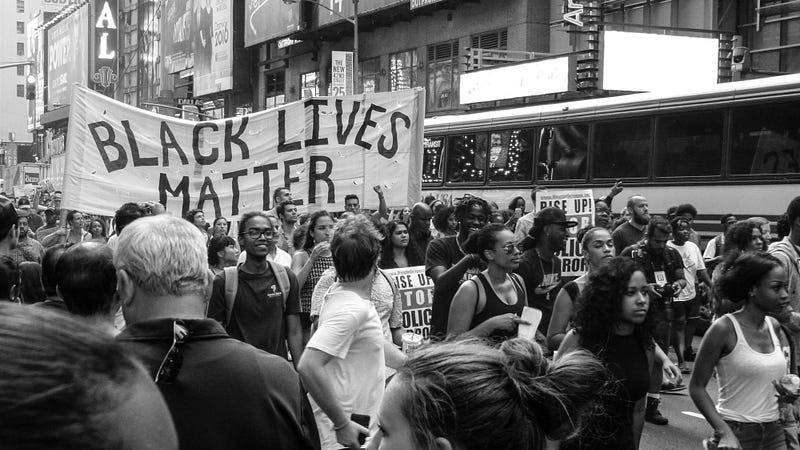
I’m an Aboriginal Australian with a white mother and an Aboriginal father, who grew up in a cross-cultural dichotomy. And for a number of years, at times I’ve grown numb to the injustices of the BIPOC (Black Indigenous People of Colour) communities.
I’ll begin by saying I whole-heartedly support and believe in the Black Lives Matter movement. And I hope in my lifetime we start to see some crucial changes. The footage of the murder of George Floyd woke me up, and I hate that it had to be something like this that’s got me motivated again.
How many more videos like this have to exist for the majority of society to join in and be a part of life-saving change?
So, why the numbness I mentioned earlier? It’s not always that way. First it’s the horror, followed by anger and frustration, then I begin avoiding it all altogether.
It’s not because I don’t care, or feel helpless, or don’t think my voice would make a difference. And maybe those last two excuses are a small part of it, but they’re not the reason. The reason numbness sets in is because whilst I gather it’s one of my many coping methods… I’m tired.
Like so many, I’m constantly questioning whilst simultaneously defending my cultural identity, tactfully navigating conversations of an othering intrigue at social gatherings/places of study/school/workplaces, witnessing and dealing with direct and overt racism (face-to-face and online), and those niggling micro-aggressions, statements like ‘Really? You don’t look Aboriginal’.
And on top of that, I stay informed about issues related to Aboriginal communities, which means almost on a daily basis I could be exposed to events that bring up an array of emotions linked to intergenerational trauma. So yeah, I’m f*cking tired.
And whilst I hope the information that follows is helpful, it’s not my job to educate others. What I’ve come to realise is that I’m still continuously educating myself. And so I should. I learn more about myself the more I delve into my own culture and family history. Knowing more isn’t where this ends either.
Also, I’ve had the privilege of travelling to many different places on this big old beautiful planet. With each destination I’ve come across and learnt about different cultures, and the sub-cultures within those cultures, and I always come home with a new sense of self.
Diversity isn’t something that sets people apart. Racism is.
If like me you couldn’t get to a protest, or you could, but still want to do more, I’ve added ways you can support campaigns, initiatives, and projects regarding this important movement to stop racism, end police brutality and racial profiling, and to help those directly affected by deaths in custody.
Where to Donate
Let’s face it, resources are a necessity in any given fight for our basic human rights. A one time donation won’t rid someone of their white guilt, or make them feel better about their privileged existence, but it will help make a small difference. Small difference.
Social media has been a valuable resource of news and information on how to help, use #blacklivesmatter in the search, and follow the movement’s official page.
Again, there’s no reason you can’t figure this out for yourself, but here are a few donation options.
USA
GoFundMe campaign for George Floyd’s family
The Bail Project
Black Visions Collective
AUS
Justice for David Dungay Junior — GoFundMe campaign
Antar — Justice for First Nations people — Independent network of people and orgs campaigning for First Nations rights
Path to Equality — A directory to help you educate, support, and empower yourself in dismantling our current injustice system.
Aboriginal Legal Service
Amnesty International
Educate Yourself
Here’s a start from me, the rest is up to you…
Read
Consume books and literature written by Black People, Aboriginal and Torres Strait Islander Peoples, POC, First Nations Peoples from all over, BIPOC, whichever label someone chooses to use. Learn another narrative to how the western world came to be thus far. An alternative to the one we’re often taught throughout our educational life. (If we’re lucky enough to receive an adequate education to begin with.)
A diverse bookshelf can be filled with informative and well researched pieces. For instance Bruce Pascoe, a lecturer, farmer, fisher, Aboriginal language researcher, brought us his book Dark Emu.
Our bookshelves don’t have to hold only historical-based reading materials, I’m talking poetry, fantasy fiction novels, personal essays, biographies, etc. So many stories come from actual experiences or are based on historical events.
For example, Tomi Adeyemi, the author of Children of Blood and Bone, was motivated to write this adventurous tale after a run of police violence and shootings against Black People in America.
Watch and Listen
Tune into TV shows, movies, and documentaries, and listen to podcasts and music created by, you guessed it— Black people, Aboriginal and Torres Strait Islander Peoples, POC, First Nations Peoples, BIPOC.
I started watching #blackAF the other week before George Floyd’s murder and the protests that followed. The comedic aspect of the show aside, it embeds lessons on slavery and Black Rights Activism that still resonates with the issues of today. It’s funny, entertaining, yet educational. Maybe not everyone’s cup of tea, but enough for me.
Hear Us Out
Listen to your friends from culturally diverse backgrounds, and don’t take their experience as a personal attack against you. Someone else’s experiences, their family’s experiences, their ancestors experiences are not about you. It’s your actions and support in the present that matters, that can make a genuine difference.
Get comfortable with feeling uncomfortable. You might ask — what does that mean? Well, it’s that odd feeling you get in the pit of your stomach, when you go on your tropical holiday, driving from the airport, through the village, past the shanties and burning rubbish piles to get to your 4.5 star gated resort. It’s the moments you realise you’re privileged. The beauty of recognising it, is knowing you have the power and choice to make better future decisions.
Speak Up
Call out racism (when/if it’s safe to do so). Nothing changes if nothing changes.
‘If your complacent to the words of a racist. Don’t you dare complain when that’s what leading your nation.’ — Lyrics from A.B. Original’s Like A Version cover song, Dumb Things.
Especially call out racism when it’s spoken from the mouths of your leaders, media representatives, and celebrities. People with a following or in positions of power who can sway public opinion are not invincible and do not exist in this world on a pedestal. This pedestal we create is as real as the food the lost boys imagined up and ate in the movie Hook.
Speaking up to a racist stranger can be confrontational and a bit frightening. Even more so when it’s someone you know and maybe even love and care about. This can be a hard thing to do, but a vital tool to invoking change. Check out campaigns like Racism Stops With Me for information and useful tips on how to speak out.
Advocate
Lastly, advocate and call on your leaders to do better, that’s what they’re paid to do, that’s what our taxes go toward. They work for us and it’s about time we reminded them of that.
For example, this hashtag #8cantwait started appearing on my feed, a project by Campaign Zero, trying to end police violence in the USA through policy change.
Long term effectual change happens when we lobby political leaders, and join and follow campaigns that already exist and align with your own beliefs.
Strength in numbers!
In Australia, Aboriginal and Torres Strait Islander peoples account for only 3% of the population because you know, racism, genocide, White Australia Policy, the Stolen Generation, systemic racism, and the list goes on, so we need good, informed, and helpful allies to join us.
A final note.
(I know I’ve spoken a lot about Australian and American issues. Again, I’m still educating myself.)
I’ve heard a lot of racist remarks, hateful words spoken about many different cultural groups in my short lifetime. Some were direct and with a harmful intent, some were indirect and covert, brushed off as “jokes” (see article below).
These unfounded, ignorant attitudes and beliefs fuel the continuous oppression one group has over another group. There in America, here in Australia. Without an intention to re-educate yourself, open up to other narratives, and learn what it takes to be a good and helpful ally for BIPOC, then nothing changes.
If there’s more someone can do that I’ve not mentioned, feel free to share your ideas and links as a comment.
Another article you can check out is by Melissa-Jane Nguyen. She writes about casual racism, touching on her own experiences, and listing useful initiatives and tips on ways to stand up to racism.