
Heartless, spiritless, or what the magic of robots is all about
In the argument between proponents and opponents of close relationships with robots goes not only, or even primarily, about the magic of robots, but about the magic of humans.

Robots enchant us…
The robots that currently exist do not have consciousness, emotions, or free will, nor are they living beings, although some of them create such an illusion. Interestingly, relatively many people succumb to this illusion, or even co-create it — they allow themselves to be enchanted by robots or encourage themselves to succumb to this enchantment. Moreover, this enchantment applies not only to advanced humanoid robots, but also to relatively simple devices, including those that in almost no respect resemble anything living.
…In war,
Robots called Packbot are devices with a military purpose and used specifically to defuse explosive charges. These machines are used by the US Army in combat conditions in the Middle East, among other places. Packbots do not particularly resemble any living being visually, and they are not even autonomous, but remotely controlled.
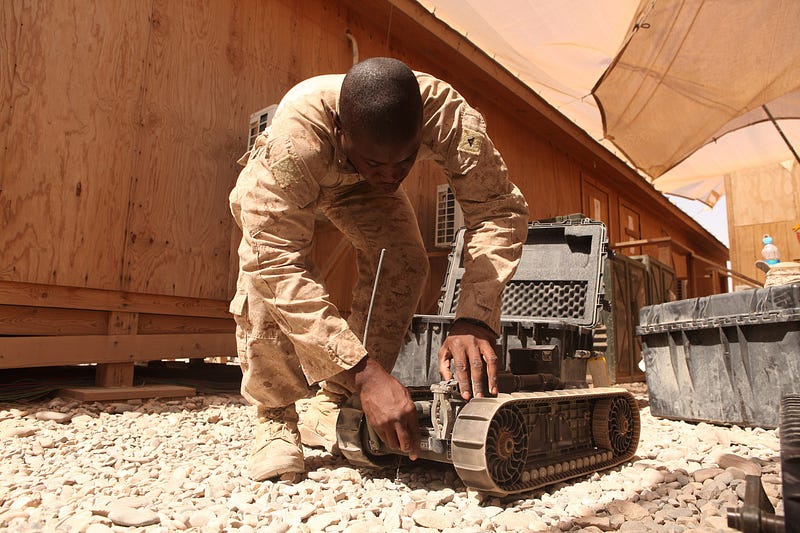
Despite this, both scientific studies (notably by Julie Carpenter) and media reports indicate that Packbots are not infrequently treated as living beings by soldiers. They are given names, assigned character traits, refuse to replace a damaged unit with a new one, send letters of condolence to the manufacturer, and hold funerals — with, of course, the obligatory salute of honor in the air as we know it from Hollywood movies. But robots don’t always charm us under such extreme conditions as wartime conditions.
…At home,
There are a number of studies that show that a surprisingly large number of people become attached to robots and treat them like animated beings in normal conditions in their own homes as well. One example is automatic vacuum cleaners — studies have shown that some people who use these devices give them names meant to reflect their personalities, take pictures of themselves with them, consider them pets or family members, and have qualms about requiring the vacuum cleaner to work for long periods of time worrying about its well-being.
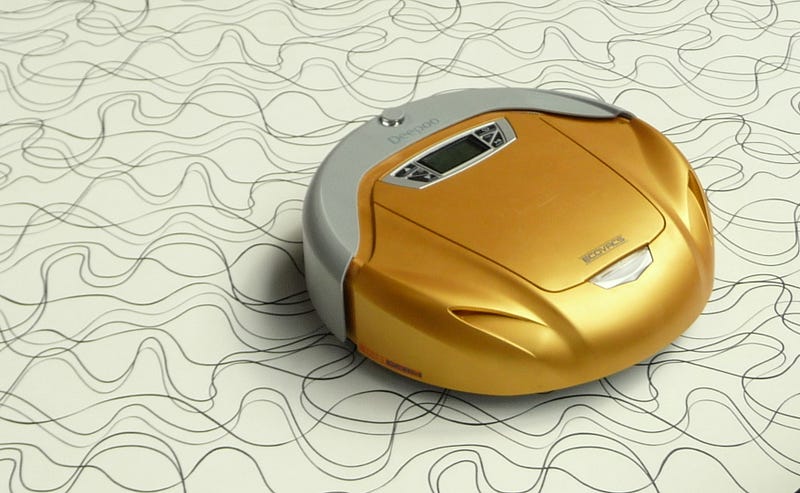
Numerous scientists and academics — including influential figures like Sherry Turkle and Peter H. Kahn — have shown that very similar behaviors also apply to other relatively low-tech devices such as AIBO (an electronic dog), and My Real Baby (an interactive doll that imitates an infant).
…In the public sphere,
In October 2017, the world was abuzz with news that the King of Saudi Arabia had bestowed honorary citizenship on the country’s Sophia robot, created by Hanson Robotics. Slightly less echoed was the official establishment of Sophia Robot Day by the governor of the state of Minnessott.
It is worth mentioning that the tendency to treat robots as animated entities has recently been gaining public justification and legitimacy — among the most famous is the position of philosopher David Gunkel, who, in the significantly titled book “Robot Rights” published by MIT Press in 2018, seriously considers granting robots rights analogous to human and animal rights.
…And even in our heads,
In recent years, at least three university centers — in Germany, the U.S. and Japan — have conducted studies that differed in various respects, but had one important common denominator: comparing the response of the human body — particularly the brain — to human suffering and to the (apparent, of course) suffering of robots.
The human brain activates areas responsible for empathy when observing simulated suffering of robots to a very similar degree as when the suffering of human beings is observed.
It turns out that these reactions in both cases are very similar — for example, one study showed by means of functional magnetic resonance imaging that the human brain activates areas responsible for empathy when observing simulated suffering of robots to a very similar degree as when the suffering of human beings is actually observed. This provides a hint that our brains — whether we like it or not — tend to empathize with robots.
How is this possible? This question can be answered in at least two — largely complementary — ways: naturalistically and culturistically.
…Because we are the ones who enchant the robots
The naturalistic explanation generally captures the tendency to treat robots — and other inanimate objects — as animate beings as a kind of relic of the past. Functioning for most of their existence on the savannah in nomadic hunter-gatherer groups, representatives and representatives of the species Homo sapiens probably often encountered a situation of uncertainty as to whether they were dealing with an inanimate object or an animate being, repeatedly hearing various indefinite sounds or noticing movement of unclear origin out of the corner of their eye.
Of course, they could only seemingly come from living beings, and then, by paying attention to them, our protoplasmists unproductively wasted energy. However, if their source was indeed a living being, it was either a life-threatening predator or a life-extending potential predator. Thus, over thousands of years, the human brain has developed mechanisms whereby our nervous system reacts to the appearance of life as if it were life, for those who reacted differently died and did not pass on their genetic traits to their offspring.
The culturalist explanation adds that the biological mechanism indicated above reveals itself in a particularly pronounced way not only in people who treat robots as animate beings, but especially in young children and representatives and representatives of so-called indigenous peoples.
Developmental psychologists, at least since the time of Jean Piaget, mostly agree that children spontaneously animate various objects and only at a later stage of development do they learn to distinguish between animate and inanimate entities (provided they grow up in a culture that recognizes such a distinction). Cultural anthropologists, on the other hand, believe that in indigenous peoples there is also a widespread animalization of various objects, such as stones, streams, or even their own creations like bows.
Both psychologists and anthropologists give the aforementioned way of thinking various names, but among the most popular are the terms “magic” and “magical thinking.” Of course, the question arises as to why, when dealing with robots, we activate this way of thinking — most typical of children and indigenous peoples — but this is a question for a separate discussion.
Is it good or bad that robots are bewitching us?
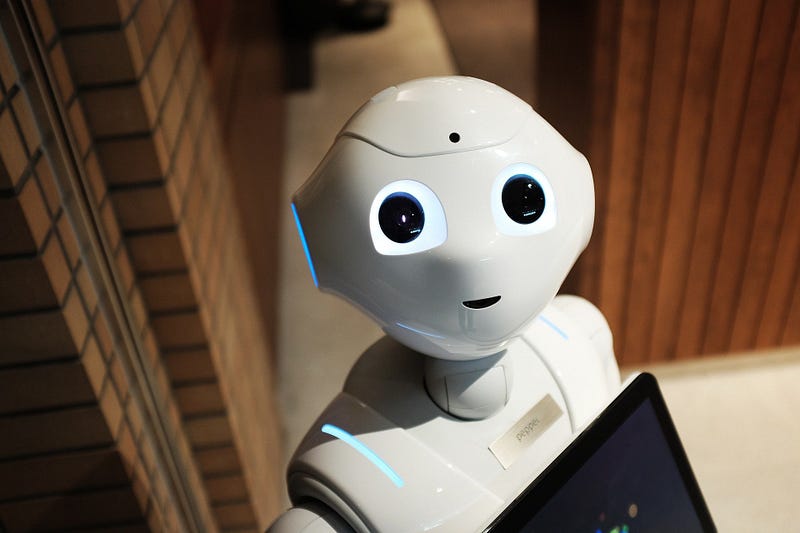
The above question gains importance especially in view of the ideas of creating robots to replace humans within the most “human”, close relationships: love, sexual, caring relationships, as well as the fact that such robots already exist.
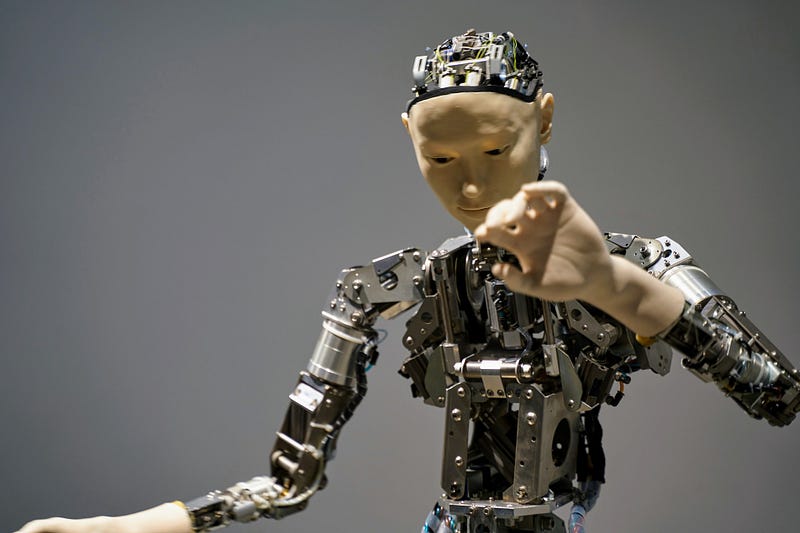
As for robots strikingly similar to humans, it is worth mentioning geminoids (twin copies of specific people) by Hiroshi Ishiguro, the famous Sophia robot created by Hanson Robotics, or, finally, androids built by Engineered Arts (all of which can be viewed on YouTube).
Sex robots have been commercially available for more than a decade. The most famous are the devices called Harmony created by Matt McMullen. Among care robots, the best known is Paro: created in the 1990s by Takanori Shibata and available for sale since 2004, a seal-like robot that responds to touch and is used in retirement homes (including in Poland), as well as in therapy for children on the autism spectrum.
Robots will give us everything….
Chess master David Levy, in his 2007 book “Love and Sex with Robots,” floated predictions that within a few decades something commonplace would become weddings between humans and robots. Levy — like many others — views this prospect with great enthusiasm, believing that close relationships with robots will provide us with more freedom, security and pleasure than close relationships with humans. Robots will not restrict us, so our freedom will flourish.
Robots will not betray us, divorce us, cheat on us or hurt us, so we will feel much more secure with them — and indeed we will be more secure — than with humans. Finally, the robots will always be ready to provide us with pleasure — they will never be tired, nor will they require us to earn it first. What more to want, enthusiasts ask.
What if robots start telling us their preferences, and those preferences are the result of a prior agreement between robot manufacturers and those who will be affected by the robots’ formulated positive feedback?
Opponents respond that, in principle, there is a fundamental problem with each of the advantages of close relationships with robots pointed out by their proponents. First, skeptics worry that robotic relationships will only ostensibly multiply the freedom of their users, while in practice making them vulnerable to manipulation. For won’t it be manipulation if the robots start telling us about their political and shopping preferences, and these preferences are the result of a prior agreement between the robot manufacturers and those who will be affected by the positive opinions the robots formulate — if a furniture manufacturer or party member pays a robot company to have these robots praise a particular piece of furniture or party? Will we be able to see the manipulation in this procedure, or will we recognize that our beloved robot is simply right and succumb to its persuasion? Will we put in place effective regulations to eliminate this type of treatment, or will we be in the clear?
Second, opponents of a close relationship with robots believe that even if robots provide us with more security than humans (which is controversial in itself, given even the fact of the highly sensitive data that these robots will record), they will not be able to balance this security with the aforementioned freedom. Let’s think of an elderly person who decides to drink a glass of champagne on the occasion of his birthday, while the robot has information that the person should not drink alcohol. In the interest of safety, should the robot prevent the consumption of champagne thereby restricting the elderly person’s freedom? The examples can be multiplied, the crux of which is to demonstrate that robots will not be able to balance safety concerns with freedom concerns.
Finally, the central counter-argument of opponents of close relationships with robots concerns pleasure — in their view, it is an apparent, inauthentic pleasure, based on succumbing to illusion and infantilization — people who derive pleasure from contact with a robot are like little children claiming that a teddy bear is their friend. Even if succumbing to this illusion brings both subjective satisfaction and objectively measurable well-being for the body (some studies on the relationship of caring robots with seniors and children on the autism spectrum suggest such positive consequences), opponents of close relationships with robots still consider them unethical, because they are based on succumbing to falsehood.

…Will they take everything back?
The fundamental premise of opponents of robotic relationships is to emphasize the fact that robots are not humans, and only close relationships with humans are a source of authentic well-being for us. They argue that once robots replace humans even within close relationships, human relationships will erode, which, according to the above assumption, will prevent us from authentic well-being.
First, as anthropologist Kathleen Richardson, author of the campaign against sex robots launched in 2015, fears, if we start treating robots that are things as persons, we will end up treating persons — living people — as things. Of course, this is not a new idea: analogous accusations are leveled against violent games and movies (taking seriously the events contained therein can result in violence against real people) or pornography (according to the famous phrase coined by Robin Morgan, pornography is theory and rape is practice).
Proponents of close relationships with robots often counter-argue that not only will relationships with robots not have a negative impact on relationships with humans, but that they can have an unambiguously positive impact — robots will serve us to vent our frustrations without the consequences of someone else’s suffering (because, after all, robots don’t suffer), and as a result, we will be muted and gentle in our dealings with humans (because we will pour all negative emotions onto robots).
Radical sex robot and care robot enthusiasts believe that if we replace humans with robots, then apparently there is nothing essential about humans that robots cannot provide us with.
The second major concern of opponents of close relationships with robots is the loss of the ability to interact with other humans. Sherry Turkle worries that humans will be replaced by robots that are adapted to us, always nodding, having no opinion of their own, then even if after some time we want to establish a relationship with a living human, we will not be able to do so, because — according to the principle that an unused muscle atrophies — we will lose the social, cultural and communication competencies necessary for this.
Advocates of close relationships with robots respond to these concerns in two ways. Some argue that close relationships with robots will not replace close relationships with humans, that robots will be a supplement, not a substitute, as — for the vast majority — is the case with animals. In contrast, more radical sex robot and care robot enthusiasts believe that if we do indeed replace humans with robots and establish close relationships only with the latter, then apparently there is nothing essential about humans that robots cannot provide us with, and thus relationships with humans are neither unique nor necessary for happiness.
The magic of humans?
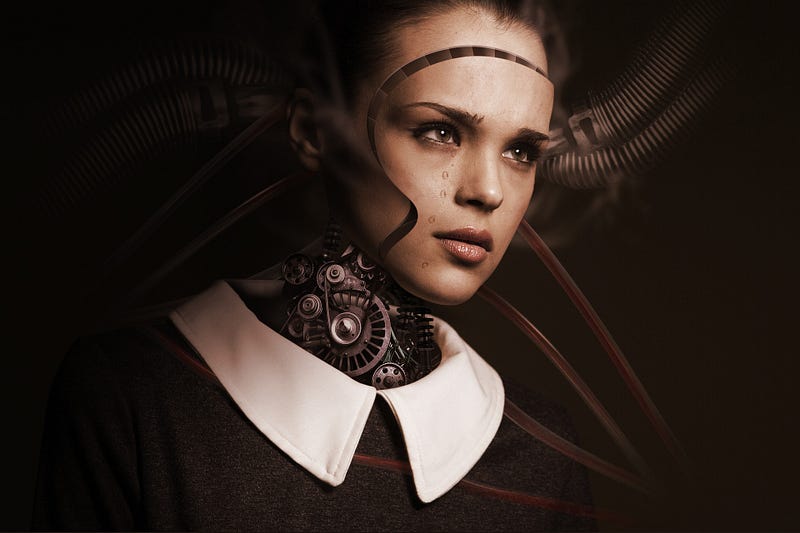
The dispute between proponents and opponents of close relationships with robots is — as is usual in such cases — difficult to resolve. However, it is worth noting that the dispute is not only, or even primarily, about the magic of robots, but about the magic of humans.
Opponents of close relationships with robots consider these relationships to be a bad thing, because instead of the illusory magic of robots, they advocate focusing on the authentic magic — i.e. uniqueness — of humans. They want us not to succumb to the charm of robots, and instead see the charm of humans. Meanwhile, proponents of close relations with robots tend to argue for the virtues of succumbing to the charm of robots while disenchanting humans, i.e. denying their uniqueness. According to opponents, if we succumb to the illusion that robots can replace us, we ourselves will become similar to robots, while supporters tend to believe that the illusion is precisely the belief in the uniqueness of humans, because in principle we are not very different from robots.
Cool that you made it to the end of this article. I will be very pleased if you appreciate the effort of creating it and leave some claps here, or maybe even start following me. It would be nice if you also left a tip! Thank you!


.jpg)