Summary
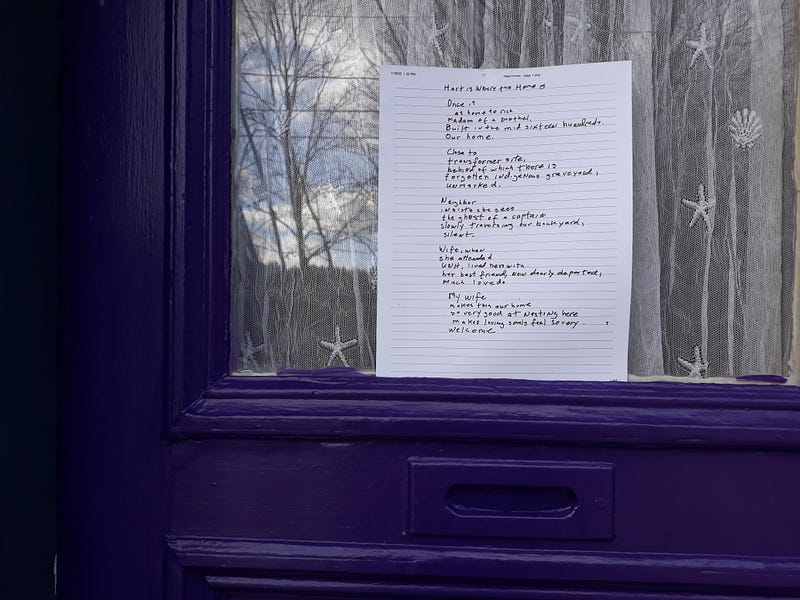
The text recounts the history and personal significance of a home that once housed a brothel madame, is near an unmarked indigenous graveyard, and is said to be haunted by a captain's ghost, with the author's wife having fond memories of living there during college.
Abstract
The article titled "Heart is Where the Home Is" delves into the rich history of a residence that dates back to the mid-1600s. Originally the abode of a wealthy madame who ran a brothel, the house has since become a place of warmth and welcome, particularly due to the current resident Martha's hospitality. The home's location is near a transformer site and an overlooked indigenous graveyard. Adding to its mystique, neighbors claim to have seen the spectral figure of a captain wandering the property silently. The author's wife shares a deep connection with the house, having lived there with her best friend during her time at the University of New Hampshire (UNH). The piece is a reflective tribute to the house, acknowledging its past and the memories it holds.
Opinions
- The author, Wry Welwood, conveys a sense of pride and affection for the home, emphasizing its ability to make inhabitants feel welcomed.
- The neighbor's belief in the ghost of a captain suggests a local folklore or supernatural element associated with the property.
- The mention of the indigenous graveyard hints at a respectful acknowledgment of the area's history and the importance of remembering the past.
- The author's wife's memories of living in the house with her departed friend indicate a deep personal connection and nostalgia for the home.
- Martha's role in the house is portrayed as central to creating a warm and inviting atmosphere, highlighting the importance of a nurturing presence in a home.