avatarKristina Segarra

Free AI web copilot to create summaries, insights and extended knowledge, download it at here

1535

Abstract

fiber intake just by eating air-popped <a href="https://www.healthline.com/nutrition/22-high-fiber-foods#section18">popcorn</a> as a snack.</p><p id="74e0">Here is the nutritional information on 100-gram (3.5-oz) serving of air-popped <a href="https://nutritiondata.self.com/facts/snacks/5356/2">popcorn:</a></p><ul><li>Vitamin B1 (Thiamin): 7% of the RDI.</li><li>Vitamin B3 (Niacin): 12% of the RDI.</li><li>Vitamin B6 (Pyridoxine): 8% of the RDI.</li><li>Iron: 18% of the RDI.</li><li>Magnesium: 36% of the RDI.</li><li>Phosphorus: 36% of the RDI.</li><li>Potassium: 9% of the RDI.</li><li>Zinc: 21% of the RDI.</li><li>Copper: 13% of the RDI.</li><li>Manganese: 56% of the RDI.</li></ul><p id="0c85"><b>Popcorn is rich in antioxidants</b></p><p id="9e38">According to the research study conducted by the University of Scranton Chemistry Professor Joe Vinson, Ph.D., popcorn contains more antioxidants than fruits and <a href="https://news.scranton.edu/articles/2012/03/popcorn-study.shtml">vegetables</a>. “The new study found that the number of polyphenols found in popcorn was up to 300 mg a serving compared to 114 mg for a serving of sweet corn and 160 mg for all fruits per serving.</p><p id="7ba5">Also, one serving of popcorn would provide 13 percent of an average intake of polyphenols a day per person in the United States. Fruits provide 255 mg per day of polyphenols and vegetables provide 218 mg per day to the average U.S. <a href="https://news.scranton.edu/articles/2012/03/popcorn-study.shtml">diet</a>.”</p><h1 id=

Options

"9bec">How to make popcorn at home</h1><p id="2c50">If you don’t want to buy pre-packaged popcorn, you can choose to make it fresh from scratch at home. You can either use an air-pop machine or if you don’t own one, you can use a pan with a little bit of oil (use a healthy oil like extra virgin olive oil or grapeseed oil).</p><p id="777f">Put some oil in a pan and enough popcorn to coat it in oil (don’t overfill it). Then, heat the pan on medium-high heat with a lid closed until it starts popping. Keep an eye on popping sound, and as it starts to hush, turn the heat on low and let it stay for a couple of more minutes. After that, turn off the heat. Lightly sprinkle with salt and pour some melted butter over it. If you want to skip on butter and salt, you can spruce up the flavor with spices like onion powder or garlic powder to make up for the loss of flavor that butter and salt provide.</p><h1 id="61ef">Microwaveable popcorn</h1><p id="11b0">If you decide to go with microwavable popcorn, go for varieties that say “Lightly buttered” to go lighter on fat and calories. Pop the bag in the microwave for 2- 21/2 minutes, depending on the package instructions, and boom, your popcorn is ready.</p><p id="5852">If you are looking for a healthy way to supplement your diet, popcorn is one of your options. Snacking on popcorn at any time during the day will give you loads of fiber and antioxidants your body needs. So, next time you watch a movie and reach out for chips, remember that there is popcorn.</p></article></body>

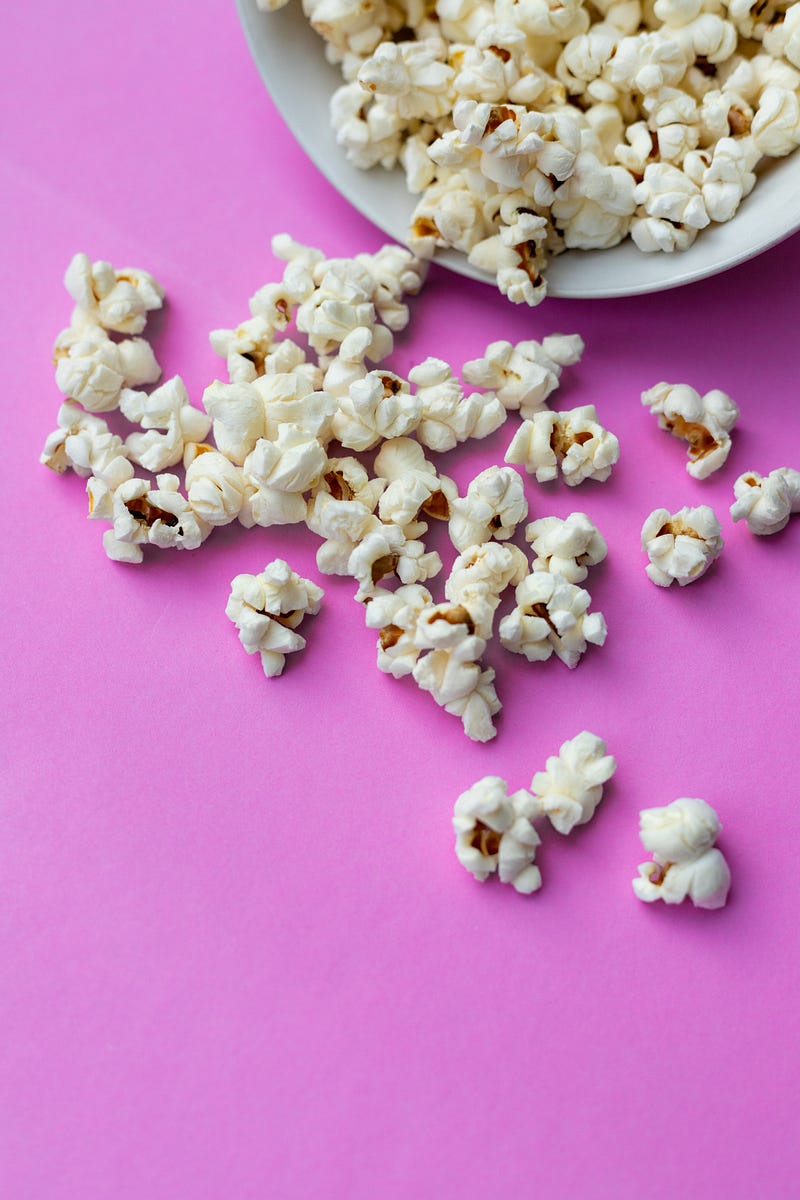
Photo by Yulia Khlebnikova on Unsplash

Health Benefits of Popcorn You May Not Know

How eating popcorn will boost nutrition in your diet

Popcorn is among the most popular snacks in the United States. It is a type of kernel that pops when you heat it to a certain temperature. Popcorn is not just a movie theater snack. You can enjoy it at any time of the day- at home or at work.

“Today around 500 million kilograms (1.2 billion pounds) are consumed by Americans every year, making it America’s most popular snack food by volume.”

Not all popcorn is healthy

Depending on how you prepare popcorn, it can be healthy or unhealthy. Popcorn that comes in pre-packaged bags is loaded with oil and salt and therefore is unhealthy for you. Air-popped popcorn is the healthiest popcorn of all. It is loaded with fiber and antioxidants without extra calories from fat. You can naturally increase your fiber intake just by eating air-popped popcorn as a snack.

Here is the nutritional information on 100-gram (3.5-oz) serving of air-popped popcorn:

  • Vitamin B1 (Thiamin): 7% of the RDI.
  • Vitamin B3 (Niacin): 12% of the RDI.
  • Vitamin B6 (Pyridoxine): 8% of the RDI.
  • Iron: 18% of the RDI.
  • Magnesium: 36% of the RDI.
  • Phosphorus: 36% of the RDI.
  • Potassium: 9% of the RDI.
  • Zinc: 21% of the RDI.
  • Copper: 13% of the RDI.
  • Manganese: 56% of the RDI.

Popcorn is rich in antioxidants

According to the research study conducted by the University of Scranton Chemistry Professor Joe Vinson, Ph.D., popcorn contains more antioxidants than fruits and vegetables. “The new study found that the number of polyphenols found in popcorn was up to 300 mg a serving compared to 114 mg for a serving of sweet corn and 160 mg for all fruits per serving.

Also, one serving of popcorn would provide 13 percent of an average intake of polyphenols a day per person in the United States. Fruits provide 255 mg per day of polyphenols and vegetables provide 218 mg per day to the average U.S. diet.”

How to make popcorn at home

If you don’t want to buy pre-packaged popcorn, you can choose to make it fresh from scratch at home. You can either use an air-pop machine or if you don’t own one, you can use a pan with a little bit of oil (use a healthy oil like extra virgin olive oil or grapeseed oil).

Put some oil in a pan and enough popcorn to coat it in oil (don’t overfill it). Then, heat the pan on medium-high heat with a lid closed until it starts popping. Keep an eye on popping sound, and as it starts to hush, turn the heat on low and let it stay for a couple of more minutes. After that, turn off the heat. Lightly sprinkle with salt and pour some melted butter over it. If you want to skip on butter and salt, you can spruce up the flavor with spices like onion powder or garlic powder to make up for the loss of flavor that butter and salt provide.

Microwaveable popcorn

If you decide to go with microwavable popcorn, go for varieties that say “Lightly buttered” to go lighter on fat and calories. Pop the bag in the microwave for 2- 21/2 minutes, depending on the package instructions, and boom, your popcorn is ready.

If you are looking for a healthy way to supplement your diet, popcorn is one of your options. Snacking on popcorn at any time during the day will give you loads of fiber and antioxidants your body needs. So, next time you watch a movie and reach out for chips, remember that there is popcorn.

Popcorn
Healthy Foods
Healthy Lifestyle
Nutrition
Diet
Recommended from ReadMedium