
Head on a stick
08.06.2020 Portlaoise
We live in a world of inverted poles, where current roles and language are the opposite of what we’ve experienced so far. Truth has become a relative concept; conspiracy theories are multiplying exponentially. Quarantine has set the flywheels of processes that we don’t fully understand, and it turned out to be a phase that leads to a new social order. By distancing from each other we also have separated ourselves from the roles we played in society. Suddenly it turned that not everyone was equally needed, and some were simply considered expendable. Such a state of affairs causes fear, and fear ignites violence.
Why we hate?
Not so long my six-year-old asked me: why people hate? It seems to us that the affairs of adults do not concern children, that children are beyond the reach of evil we brought to life and cherish as if it were a wonderful remedy for all our failures. Well, no, children see, hear, and understand a lot more than we assume. And they are terrified, far more than we are. Not because of the horrors that steam from the recent events in America but because of the powerlessness they witness. Respectively, if there is something that we should really be ashamed of, it will be our passivity lined with the incomprehensible concept of powerlessness.
Racism, or even more profound, aversion to a stranger is so deeply rooted within us, has grown into our language and thinking with such firmness that in time it has become transparent, something imperceptible daily. Besides, it’s very difficult to distinguish fear from disgust, disgust from hatred, hatred from anger, and in many cases we simply do not know what we deal with? Often, our comments, whether the way we look at someone or how we react to certain people on a physical level, (e.g. by stepping back) are treated by us as something completely natural and we never would consider ourselves as racist, are a clear and strong signal to our children — we’re making them who we are.
Violence and hatred are as old as mankind, and it would be extremely naive to think that it will end today or tomorrow. I really don’t know what words I should use in order not to inflict unnecessary pain — these two factors will never set us free; they will always be within, right to the end of the world — and it shall come soon.
Besides, the problem of hostility against strangers, others, or simply — not us, does not apply to only one place. Europe is also not tackled with its demons. In Poland and Hungary, we could observe government-controlled anti-immigrant hysteria, in Russia, people of Caucasian descent are facing harassments on daily agenda, In Slovakia, the Roma community is being persecuted in a planned way, Polish immigrants were accused of stilling jobs in the UK, In Israel being Palestinian is equal of posing threat, even in China African descendants were subjected to harassment and ostracized.
We couldn’t cope yesterday, recall slavery, colonialism, discrimination against women, anti-Semitism, eugenics, holocaust. Even socialism and capitalism are nothing but other forms of division, we can’t comprehend what’s happening to us today, and for sure, we won’t know what will happen to us tomorrow.
Prejudices are a global problem, if not a fundamental one. The question, why we hate, is just as important, if not even more as the eschatological ones we have been asking ourselves since we learned to express our thoughts.
I am afraid that hatred is something that man receives at the time of birth. That when we come into this world we get it like a sandwich packed for a school trip, and the longer our journey lasts, the hungrier we are.
Hope is the key to the future
While listening to the radio or watching TV one cannot escape an overwhelming impression that the world is plunged into chaos, and all kinds of theories seem to be an adhesive through which, we strive to repair the rupture within our world. In fact, all these theories together and each one separately it’s nothing but a finger pointed at the guilty party. The simplest indication of the perpetrator — this is how the scapegoat is found. The Chinese, Bill Gates, pharmaceutical corporations, we can quote so endlessly. However, it doesn’t change a certain uncomfortable truth, the lower the educational capital of recipients, the greater the susceptibility to these theories. And this, dear reader, is the shortest way of stereotyping reality. Here we touch the bottom line. There is an interesting regularity, somehow due to the accumulation of low educational capital emerges a strong authoritarian personality to quickly seize a grip over people’s minds.
Still, it is not the mere appearance of such a personality that causes me a headache, but powerless awareness that all this has already been named, and yet the processes against Wald, Spender, and Arendt have warned us in the past are gaining momentum right now.
“What we are up against is a generation that is by no means sure that it has a future.”. The very same future as Stephen Harold Spender determines is nothing more than a “time bomb buried, but ticking away, in the present.”1 In other words: we live neither in the past nor in the future. For us, there is only here and now. If we ever manage to leave the present and see a snippet of what’s ahead of us, we will finally be able to admit that we are happy, but so far nobody has done it. Nevertheless, there are periods when time loses its all heft, and what’s matters are the one and only moment when we decide to change the course of all events. Hope is the key to the future, a condition of life based on trust that tomorrow will come anyway. The truth is, we are defined by a distinct aspiration — a chaotic rush towards the unknown. Yes — the future has more to do with intuition than with assurance, and the only thing it offers is the lack of any certainty even regarding the nearest anon. 2
In fact, for us who exist now, but also for our ancestors, as well as for future generations, tomorrow will never happen because we have always lived, we live, and we will live only in the present. „For what more terrifying revelation can there be than that it is the present moment?”3 Can you imagine anything worse?
Certainly — awareness of helplessness! The present is just as helpless as the past. So, what is left to us? Hope for the future in a better world?
Hannah Arendt thought that in fact, the only way to look for a better tomorrow is to march forward — what by any means is impossible to avoid or prevent. Following the same reasoning, the conclusion suggests itself: our future in a holistic approach has nothing to offer apart from certainty of death.
Then, if we don’t take it into account and our thoughts will float only around the general terms, the obvious argument against progress is that “development is a form of chronological unfairness since latecomers can profit by the labors of their predecessors without paying the same price,”4.
Arendt and Herzen’s tours had led me to a certain trail, namely to the image of the world without Gods — as Albert Camus said in a Nobel lecture “Each generation doubtless feels called upon to reform the world. Mine knows that it will not reform it, but its task is perhaps even greater. It consists in preventing the world from destroying itself. Heir to a corrupt history, in which are mingled fallen revolutions, technology has gone mad, dead gods, and worn-out ideologies, where mediocre powers can destroy all yet no longer know how to convince, where intelligence has debased itself to become the servant of hatred and oppression, this generation starting from its negations has had to re-establish, both within and without, a little of that which constitutes the dignity of life and death.”5
However difficult to believe, today’s generation has no other role to fulfill. After all, this is an older vision of us living in a world confined by a bare, unembellished frame. Indeed, we do not live for ideology, our claims as certain people are of much greater importance to us than most sublime ideas — arising only to resist the crushing wheels of history. The world, and we as part of it, must rely on our immanent, existential persistence of lasting. The only thing we can afford right now is faith — the potency of beliefs and expectations.
That’s how it happens in the time of trial when we allow ourselves (and only ourselves) to reason with ourselves, in internal dilemmas and struggles, a dispute between the heart and the mind, in opposing the circumstances of fate, which (in our imagination) constantly exposes us to unjustified suffering. Thus, our faith crystallizes in the act of dramatic decisions, and because of its essence, it’s radically subjective and lonely.
Companions of misery
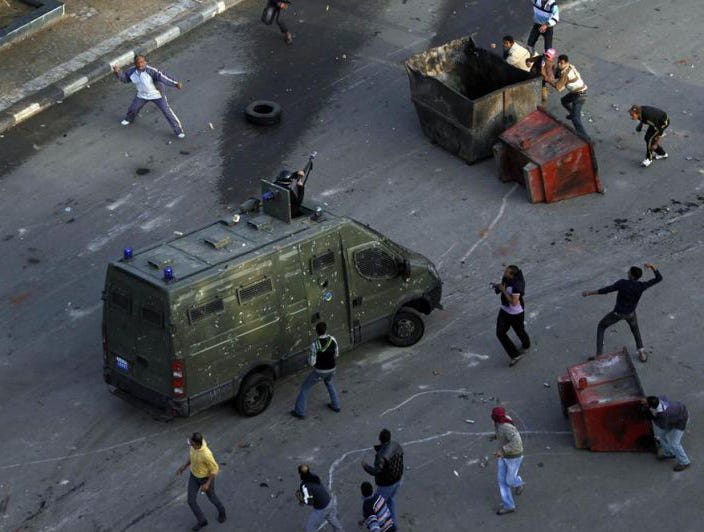
Today we know, whatever fate brings, one way or another, but we will welcome it with forced acceptance, although for most of us predicting the future (or having hope) is nothing more than wading in the fog at the edge of a deep abyss — where the main risk is associated with cognitive errors — wistfulness, and fears. Then what we have recently experienced, this tearing impression of loneliness only enhances these overdiagnosed emotions — simply put — we don’t like being left alone with our dilemmas. So, we are looking for companions of misery, and they are already here: relatives, friends, people we know — crowd. We are happy to surrender to the collective self of the throng; it makes us part of something far greater than we ever could achieve as individuals — we are becoming particles of the collective soul of the crowd. Everyone’s feelings, thoughts, and actions travel the same route. The crowd’s level of intelligence is much lower compared to the intelligence of individual participants. But it doesn’t bother us, involvement alone excludes liability. Therefore, decisions made by the crowd are, usually primitive and simplest but free of remorse. The crowd’s response is generally exaggerated, which in turn leads to violent outcomes. Participants of mass gatherings are more likely to succumb to lower instincts, suddenly an individual acquires a sense of supreme power, which causes non-compliant behaviors normally avoided by a single person. Consequently, the mob becomes anonymous — we saw it in America.
Violence is the result of the downfall of society, and the downfall is a consequence of social stratification. We live in an era of autocrats using the will of the people as a shield. The more we are afraid of tomorrow, the more we suffer loneliness, the more we are vulnerable to manipulation. Pandemic is a gift from providence to all kinds of radicals and above all to those who, in the name of their benefits, are ready to take away man’s freedom. And I’m not talking about freedom of movement or discomfort of self-isolation, but how we think, how we see the world, how we make distinctions between what is fundamentally good and what is simply evil. If I’m being honest, our vulnerability to the virus is nothing compared to helplessness in the face of a crawling catastrophe we have pulled on ourselves by making ill-considered choices giving power to those who will not hesitate to abuse it. Well, making wrong choices is probably our innate skill, something instilled in us by some very malicious god long, long time ago. Otherwise, it would mean that we just don’t learn, we don’t draw conclusions. That scourge of mankind in the persons of Tamerlane, Pol Pot, Hitler, and hundreds like them did not cause us any reflection. It would also mean that moral systems developed for thousands of years by all manhood are nothing regarding the skin tone. Or else, that shouting abuse and threats on ambulance staff, or ostracising nurses, and doctors (when people are dying by the virus) is a way of stating our objections to unfair fate feats. Ultimately, it implies that after long months spent in seclusion, we will certainly jump one at another, only to congratulate ourselves on endurance. But we know it would be silly, as John Wayne used to say, “Life is tough, but it’s tougher if you’re stupid.”
Why we fight?
Thus, not having anything better to do, we fight. But what are we fighting for?
Does it even matter? We fight and it counts — reasons are of secondary importance. Violence suits any ideology — there will always be someone to justify bloodshed. Then, the question should sound — what for? Well, to practice. At least we’ll be ready when the right time comes.
“The Gods throw the dice, and they don’t ask whether we want to be in the game or not. […] The Gods don’t want to know about your plans and hopes. Somewhere they’re throwing the dice and you get chosen. From then on, winning and losing is only a question of luck.”6
Maybe it’s not about winning, perhaps it’s about freedom of choice. Liberty increases your odds to be happy, so we rebel to seize control over happiness.
No! Because of its nature man is incapable of being free — we are who we are, therein lies our greatest limitation. If we were a bit like animals; then yes, there would be nothing more precious than freedom, but the Gods have created us in their image, and we accepted the Gods to have someone to blame. No, there is no freedom in our world. That’s why we’re still revolting, that’s why thrones are collapsing, and heads are falling. For us, the most important thing in the entire world is someone’s corpse and head impaled on a stick. The head of the hated enemy was, is, and will be a symbol — or rather a totem — of victory. But not a warning, if that were to be true — I mean a deterrent — blood would never be spilled again. Except we never learn. By collecting tyrants’ heads like colored beads, we feel even better, nobler, and freer, not remembering that freedom cannot be easily satisfied. At times it seems that we live only to fight, we fight to live — the rest is only a crying game, something that lets us digest reality, and before we even realize what is at stake, again, with a stick in hand, we hunt for someone’s head.
Anyone who thinks that violence cannot be comprehended is in wrong. Figuring out is just a matter of conditions. The insanity of man and the world he lives within can be easily shown, we watch it every day on television, it can also be understood, but not through a picture. No! To feel it you have to touch it, when you try to ease the last thoughts of a dying friend, or when you gaze into your wife’s fading eyes, or by holding breathless child you hoped it will survive somehow. We watch this insanity, we notice it, we even try to explain it, but the picture works only at the level of emotions, does not bring any reflection, it is so because everything is happening remotely, but believe me: if we were there, we would have to accept it deeply — with all accounts squared; fear, regret, hatred, rage, fury that grants you strength, pulls you into the vortex of violence and tells you to kill. The first and only thing that keeps us alive is the acceptance of facts. Yes, there were events that we could not prevent, but there will be new ones we can influence or at least try to shape. Problem is that people on the other side of the barricade think exactly like us.
In our case, acceptance is a locked circle with no way out — at best until everyone dies — until death parts us. When we fight, we rely on death — even more — we are sure it will reach for us, and yet we take lives. It is as if an endless reveille sounded in our heads — a call to fight, never-ending bloodlust.
Behold of mocking triumph of evil — the more fought, the more it gains, and we, in our eternal desire to be better, become even worse.
1 See “The year of the young rebels”
2 See Reflections on Violence, HANNAH ARENDT Journal of International Affairs
Vol. 23, №1, Political Conflict: Perspectives on Revolution (1969)
3 Virginia Woolf „Orlando”
4 Here’s a Herzen’s warning, see Reflections on Violence, HANNAH ARENDT Journal of International Affairs
Vol. 23, №1, Political Conflict: Perspectives on Revolution (1969), p10.
5 Albert Camus in his Nobel Banquet speech delivered on 10 December 1957.
6 See Paulo Coelho, By the River Piedra I Sat Down and Wept


