
He Was White, I Was Black, We Were In Love In A Racist World
First encounters with racism are often traumatic, and sometimes, the brain doesn’t want to accept that racism exists.
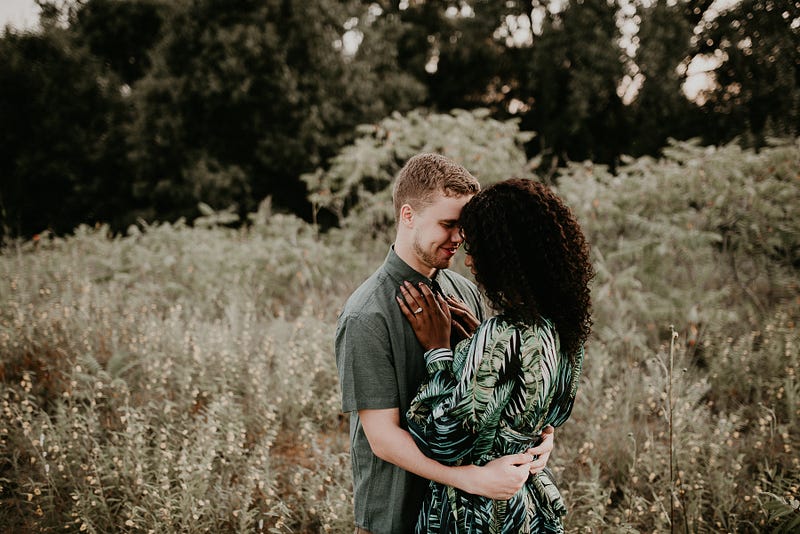
I met Ben when I was 16, he was my first love. He was white, and I was black.
It’s funny how there are some things in life you never forget. I won’t forget how I met him. My mum had signed me up for judo classes, she wanted me to be able to defend myself.
I grew to like judo quite a bit and was soon selected to compete in tournaments throughout Switzerland. Ben had joined the same club a few months earlier but we had never met. He was also on the competition team.
We met at a tournament in Geneva in 1987 – he lost his judo match because he kept on staring at me in the bleachers instead of focusing on his opponent. It was love at first sight.
Ben was an only child, and his parents were divorced. He loved reggae and was an outstanding graffiti artist. I was immediately drawn to him.
There weren’t many interracial couples in Geneva in the mid-1980s so we stood out quite a bit. People said that we made an attractive couple.
We were young and a tad bit rebellious and didn’t care what the world thought about us being a mixed couple, we were in love.
Ben had a friend called Philippe that he talked about quite a bit, but for a reason, I didn’t understand, I had never met him. A year into our relationship, my curiosity got the best of me and I asked Ben if I could meet Philippe.
“He’s sort of odd, I’m not sure that you will like him”, he said.
“But he is your friend, and I’d like to get to know him or at least meet him”, I said.
“Yes, I understand sweetheart, but Philippe is just not as open-minded as I am”.
“What do you mean”, I asked.
“Well, Philippe’s parents don’t like black people”.
My jaw dropped – “And this is a friend of yours”, I asked.
“I’ve known him since high school, I only realized that his parents were racist when I started dating you, but Philippe isn’t racist”.
The conversation chilled my interest to meet Philippe.
But as Ben and I celebrated our second year together, I did finally meet him.
As I had suspected, he wasn’t particularly affable. He was arrogant and standoffish and had this superior air about him.
We got to know each other better and eventually got along for Ben’s sake.
Philippe’s parents would often invite Ben to dinner, but I was never invited to go along with him.
Ben and I were inseparable, and when he had one of those lengthy dinners, I felt lonely. I was curious. One evening I asked him to tell me more about the dinners. I asked if they ever spoke about me.
“They are clearly racist and I don’t feel comfortable spending time with them. I mean I go there because I’ve been going there since I was a little boy, but I don’t want to go there anymore”.
“But why, why now. I mean you have been going to dinner with them for years, what changed?”
“Last time I was there, we got into an argument. You see they have a dog — a German Shepherd. So, they were training the dog to attack people. They used a black doll as a model for the dog to attack. I was sick to my stomach to see that”.
I shook my head in disbelief. I couldn’t understand why people would do that. I was sixteen, at the very start of my adult life.
Even though I knew that racism did exist, I didn’t realize that some people’s hatred of black folks was so intense that they would train their animals to attack us.
Ben declined future dinner invitations and his friendship with Philippe abruptly ended. We had much less tension in our relationship after that. But I must admit that that experience showed me an ugly side of the world.
I was used to being bullied and harassed by other children at school because I was black. Somehow in my head, the head of a child, I thought that racism was a juvenile thing, something that only existed in the world of children. I was so naive.
I truly believed that older people, responsible adults could not be racist. As I child, I looked up to adults — white, black, and brown adults, I respected them. I believed that they were all grown-ups, role models, all infallible, wise, non-racist.
It was quite traumatic for me to learn that white adults could be racists. I couldn’t understand why. Hadn’t living, education and experience taught them that racism was wrong?
It took me a while to process the fact that Philippe's parents were racist.
It was at that time that I understood how parents pass on racism to their children, and how the insidious cycle of racism is perpetuated.
As I embark on this antiracism journey, I realize that the enemy — racism, sits right at the dinner table with some families every evening.
It is a foe that should never be underestimated, especially if young children are socialized into it at a very young age.
I am however confident that our ability as human beings to engage in free thinking still makes it possible for anyone to unlearn racism and hate even if they are born into it.
Thanks a lot for reading my perspective.


