
He Was Indigenous and a Slaver
Should a hospital be named after him?
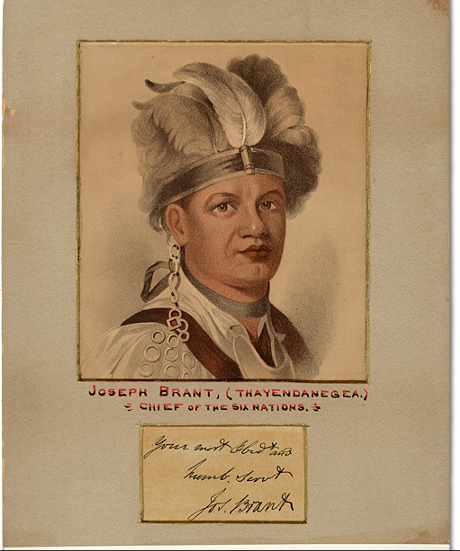
Sixty kilometres south and to the west of Toronto is the suburb of Burlington, nestled along the banks of Lake Ontario. Burlington sits inside the traditional territory of the Kanyen’kehà:ka (Mohawk) Indigenous people. Land that stretches
north to the St. Lawrence River. Southern Quebec and eastern Ontario; south to greater New Jersey and into Pennsylvania; east to the Green Mountains of Vermont and west to the Oneida nation’s borders.
This land was presided over by Mohawk leader Joseph Brant. Brant won accolades from the Canadians for his military prowess and his masterful ability as a diplomat. He received a captain’s commission in 1775 and visited England twice meeting with the King.
With his sister married to the British superintendent for northern Indian affairs, General, Sir William Johnson the Brant family was well integrated into Canadian society.
Brant himself inherited the Mohawk leadership from his father and with his schooling under the colonists, he straddled two worlds. One as the Indigenous leader striving for success for his people, and the other as the high-born noble, successfully embedded with the colonists.
Brant had lived his life believing the colonists would treasure the friendship the Indigenous leader constructed through standing on Canada’s side. After having dutifully served Canada as a believer in integration between the colonizers and the Indigenous, Brant was shocked when Canada failed to honour their friendship with the Indigenous people.
Brant brought power to the Canadian authorities going to war for Canada against the Americans. Going to war against any enemy the Canadians pointed him at. Thus the 1783 Treaty of Paris suddenly instilled in Brant the same lessons Indigenous people around the world have all learned, colonizers, do not honour their word.
Joseph Brant was a man living the intersectionality of Indigenous, Colonialism, and Black. He grew up among the whites. He learned their religion, their culture, and their mores. When his brother-in-law the General, went into the French and Indian war of 1754–1763, Brant followed. I would imagine he considered himself “one of them.”
Mirroring the white population, slaveholding was primarily confined to the wealthy Indigenous families. As freedom for Black people would impact their wealth and status, slaveholding Indigenous Nations joined the US Civil War to protect their right to hold Black slaves.
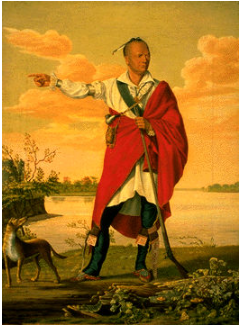
During his life, Brant owned approximately forty African people. People he’d captured during the American Revolution.
Brant went to the colonizers’ schools, he learned the white way of life. In this, he was no different from other Indigenous nations friendly with the colonists.
Prior to contact with European Settlers, Indigenous people practiced slavery. In their practice, enslavement was neither hereditary nor permanent. Enslaved people usually replaced a dead family member in all capacities, including sexual. They could also earn their place in the Nation through war, hard work, and adoption.
After contact, the whites persuaded the Indigenous to hold slaves for profit, as opposed to their custom of population augmentation.
That chattel slavery was the norm among his friends and allies doesn’t absolve Joseph Brant from knowing slavery was wrong. As the whites knew slavery was a corrupt institution so would Brant who grew and learned among them,
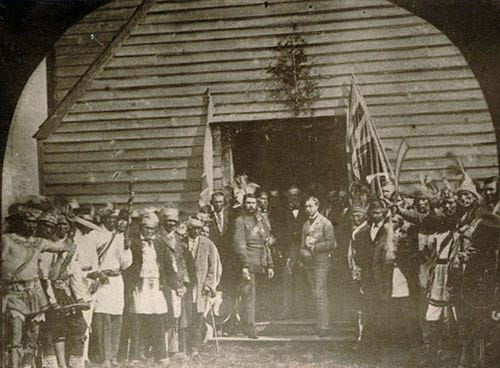
Indigenous Nations used Black labour to plant and harvest cotton, to erect structures. Brant’s enslaved people built the only Protestant church outside the UK with the status “Chapel Royal.” Built at the order of King George III in 1785, “Her majesty’s Chapel of the Mohawks” is still standing today. A durable tribute to the stolen skills of Black bodies.
The Treaty of Paris was the document by which Britain recognized America’s independence, but not Indigenous nationhood. The British took Indigenous lands and gave them to the Americans.
Here was Brant, an intercedent on behalf of the colonists in any dispute. Even against Indigenous people. He is amazed
“such firm friends and allies could be so neglected by a nation remarkable for its honour and glory whom we had served with so much zeal and fidelity.”
The British hadn’t forgotten Brant. They feared the Indigenous Nations might come together and fight against them. To put their terrors to rest, the colonists took away Indigenous homes and native lands. To this day Canada continues to work to maintain the divorce between the Indigenous and their lands.

On these still disputed territorial lands sits The Joseph Brant Memorial Hospital.
Do you believe the hospital should bear Brant’s name?


