
He Saved the Human Race From Extinction but Was Responsible for the Death of Millions
The tragic tale of Fritz Haber
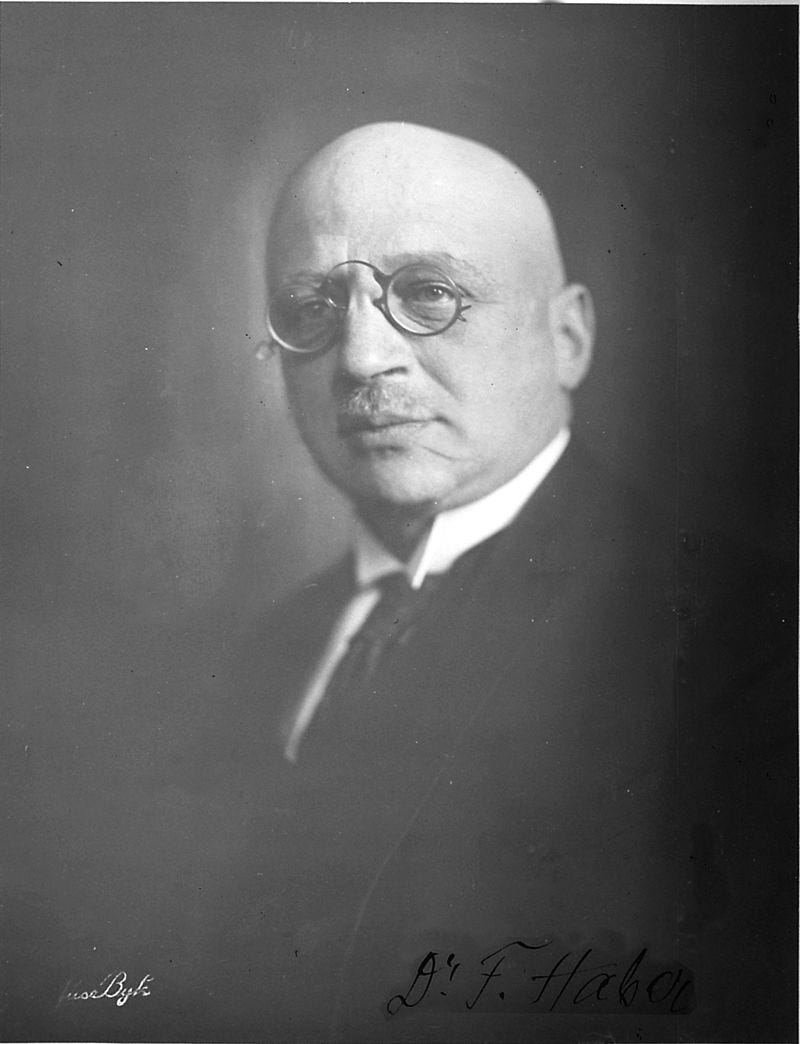
During peace time a scientist belongs to the World, but during war time he belongs to his country- Fritz Haber, Nobel laureate.
Few awards are as controversial as the 1918 Nobel Prize in Chemistry. The recipient’s discovery of producing ammonia from the air saved humans from extinction. But the man found himself alone at the acceptance ceremony. Not many shook his hand. His presence sickened them.
There is a 50% chance that this extraordinary person is the reason you are alive. But there is a dark side to his story. His life is a heartbreaking tale of a genius whose blind patriotism led to the death of millions.
Albert Einstein, one of his closest friends, described the exceptional man who rescued humanity as “the tragedy of the German Jew: the tragedy of unrequited love.”
The man was Fritz Haber.
Haber’s story will prompt you to question the ethics of scientific research. How far can a scientist take his ideas before they become too dangerous for the world? Haber solved the world’s food crisis. But he’s also known as the “father of chemical warfare.” During the First World War, Haber supervised the release of weapons of mass destruction, killing thousands within minutes.
One of Haber’s inventions was a pesticide meant for agricultural use. But the chemical was deployed on an industrial scale to carry out the Holocaust. The scientist’s own relatives perished in the tragedy. The substance was the dreaded gas Zyklon B.
Haber’s life is one of the cruelest stories in human history. A man who gave everything to save us yet took away the lives of so many.
Let’s explore Fritz Haber’s complicated legacy.
The making of a patriotic scientist
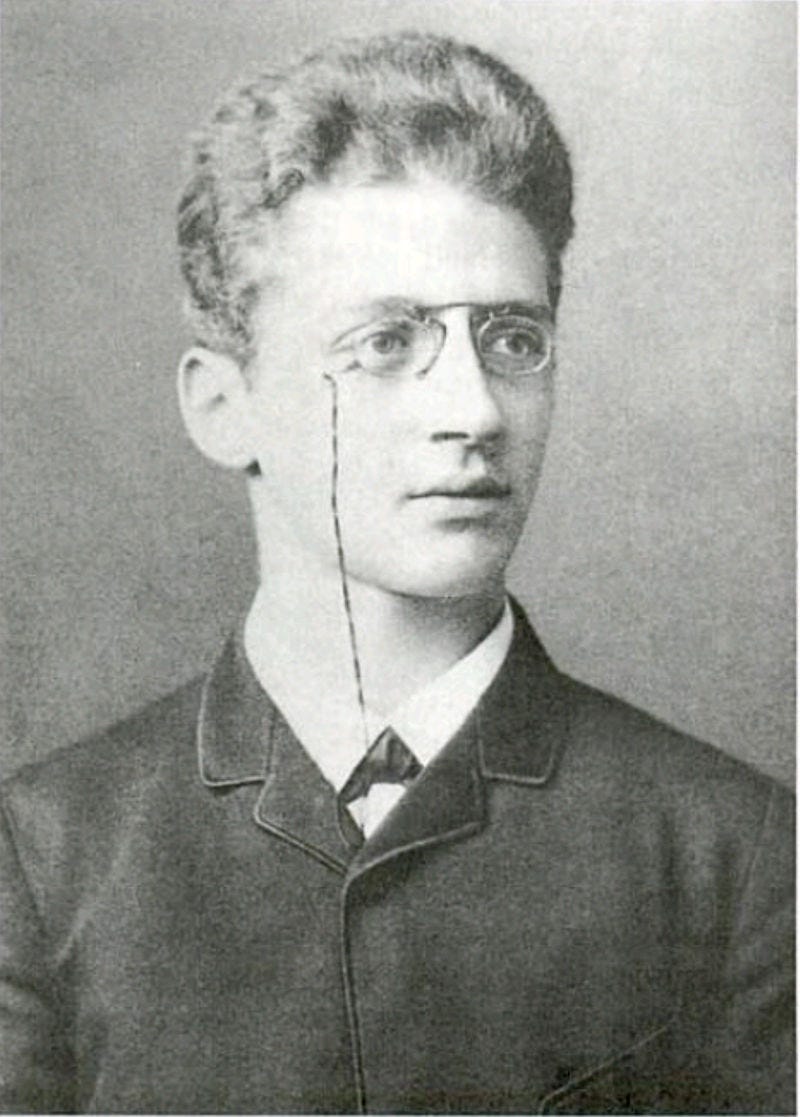
Haber was born on December 9, 1868, to a wealthy Jewish family in Breslau (modern-day Wroclaw). He grew up in a time when Germany’s national identity was shaped by the unification of Germany and the triumph of Prussia over France in the Franco-Prussian war. Haber’s formative years had a major effect on his nationalist views.
Fritz’s relationship with his father, Sigfried, was strained since childhood. Fritz’s mother Paula died three weeks after giving birth to him. Sigfried got remarried and had three daughters: Else, Helene and Frieda. Fritz did not get along well with his father, but he was close with his step-sisters.
Chemistry fascinated Haber. His father’s company dealing with dyes, pigments, and pharmaceuticals exposed him to the world of chemicals early in life. Sigfried wanted his son to join the family business, but Fritz had other ideas.
Fritz Haber began studying chemistry at Friedrich Wilhelm University in Berlin in 1886. In 1889, he took a leave of absence to serve in the army. He then attended the Zurich Polytechnic College (ETH Zurich) and earned his Ph.D. in 1891. In 1892, he briefly went back to work for his father’s business. But when their ideas clashed, both realized they couldn’t work together.
Fritz Haber knew he belonged in the lab, not in business. He made a career-defining decision to join academics and research. He began teaching in Karlsruhe. There he met his future wife, Clara Immerwahr, the first German woman to get a doctorate in chemistry.
Haber’s relationships with his Sigfried and Clara, are crucial to understanding his tragic story. We’ll get into the nitty-gritty of his life later.
But first, let’s look at his most important work, which won him the Nobel Prize in 1918.
Making bread from air: The Haber-Bosch process
We have used animal dung as fertilizer since the birth of agriculture. But one particular creature’s feces is rich in nitrogen, that of birds. In the 19th century, bird droppings were used to make fertilizers globally. Chile, in particular, dominated the trade. Wars erupted over bird deposits, also known as guano.
The guano so valuable that if an American found an island with enough bird droppings, the person could claim it for the US. The US President has the authority to dispatch the navy and seize the islands. This law still exists.
At the turn of the 20th century, there was not enough food for everyone. The human population has reached a critical mass of one billion people. The guano available was insufficient to mass-produce fertilizers. Humanity was in danger of catastrophic conflicts and starvation because of the impending scarcity of food.
So why not use nitrogen from the air to produce ammonia? Ammonia in turn can be used to make fertilizers. After all, the air is 78% nitrogen.
We can’t use nitrogen in the air. Breaking apart the bonds of a nitrogen molecule takes a lot of energy, and there wasn’t a good way to do it.
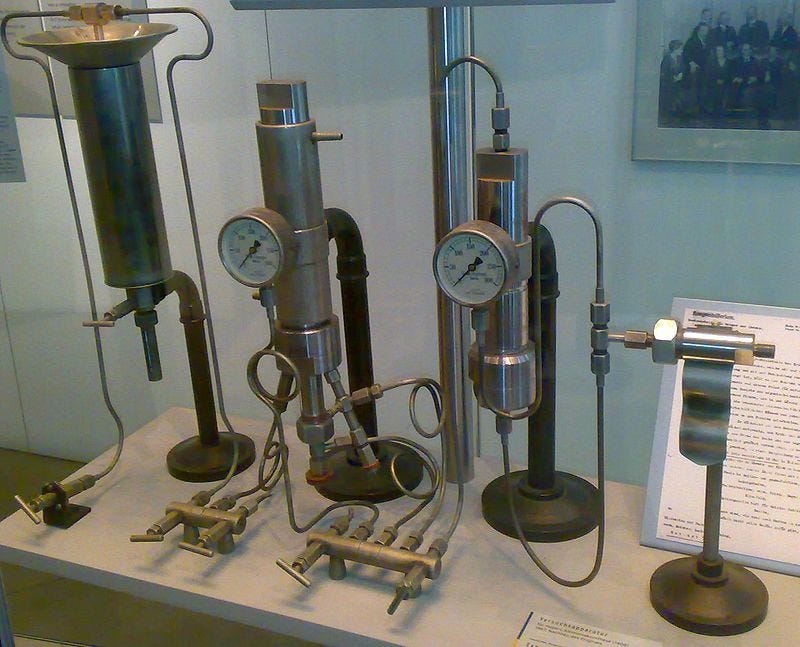
Haber wasn’t the first scientist to think of using nitrogen from the air to make ammonia. But every scientist who tried to do so failed. In 1911, Haber produced ammonia by combining nitrogen and hydrogen at high temperatures and pressures with osmium as a catalyst. This method of producing ammonia is known as the Haber process or Haber-Bosch process.
The finding was a major breakthrough in science. His coworkers dubbed the discovery: “Brot Aus Der Luft,” which translates to “bread from the air.” Haber had created food out of thin air. The impact of the process is such that right now half of the world’s food base is produced because of the Haber-Bosch process.
The BASF group patented Haber’s process. He worked with Carl Bosch to make ammonia on an industrial scale. The dependence on guano ended. Food availability across the world increased thanks to the Haber.
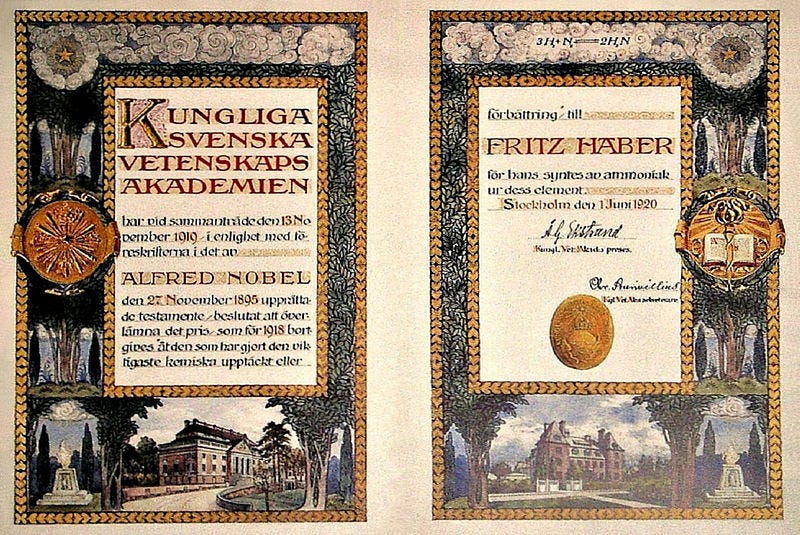
Fritz Haber received the Nobel Prize in 1918 for his miraculous discovery. But it didn’t take long for this ingenious method to be put to evil use.
The father of chemical warfare
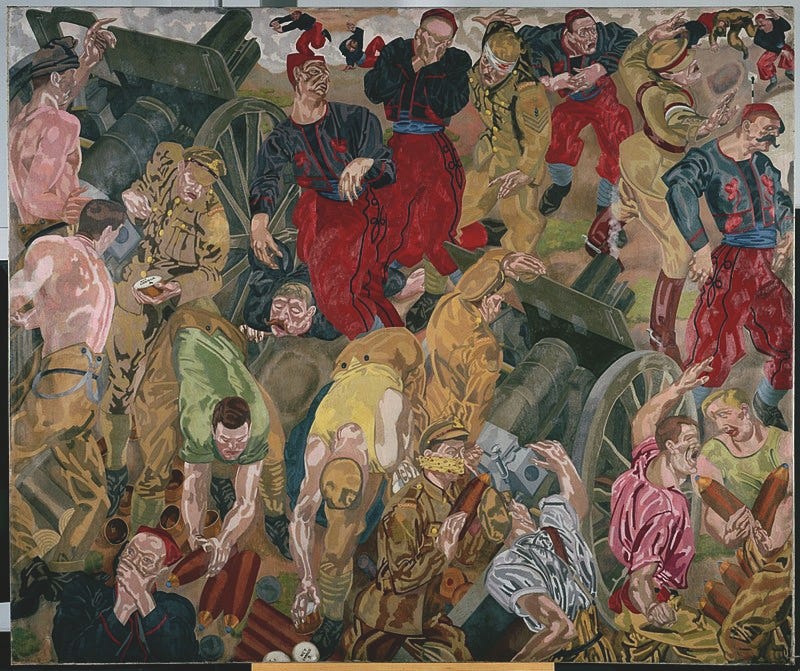
Three years after the invention of the Bosch-Haber process, the First World War Broke out. Britain wasn’t interested in joining the war. But when Germany invaded Belgium, the British responded by blockading Germany. The goal was to choke the German war machine. The strategy worked.
Germany had only six months of ammunition and explosives left. Nitrogen-based chemicals are used to make explosives. Since ships with nitrates couldn’t get into Germany, the German military industry was about to fall apart.
Haber, in contrast to his pacifist friend Einstein, was a fervent nationalist. He volunteered to help the German war effort and joined the army. Like many Jews who grew up in Germany after its unification, Haber was eager to prove he was a true patriotic German. He modified the Haber process to produce the nitrogen-based compounds required for explosives. Germany was back in business. The ammunition crisis was over.
But Haber was not satisfied. He wanted to help Germany win the war quickly. He argued to the German high command that weaponized chemicals would break the stalemate of trench warfare. Keep in mind that Haber was not alone; British and French scientists were also working on chemical weapons.
But the German scientist beat everyone to it.
On April 22, 1915, at the Battle of Ypres, Lieutenant Fritz Haber arrived to lead an unconventional attack. Around 5 p.m., a gentle wind started blowing toward the Allied positions. The wind wasn’t any ordinary wind. It was a green fog that kept getting thicker as it drifted into the trenches of the French soldiers. Birds fell from the sky and the leaves of trees withered. The wind carried death.
Soldiers who breathed the toxic air suffered a terrible end. The wind was chlorine gas. Chlorine is 2.5 times heavier than air, hence easily penetrated deep into the trenches.
When chlorine gas comes in contact with our respiratory system, it causes a violent inflammation. Our immune system goes into overdrive, flooding our lungs with mucus. The airways get congested. We are left gasping for breath. The result is a horrific death. It feels like you’re drowning in a dry land.
The German army released 150 tons of chlorine gas on the Allies on that fateful day. Haber supervised the operation. He had no qualms about unleashing a lethal weapon of mass destruction.
In Haber’s own words, “a death is a death, no matter how it is inflicted.” He even said that what he was doing would end the war faster and save millions of lives.
But not everyone agreed. It disturbed one person, in particular: his wife Clara.
A troubled soul
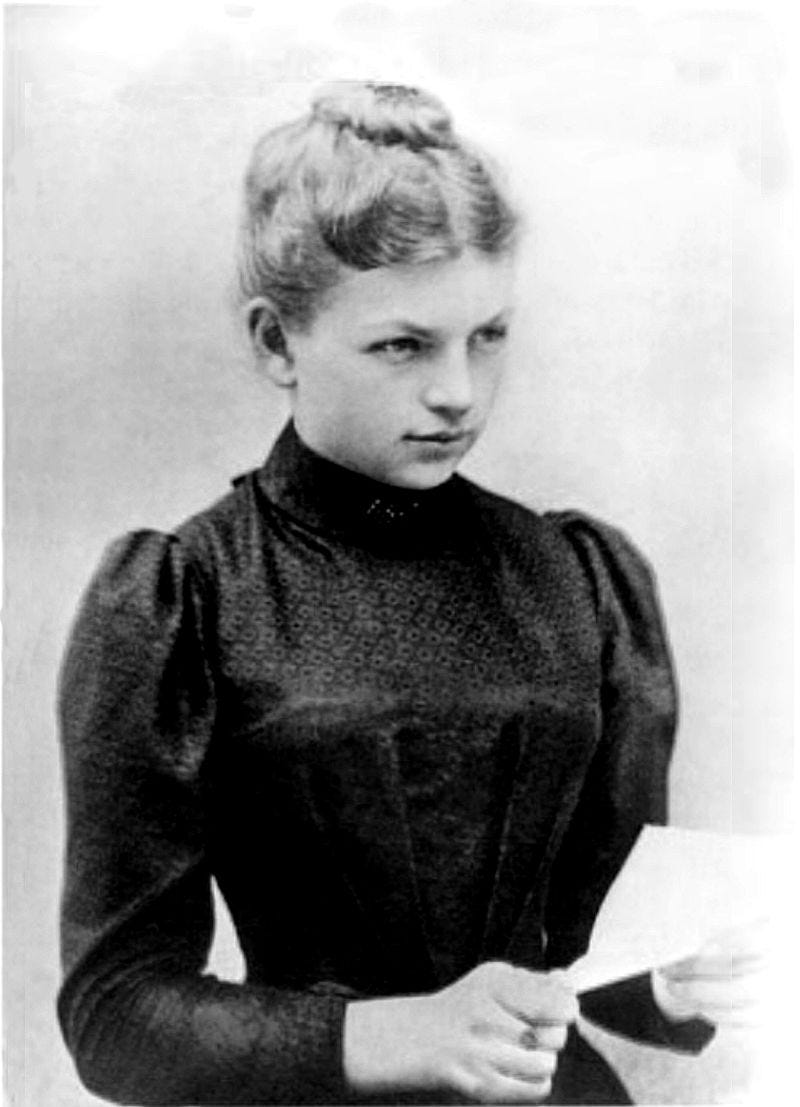
Clara Immerwher and Fritz Haber hosted a party on May 2, 1915. Haber was a national hero after returning from the Western Front. The German high command held Haber in the highest regard and promoted him to captain. But they assigned him a new mission. The next day, Haber was supposed to go to the Eastern Front and unleash the deadly chlorine gas on the Russians.
After the guests left the party, Haber went to bed. Clara took his service sidearm, a Luger 9mm, and went to the garden. A single shot was heard. Haber and his son, Hermann, rushed to find Clara dying.
She had shot herself in the chest. The woman died in her crying son’s arms.
Clara and Fritz enjoyed a pleasant marriage at first. But as Fritz’s career progressed, Clara’s suffered. She had beaten the odds and earned a doctorate in chemistry. She had even put off their wedding until she was financially secure. Regrettably, Clara was demoted to the role of English translator for Fritz’s publications. She contributed to his research with no acknowledgment.
Clara opposed the war. She was a staunch pacifist. After knowing about her husband’s role in mercilessly choking men to death at Ypres, she was shocked. An unfulfilled career, deteriorating marriage, the horrors of war, and a family history of depression drove her to suicide.
This is where things got worse.
Fritz Haber traveled to the Eastern front the day after his wife committed suicide, leaving behind his bereaved 13-year-old son. Haber later married Charlotte Nathan, and they had two daughters, Eva and Lutz.
Hermann couldn’t accept his father’s decision to remarry. They had a troubled relationship, similar to Fritz’s with his father, Sigfried. Later, Hermann moved to the US. In 1946, after his wife Margarethe died, Hermann committed suicide. He had a daughter, Claire, who was working for the US government to discover an antidote to the lethal effects of chlorine gas. The authorities shut down the research in favor of the Manhattan Project. In 1949, Claire took her own life.
Three generations of tragic deaths plagued the Haber family.
Was it a sense of misplaced duty towards the Fatherland that made Fritz Haber ignore his family duties? We’ll never find out. But we know how Germany rewarded Haber for his patriotism.
The end of a Greek Tragedy
Dark clouds hovered over the German nation following the end of the Great War. A sense of frustration at being “betrayed from within” crept in. Economic recession, hyperinflation, and political turmoil resulted in the rise of the Nazi Party and Adolf Hitler.
Jewish scientists at the Kaiser Wilhelm Institute, where Haber was the President of Physics and Electrochemistry, became targets for the Nazi regime. In 1933, Nazis passed a racist law requiring all Jews to be removed from the civil service. Haber had served during World War I and converted to Lutheranism. His position was not in danger.
Haber soon learned that the government fired all his Jewish colleagues at the institute. He delayed the removal of his fellow scientists until he could find them gainful employment. As a protest against this discriminatory law, Haber submitted his resignation and left Germany in August 1933.
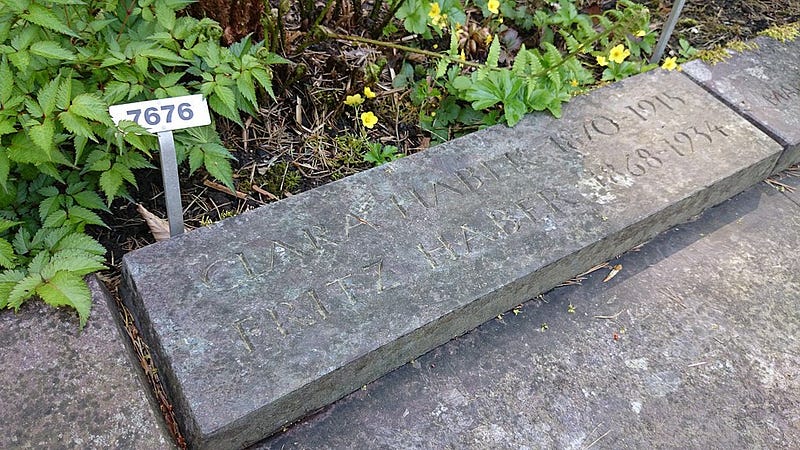
Haber’s colleagues in England were more than happy to welcome him. He lived in Cambridge for a few months. He received a job offer as the director of Sieff Research Institute, in British Palestine, which he accepted. Unfortunately, on the way to joining his new role, he suffered a heart attack and passed away on 29 January 1934, in a hotel in Basel, Switzerland. Haber was 65 at the time of his death.
Haber’s inventions continue to benefit us. However, one of his creations proved deadly. After World War 1, in 1919, Haber started a chemical manufacturing company, the Degesch. The organization made fertilizers and pesticides.
Haber and his team developed a pesticide using hydrogen cyanide. The insecticide was a delousing agent to be used in farms. The company added warning ingredients to the chemical. The gas had a foul odor and irritated the eyes to alert humans of the dangers of direct contact.
Zyklon B was the pesticide.
In 1941, SS member Karl Fritzsch used Zyklon B on Russian prisoners of war. This sinister act caught the attention of his boss, Rudolf Hoss, who ordered scientists to remove the eye irritants and foul-smelling odor from the gas.
Hoss used Zyklon B on an industrial scale to exterminate Jews, Slavs, prisoners of war, and other elements of the society Nazis considered “Untermensch”, or lesser men. Millions of people walked into unsuspecting traps in extermination camps and died a horrific death.
The world witnessed a mass-scale industrial slaughter of humans unheard of in history. Concentration camps such as Auschwitz, Dachau, and Majdanek ordered several cylinders of Zyklon B to kill millions. Haber’s own relatives died in the Holocaust.
It is easy to term Haber a hero or a villain. His legacy is complex and cannot be viewed in binary terms. Haber saved our species but supervised the death of many. It is ironic that the discovery by a Jewish man caused the death of millions of Jews, including his own relatives. Haber’s intention was to improve agriculture. But little did he know someone would figure out a sinister use of his invention.
Haber was a flawed genius who couldn’t fulfill his family duties. He loved his nation over everyone else, but the country didn’t love him back. His story is truly a Greek tragedy.
Did you like learning about Fritz Haber? You might enjoy knowing about one of his contemporaries, Dietrich Eckhardt, who mentored Hitler only to regret it later.
Enjoy this? Subscribe to my posts and never miss a story. Not a Medium member? Unlock complete access to thousands of stories by joining Medium today using this referral link!
Sources
- Charles, Daniel (2005): Master mind: The Rise and Fall of Fritz Haber, the Nobel Laureate Who Launched the Age of Chemical Warfare.
- Stoltzenberg, Dietrich (2005): Fritz Haber: Chemist, Nobel Laureate, German, Jew: A Biography, Chemical Heritage Foundation.
- Hager, Thomas (2008): The Alchemy of Air: A Jewish Genius, a Doomed Tycoon, and the Scientific Discovery That Fed the World but Fueled the Rise of Hitler
- Fritz Haber: The Giver and the Taker Away by Simon Whistler.


