
He Said I Had a Great Personality
How was that not a good thing?
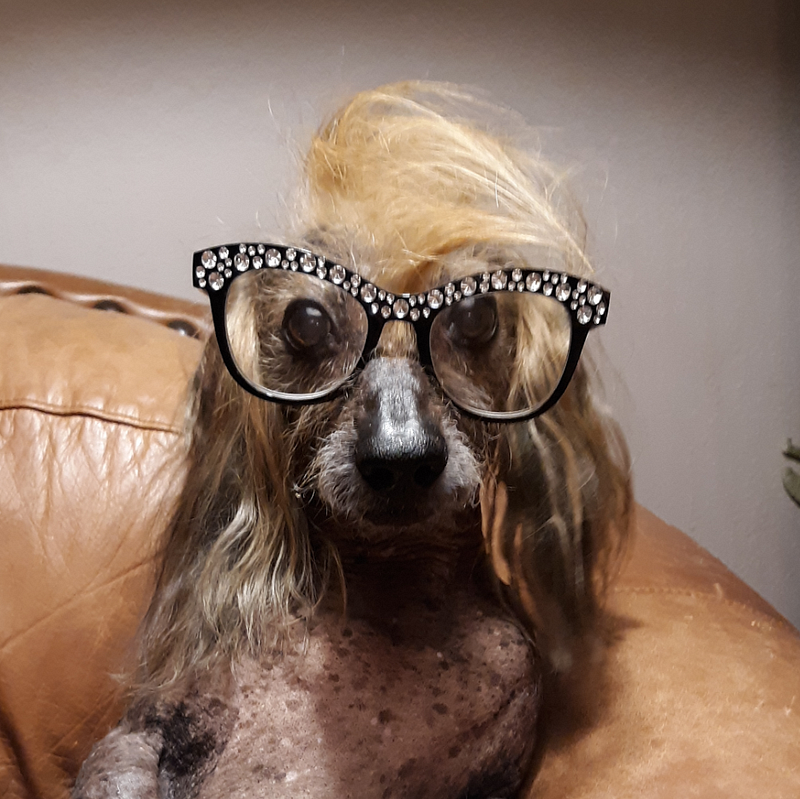
I was thrilled. After spending most of — ok, part of — a giddy afternoon with “Jim” at Chippewa Lake, our decidedly downmarket version of an amusement park, a mutual friend told me that he’d later reported that I “had a great personality”.
Keep in mind that I was born a cranky old lady with anxiety issues. I grew up certain that I was too ugly for anyone to ever love me, never realizing that nearly everyone around me was living their own version of that tormented lie. So when Jim asked if I’d like to hang out at Chip one long-ago Saturday, I was over the moon. It was one racy afternoon, let me tell you. He held my hand. On one of the rides, he casually draped his arm across my shoulder. He bought me cotton candy!
Then that bit about my “great personality” and I was walking on air.
Our mutual friend looked at me a little funny but said nothing. Later, back at school when I walked towards Jim in the hallway between classes, he was surrounded by his buddies. When they saw me, they burst into laughter and began shoving Jim around. I kept moving, wishing I could evaporate into thin air.
I don’t think Jim ever spoke to me again. I certainly never attempted to approach him having finally understood what that crack about my “great personality” really meant. It meant that I was as ugly as I thought.
Another strike against me
Parents loved me. The parents of friends and later the parents of boyfriends. I thought this was a good thing (yes, I was that clueless). I’d sit around kitchen tables, chatting away and happy to look through family photo albums, thinking this was sure to win his undying affection.
My sisters and I grew up being told repeatedly what rotten kids we were so it came as a surprise when other adults found me polite and well-behaved.
Not big assets in the eyes of teen-aged boys. Who knew?
Generally, one meeting with the family was all it took for the phone to fall silent. I knew better than to even bother trying to talk to Andrew or Davy or Mark after one of those fateful visits. And with each dumping, I grew less and less certain about my worth in the world.
Turns out I DO have a great personality!
No one was telling us that “It Gets Better” back in those dark old days. But even if they had been, I wouldn’t have believed them. No one would. Sorry, Barack Obama, hearing you tell us in measured and engaging tones about your experiences being bullied as a teen and how you prevailed is not helping.
I don’t know what would have helped. A mentor, perhaps? But the woman who reached out to me, believed in me, helped get me a job right out of high school? Yeah, I got busted stealing on that job. Some gratitude, hm?
There simply isn’t some clear, beautiful glide path that gets us through the hell of being a teenager. Some kids definitely have it easier than others, but I wonder if that’s such a good thing? How horrifying for the people who realize at their twentieth high school reunion that those were the best days of their lives.
Here’s the perfect opening for a lame list of cliches about oysters turning bits of irritating gravel into pearls. Time to haul out the Nietzsche, right?
I don’t know about all that.
I think I could have turned out to be the interesting, curious, creative woman I am without having people point at me and laugh in high school hallways. Maybe I could have shortcutted my way past a bunch of crappy relationships, but did I really need to have those (three) guys never call me again after we had sex? Were the years of misery, uncertainty, and anxiety really necessary?
Who knows?
After all these years and all my mistakes, at least I do now know I was never ugly and never undeserving of love, attention, and care. I still can’t decide if it’s a good thing or a bad thing that we can’t simply clue the kids in to this basic truth. Maybe what we learn from getting kicked around by others gives us compassion and empathy we wouldn’t otherwise come to possess. I don’t know, seems like a design flaw to me, but I wasn’t consulted.
Here I am, many decades later still shaking my head at the poor, hungry kid who mistook a dismissive insult as validation.
Still, the kid turned out ok. Mostly.
© Remington Write 2020. All Rights Reserved


