
He Makes More than $1 Million a Year with a One-Person Design Agency
Should you do it too?
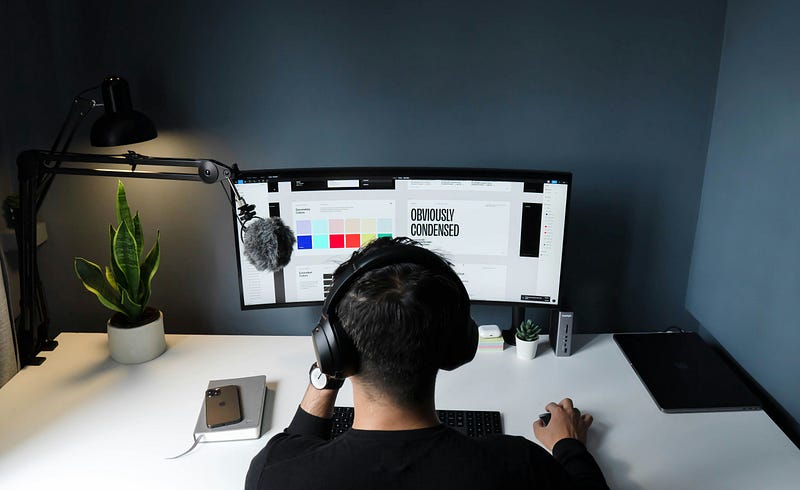
What would it be like to have a million-dollar services business on your own?
This goes against the conventional wisdom.
Most people say that consulting and services are a good starting point, but you’ll need to break out into more scalable ways of business.
Brett from Designjoy seems to have cracked the code
It’s paid off:
He created his own one-man design agency.
He still gets to do work on his own that he enjoys while making profits most agencies would take.
It’s a story that you may be able to do, too.
How the DesignJoy model works
At the heart of DesignJoy is a one-person, subscription-based design service.
Companies sign up for a subscription at the Designjoy website, and then the designer — Brett — works on designs for them, one or two requests at a time.
Brett has a Trello board with form requests and he does the work.
The limitation is that clients only get a few requests at a time.
If you’re not satisfied or don’t have much work, you can pause the subscription.
The key to his success is the monthly subscription.
This ensures that Brett gets a regular income flow.
And much like with any SaaS business, some people use their subscription more than others.
Some companies are looking to squeeze the most juice out of Brett. Others are just happy to have a talented and professional designer on call.
This model combines the flexibility of freelance work with the consistency of a regular income stream, a blend that appeals to many in the creative field.
Pros and Cons of a One-Person Productized Business
The bright side of running your business this way:
- Consistent Quality and Personalized Service: A one-person team ensures a uniform style and a personalized touch, translating into designs that resonate more closely with clients’ visions.
- Efficiency and Direct Communication: Streamlined processes and direct client interactions lead to faster turnaround times and fewer miscommunications.
- Automated Processes: More tools at our disposal today make it easier to pull this off, with payment integrations that integrate with your site.
The challenges:
- Capacity and Scalability Limitations: Solo people taking on this model face inherent limits in workload capacity and scalability. Some clients will get more attention than others. Some work may feel “rushed” or not what they were expecting. Clients feeling this may be more likely to churn.
- Risk of Burnout: Managing all aspects of a business alone can be taxing, posing a risk to both personal well-being and business sustainability.
- Templates: This is a pro and a con. You can re-use and tweak some of the same material and design, and then you become for a certain style. That means companies may come to Brett because of his style, and not just do anything that the client wants. That probably works best for both — because the designer gets to do what he wants and the client gets something with style. Obviously, that doesn’t work in every circumstance.
Who thrives in this model?
Ideal candidates for this:
- Versatile and Adaptable creators: Those who can wear multiple hats and quickly adapt to changing trends and client needs.
- Self-Motivated Individuals with Business Acumen: Success requires a mix of creative prowess and entrepreneurial spirit.
Who might struggle with it:
- Specialists and Team-Dependent Creatives: Those who specialize in a narrow field or thrive in collaborative environments might find this model challenging.
- People pleasers: You’re going to have more churn with a model like this than a typical solo freelancing agency. Be prepared for that, and think of it not only as a business, but as a product. People come, people go. You’ll have to be on top of your marketing game to keep pulling it off.
Key takeaways for anyone who wants to try this
Balancing Creativity and Business: Striking the right balance between your creative output and the business’s operational aspects is crucial.
The Importance of Personal Branding: In a solo venture, your personal brand is your business’s brand. Cultivating a strong personal brand is essential.
Embracing Flexibility and Continuous Learning: The ability to adapt and learn on the go is a superpower in the solo entrepreneurial journey.
The marketing advantage of Designjoy
Part of why Designjoyo has become successful is that Brett has built a nice Twitter following by sharing his learnings and how to set this up.
Businesses and entrepreneurs that are interested in his process then later come to him for their actual designs.
This tweet is a good example of Brett’s approach to marketing:
Criticism of his process
Online comments don’t quite grasp how he can service so many clients.
Here is a typical response:
What people are missing here is that at some point, Brett could:
- Add more designers, but this may break his marketing advantage
- Or he could just turn work away if he became too busy
And many clients treat Brett as a designer on retainer. He’s not doing the same volume of work for each and every client. He’s made the retainer sign-up flow more seamless than most.
Bottom line is that his growing online presence has given him a hook and entry point, and he can pivot from here if he wants to.
Where do one-person businesses go from here?
This feels like the surface. And only the beginning.
In some ways, this model isn’t new for writers, this is how many freelance contracts work. The Designjoy model has systemized it a bit more than the typical freelancer, giving that method an advantage.
I’ve thought about doing a similar model for SEO and content, that I may implement at some point. It opens up a lot of possibilities.
And guess what? There’s nothing that says you have to do this model exactly the same way, but it could be a great starting point.
Join hundreds of writers who get productivity tips from me in their inbox. Take a look.


