
He Killed a Family in Their Home, Ate Ice Cream, Then Took a Nap
The shocking unsolved case of the Setagaya Family Murders.
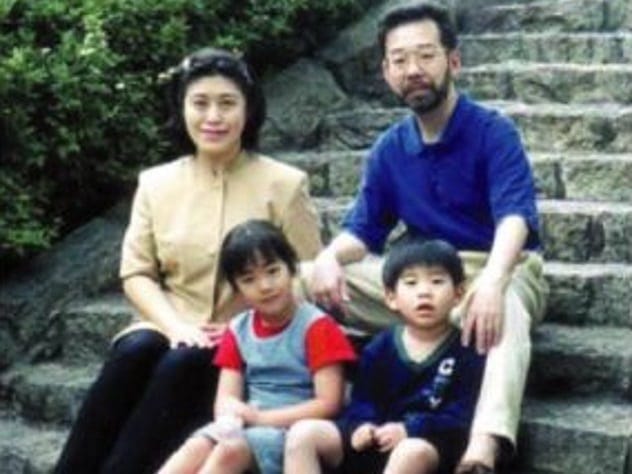
It’s scary enough to think that there are people out there who kill without a thought. Without motive or a grudge, they can easily take a life, no matter how innocent it is. Some killers stake out their targets while others kill when they see an opportunity. There are those who are meticulous in their planning and leave the crime scene spotless while others wreak havoc and leave a trail of blood and bodies. This killer is different.
The person responsible for killing a family of four in their house while they slept was neither indiscreet and spotless in his murders nor was he showy. There were no messages on the wall written with blood or dismembering of bodies. But instead, there were ample amounts of DNA, fingerprints, and even clothing left behind that belonged to the killer.
Not only did the killer enter the house and travel from room to room killing everyone in the house, but he also stopped to eat ice cream, surf the internet, take a nap on the couch, and left many clothes behind. He even left a bowel movement without flushing.
Why was the killer so relaxed and nonchalant about murdering an entire family? Was this his first crime or was he so comfortable with killing that he hung out at the house for hours while bodies around him slowly bled out and went through rigor mortis?
This is the case of the Setagaya House Family Murders that took place in Tokyo in 2000. The killer was able to escape detection, has not been identified and the case still baffles Tokyo police to this day. Find out the details of the crime and if the police are any closer to finding the culprit and solving the case.
The Crime
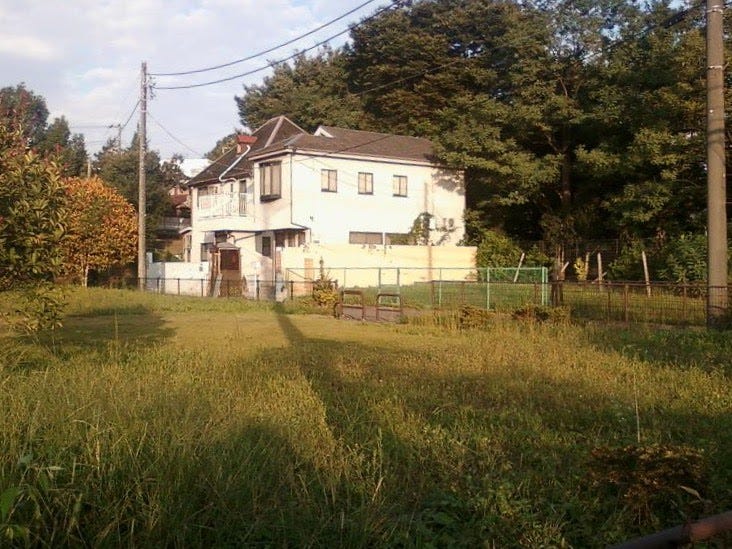
In Tokyo, Japan, in the Setagaya area stood a group of houses near the Soshigaya Park. This public park was expanding and the houses were being bought out and demolished to make room for the park expansion. One of these houses that were still remaining was the house of the Miyazawa family. Living in the house was Mikio, his wife Yasuko, and their children, daughter 8-year-old Nina and son 6-year-old Rei.
The house sat alone mostly but had a children’s park behind it where young kids would play, teenagers would skateboard and people would sit while their kids enjoyed the outdoors. On December 30, 2000, someone decided to enter this house and kill all its inhabitants.
The family had spent the day shopping, enjoying dinner, and watching tv before heading to bed. Sometime later in the night or early hours of the morning, the killer decided to enter the Miyazawa home.
It is still not confirmed but police believe that the killer came from the park, climbed up a tree, removed the window screen, and entered the window of the second-floor bathroom. Once in the house, he saw 6-year-old Rei asleep in his bed. He strangled Rei in his sleep before moving further into the house.
According to reports, Rei’s father, Mikio heard noises and came to check on Rei only to come face to face with the killer. Despite fighting back, the killer was able to use a long, thin knife used to slice sashimi and stabbed Mikio several times, including in the head. The stabbing was so severe that the knife broke off in Mikio’s head. Mikio was found at the bottom of the staircase near the front door and had been stabbed multiple times.
Further up the stairs on the mezzanine landing, the bodies of Yasuko and daughter Nina were also discovered stabbed multiple times. The killer had continued to use the broken sashimi knife to continuously and savagely stab and kill both females. Yasuko’s mother, who found the family the next day expressed her horror,
“In this small house, you are not left with much space to flee to if you encounter the perpetrator. They must have been extremely terrified.”
Police investigators also expressed their shock at the stabbing deaths saying,
“He slashed them from above the chest to the face as if he tormented them. It was extremely brutal. And the way he finished them off in the very end … [it was so horrific] we couldn’t show those scars to the devastated victims’ families. There are no other cases in which the victims have been cut up like this.”
The family was discovered in the morning around 10:00 am by Yasuko’s mother who lived next door and couldn’t reach them by phone. The killer had apparently unplugged the phone line. Finding it odd that no one was answering, Yasuko’s mother came over and rang the doorbell. When there was no answer, she used the spare key she had and entered to find Mikio dead by the front door.
After police were called, they found ample amounts of evidence the killer had left behind and begun their investigation. Here are some of the most shocking things they discovered about the killer and the crime.
- The killer used Mikio’s computer to log onto the internet at 1:18 am after murdering the family
- The killer used first aid to mend the wounds he had gotten from the struggle while killing the family.
- The killer ate 4 ice creams bars and drank tea
- The killer took a nap on the 2nd-floor couch
- The killer left the murder weapon, a sashimi knife
- The killer left fingerprints and other DNA on the weapon and parts of the home
- The killer left his hat, scarf, gloves, fanny pack, jacket, and shirt in the house
- The killer left his shoes and shoe prints at the house
- The killer left an unflushed bowel movement in the toilet which police examined and found contained string beans and sesame seeds which was most likely part of his previous meal
And one of the most frightening things, the killer used the internet again around 10 am. If this is accurate then it means that when Yasuko’s mother came looking for the family the killer might still have been in the house or they might have just missed each other by minutes. However, Yasuko’s mother might have touched the computer when she was moving around the house so the second internet access might have been accidental.
The police believe the killer left the house in the early morning of December 31st but don’t know the exact time or the path he took. Did he climb back out the window? Did he leave out the front door? Since he left all his belongings and possibly had a change of clothes, the police had no idea how to begin a search. But using what they had, police were able to get a better description of who they were looking for.
The Suspect
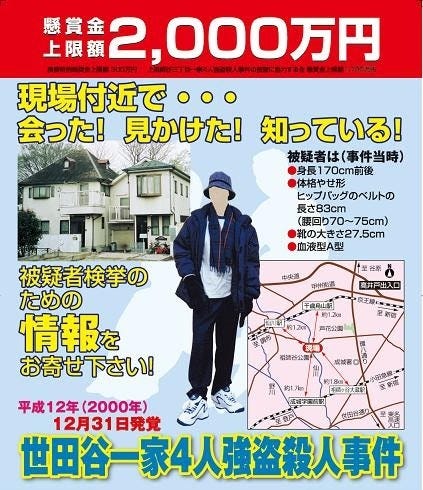
Despite all the fingerprints, DNA evidence, murder weapon, and many clues as to what the killer might look like, 21 years later there has been no arrest, no suspects, or positive identification of the killer. However, police were able to use what they found in the house to come closer to finding the identity of the killer.
Police believe he was slim because the fanny pack he left had a waist-length between 70 and 75 centimeters (27 to 29 inches). Based on his clothes, he was between the ages of 15 and 25 and was about 170 cm (about 5’6”). His shoes were a Korean shoe with a 280 size that is not sold in Japan.
Fingerprints showed that he didn’t have a criminal record. And DNA blood testing revealed that he was most likely a male, Type A blood, and not of Japanese descent. Police reports show,
“The killer was a male of Asian extraction. His DNA carried a marker from his father that occurs in one out of every 13 Japanese; one out of about 10 Chinese, and one in every 5 or so Koreans. Based on mitochondrial DNA, his mother had an ancestor originating from the southern Mediterranean area, probably around the Adriatic.”
The Korean brand sneakers and DNA showing that the killer might be of Korean descent sent police to search South Korea. But there was no fingerprint match in Korea either.
Other evidence such as soil particles found on shoes and clothing also were traced to South Korea’s Gyeonggi Province making it more possible that there was a Korean connection to the killer.
In fact, a famous Japanese investigative writer named Fumiya Ichihashi released a book about the family murders that claims he made contact with a former member of the South Korean military whose fingerprints match those collected by police at the house. However, police investigators claim the writer fabricated the story and repudiate the claims in the book.
The knife and some of the clothes found at the scene were bought from Kanagawa Prefecture and police investigations also found that only 130 of the kind of sweaters the killer was wearing exist. They were able to track down only 12 of the sweaters though.
Takeshi Tsuchida, who was the lead investigator when the murder occurred continues to work on the case unofficially even though he is retired. In an interview in 2019, he said, “It’s been 19 years and despite so many clues left behind, the fingerprints and the DNA of the criminal, why can’t we find him?” He also feels regret about the investigation when the murders first happened.
“When the incident happened, the special investigators at the Tokyo Metropolitan Police were all working on different cases and it had no choice but to send their reserve team. Also as it was New Year’s Eve, many detectives were at home and it took time to send the investigators. We can’t deny the possibility that this led to an unresolved case.”
After Tsuchida retired, his replacement Manabu Ide continues to keep the case alive.
“I don’t think there is any detective who is not confident,” he said. “It’s our mission to arrest the criminal who murdered four innocent people, including two young children, and make him atone for his crime.”
The Victims
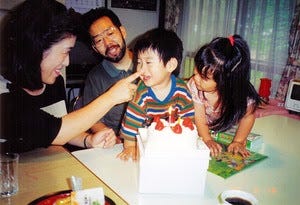
The four residents of the Setagaya house that were killed that night were a normal, loving, happy family. Mikio worked for a foreign-affiliated marketing company and was a fan of anime and theater. His wife Yasuko worked from home as a cram school teacher. Nina was a smart and active girl who loved ballet and piano lessons. Rei was in kindergarten and had a mental disability requiring special needs. He was obsessed with dinosaurs.
The kid’s grandmother, Mikio’s mother, shared her memories of her grandchildren.
“Nina loved to show me her moves. She was just a bright and adorable child. I always wonder how they would have grown up. My biggest regret is that I never got to see them grow up,”
Their grandmother was so traumatized by the ordeal that she can’t recall the family’s funeral and could not walk so had to be carried to the ceremony. She still wonders why the killer committed such a brutal act.
“Why would they kill the children as well? If someone held grudges, they could just kill the adults. I just don’t understand why I really don’t.”
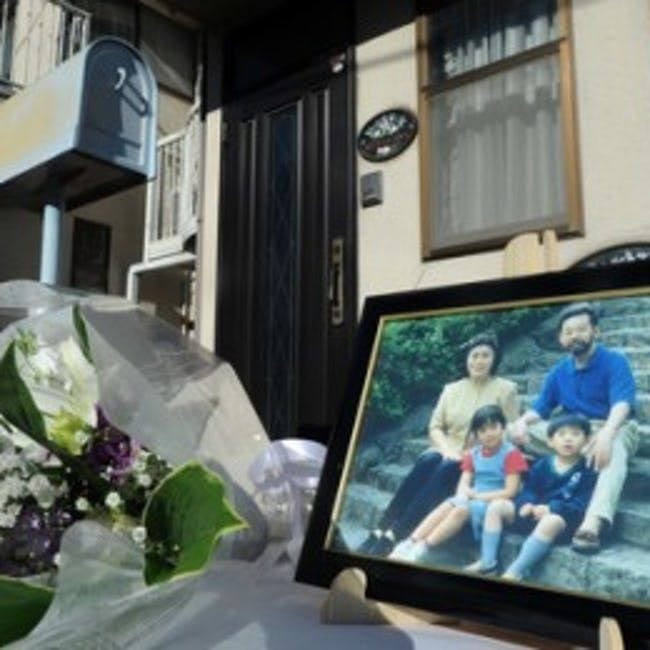
It has been over 20 years since the family was murdered and despite the thousands of tips, calls, and over 280,000 police working on the case over the years, the killer still remains at large. The house still stands by the park, a constant reminder of the awful crime that took the lives of an innocent family.
Though police have acquired all the evidence they need for their case, the house has not been torn down because relatives of the family want to keep the memory of the family alive until the killer is caught and the family can finally be at peace.
The police have offered to pay 200 million yen (167,200 U.S. dollars) as a reward to anyone who provides key information leading to the murderer's arrest.
Anyone with any information is urged to call 03–3482–0110.
If you enjoyed this article, here are some more stories of true crime in Japan:


