TELEVISION
Hazbin Hotel: A Beautifully Flawed Cartoon
How a series can squander its premise but still be great
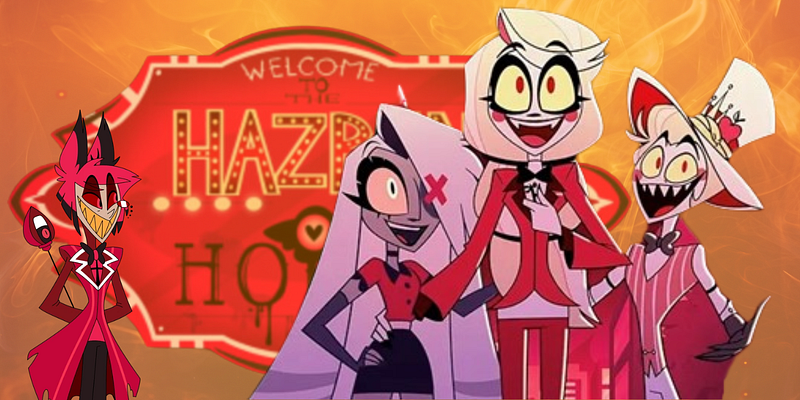

Hazbin Hotel is Amazon Prime’s trendy new cartoon. A true auteur vision by its creator Vivienne Medrano (VivziePop), Hazbin started as a pilot on YouTube before A24 put all its resources into making a more expensive, more polished series. It’s set in Hell, filled with profanities and violence, and every second feels like it was plucked directly from VivziePop’s evil-theater-kid brain.
It’s a great show, one that I happily binged last night, and yet… there’s something missing. Hazbin is chock-full of incredible moments, but it fails to string those moments together. Let me explain…
(Spoilers ahead.)

The Premise
The Hazbin pilot came out five years ago. Different voice cast, more indie animation, but still canonical. The newer pilot, the first of eight episodes produced for Amazon Prime, does a good job of restating its theme for a newer (presumably bigger) audience without contradicting anything in that original short.
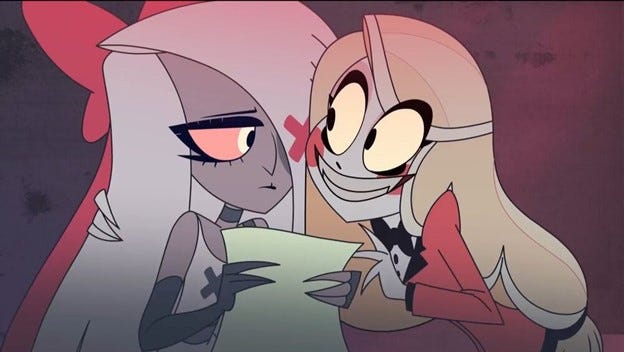
Charlie is the daughter of Lucifer, heir to Hell’s throne. She’s the most pure-hearted person in Hell, and all she cares about is taking care of her people. She’s horrified by the yearly massacre of angels exterminating demons, so she creates a hotel to rehabilitate her sinful people. She wants to help out, one demon at a time, while proving to Heaven that her people are worthy of redemption.
Charlie’s televised, toe-tapping musical number “Inside of Every Demon Is a Rainbow” spells everything out perfectly. She explains her plan to the masses, but her musical theater enthusiasm falls on deaf ears. Demons don’t want to be redeemed; they don’t even think it’s possible.
That’s the core of the story: Charlie wants to help people who don’t want to be helped, and Hazbin Hotel will presumably focus on that struggle. Her first client is a porn star named Angel, who goes along with her plan without really believing in it.
Compared to other shows, this reminds me of Lesley Knope in Parks and Rec, tackling issues every episode that seem futile until her positivity starts to chip away at each seemingly impassable barrier. Or the main guy in My Name Is Earl (remember that show?) trying to help a new person from his past every episode. Or the disparate cast of Community slowly figuring out how to coexist and learn from each other. Or the struggling bar patrons of Cheers, or the similarly dysfunction Hell-dwellers of The Good Place.
The titular hotel is a common area where the worst of the worst will grow into better people. And on the surface, that’s exactly what happens. Porn star Angel overcomes his hangups and realizes he wants to change. D-list supervillain Sir Pentious breaks through his violent exterior to admit that all he wants is for people to like him, culminating in a heroic suicide mission to save his friends. Even Lucifer himself goes from vain and uncaring to a well-meaning dad who just wants the best for his daughter.
All the character arcs are there, and yet they fall flat because the gradual changes, the reason they go from Point A to Point Z, are missing.

The Missing Connective Tissue
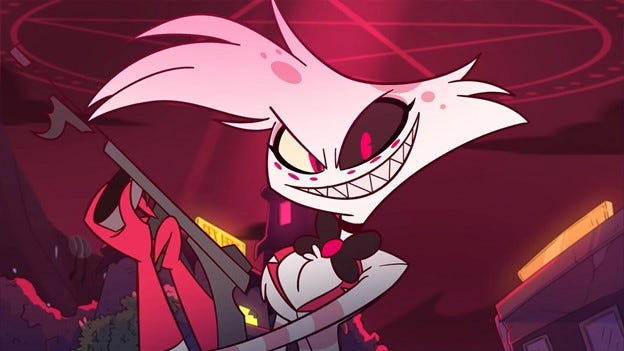
Let’s take Angel as an example. His character is gleefully amoral in the pilot. He doesn’t care about changing. Within the eight episodes, he has one spotlight episode that establishes his abusive, manipulative relationship with his boss/pimp. He has a notable duet that cheers him up (“Loser, Baby,” a real earworm). And after that, he’s a different person. He cares about Charlie and her goals.
But we never see him put any real work into his changes. The few times Charlie works with him at the hotel, leading awkward team-building exercises, are always played for laughs. Angel doesn’t even try to humor her. In the finale, he stands by her side to help protect the hotel from attacking angels, but we never see what led him to this change.
The same thing applies to Sir Pentious, who is always shown as a needy, bumbling idiot. I was waiting for the moments when something at the hotel helped him self-reflect, but despite his one spotlight episode, those moments never really came.
Lucifer only got a single episode to morph from vain to caring, and while his big father/daughter duet is poignant, it doesn’t feel earned. He spent the entire episode texting on his phone and openly ignoring his daughter, so when he finally admits that she’s the only person he really cares about, it’s a bit jarring.
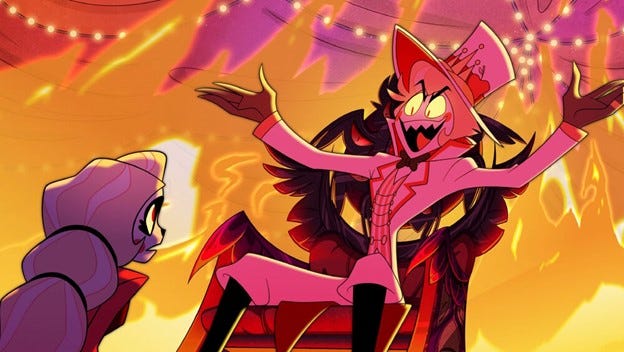

The rest of the characters are even less established. Bartender Husk, an ex-gambler, gets very little screentime. Same with stab-happy Niffty, who serves more as comic relief than an actual character. And Alastor, fan-favorite radio demon, has so much mystery surrounding his motivations that the show doesn’t want to reveal too much about what makes him tick.
For a show built on helping characters change, Hazbin shows almost no interest in watching those changes happen.
So What Does It Do Instead?
Well, Hazbin Hotel is extremely plot-heavy. It’s focused on building out its world, which is one of the main reasons for its fervent fan base. In the redux pilot, we learn about palace intrigue in Heaven. The show drops hints each episode about how unfair the afterlife is, establishing the angels as antagonistic figures who protect themselves through genocide and who don’t even know the rules of how souls can go up to Heaven.
That, along with all the detours through Hell (like visiting Cannibal Town or exploring the porn industry), forces the show to cover a lot of sulfurous ground in eight episodes. And while it establishes its rules and hums along at a breakneck pace, it doesn’t have the time it needs to spotlight the characters as they dash from situation to situation.
Also, Hazbin is a musical, with two (usually amazing) songs per episode. These songs cover the “big moments” for most of our characters. There’s Lucifer’s song about how much he loves his daughter. There’s Angel’s song about how he’s struggling through the life that he’s been given. There’s Charlie’s song about trying to win over a townful of cannibals to her cause.
Looking back over the series, I can see how each song either advances the story or shows the characters changing/learning. That’s what good musicals do. But with eight short episodes, they don’t spend enough time leading up to those moments. I wouldn’t cut a single song from the first season, but I wish that all of them had a little more lead-up.
The Big Picture
Hazbin Hotel is a show filled with ambition. It establishes its own complex world, it introduces a gallery of flawed characters, and it’s punctuated by great animation and catchy songs. All the parts work, but the show fails at bringing everything together.
If you disagree (nothing wrong with that), then I just have one question for you:
How does the Hazbin Hotel work to redeem sinners?
That’s my question. It’s the title of the show. It’s the main premise. A hotel that redeems sinners in Hell. But like, how does it work? What does Charlie do with her clients? Sure, they hang out together, and there are several moments of role-playing and team-building activities, but what else? Charlie has this big grand plan to help all of Hell, but I never learned the specifics of her plan.
If this were a 12-episode series, Hazbin could spend more time showing Charlie work with her clients at the hotel. It could show the demons learn lessons, try and fail, put in the effort. The creators wouldn’t have to lose all the cliffhangers and plot points, but they could strengthen their story by focusing more on the show’s core.
The second season shows a lot of promise. We’ll finally meet Lilith, Charlie’s (possibly evil) mom. We’ll get more info about Alastor’s true motives. And we’ll probably see the Heaven/Hell feud intensify now that more angels have been killed.
But my sincere hope is that along with all the new plot twists Hazbin will throw at us, we’ll also get a little more focus on the hotel and its mission. Songs and world-building are great, but they only work if they make us care about these fun, messed-up characters.
I’m making a movie! A horror movie! If you want, sign up for our new newsletter. We’re sending out weekly updates about the whole filmmaking process. It’s been a wild ride so far!