
HOW YOU CAN TELL STORIES: Studio Ghibli’s hidden world
Lessons from Studio Ghibli and the mind of Miyazaki
Hayao Miyazaki is a master artist, director, writer, filmmaker, animator, storyteller, and humanist. His films have spanned across the decades influencing a wide range of people in his ever growing audience. Many film critics have placed him to be one of the greatest filmmakers of all time, whether it’s because of the visual elements of his film, the wide range of characters that everyone can relate to, or the well constructed world that immerses the viewer well into the film.
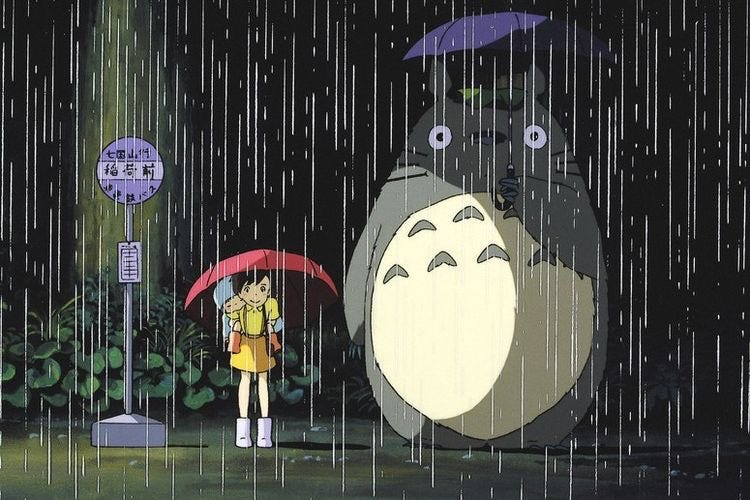
Miyazaki is definitely one of my favorite filmmakers of all time, but there is one thing that I want to analyze about Miyazaki’s work — The process.
Character portrayal- what it means to be human:
In every film, Miyazaki’s main objective is to portray the human experience. Even if many of Miyazaki’s works are filled with fantastical elements — demons, gods, spirits, etc. Miyazaki does well to balance the elements of fantasy and realism.
Using his observations of humans, Miyazaki is able to accurately portray what it is to be human. Representing these portrayals in films; subtle movements of characters are what build a realistic world. Whether it’s a small girl tapping her shoes on the floor to make sure they’re on, or the small stumble of a young witch running on the road, or perhaps a man who’s rushing to work slips on a pile of papers. Miyazaki creates a world filled with fantastical elements, but grounds them with a sense of familiarity.
He surrounds the ordinary with the extraordinary.
“Anime may depict fictional worlds, but I nonetheless believe that at its core it must have a certain realism. Even if the world depicted is a lie, the trick is to make it seem as real as possible. Stated another way, the animator must fabricate a lie that seems so real, the world depicted might possibly exist.”
— HAYAO MIYAZAKI
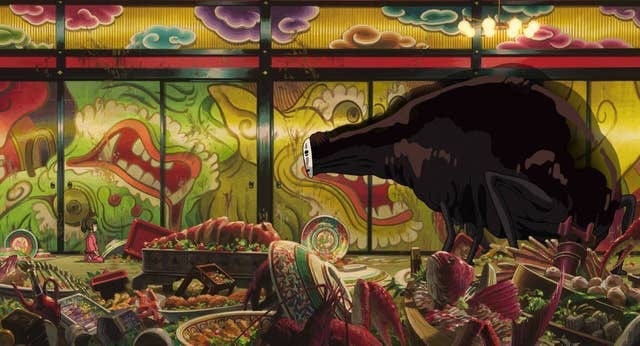
Even then, Miyazaki always had a knack for being able to illustrate scenes so beautifully that the film is able to show you what to feel, instead of telling you what to feel. And because of this, dialogue is barely used to create exposition, but is strictly used for character interaction or to express a moment of thought // wisdom.
Having the ability to take away dialogue and still have the visuals to tell the story, is what Miyazaki does best in his field.
But how does Miyazaki create his films?
The creative process
In the documentary “The Kingdom of Dreams and Madness,” Miyazaki is working on one of his last films, “The Wind Rises.” Explaining the general parts of his process, we find out that Miyazaki doesn’t follow a script. Most of his films started from a general idea or concept that he wanted to share. Instead, Miyazaki storyboards.
Storyboarding is under appreciated for what it does. Most people believe its only for artists, but even if you aren’t the best artist, storyboards give you a better vision on what you want to put on screen, and most importantly, they allow other people to understand your vision and what they can do to help. Instead of telling them what you see, showing them would be better.
World building — the immersive realism of Studio Ghibli
The immersive realism of Studio Ghibli is uncanny. When it comes to world building, animation is a daunting task. Everything is created from scratch. There is nothing there till it’s drawn. This is where Ghibli excels in.
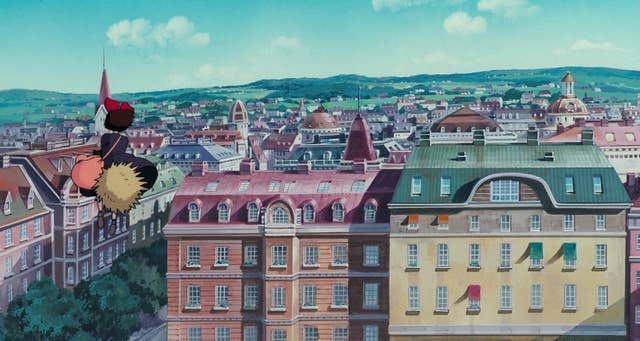
Everyone that works on these films, are masters in their own field. The animator that draws how the trees bends in the wind. Or the animator that focuses on how the ocean waves hit the rocks every time they move. Each of these animators have a mastery of technique and a strict attention to detail when it comes to every single frame.
This allows for the storyteller’s world, to exist beyond their mind.
Let’s pause for a second
With every film that Studio Ghibli creates, each one has a scene of tranquility and serenity. As meaningless as these scenes may be; a woman sitting on the chair facing a lake, a young girl sitting on the train with no destination in mind, a young witch lying on the grass — these scenes don’t drive the story further. Instead they pause the story.
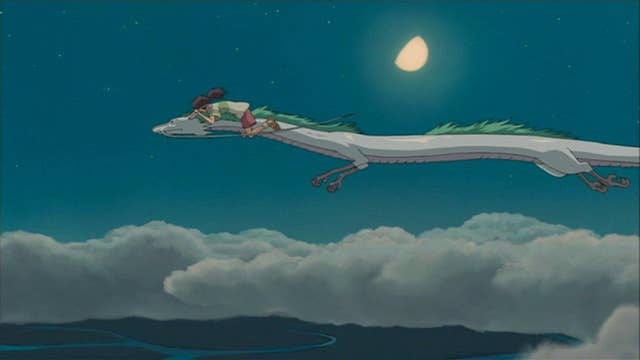
These scenes aren’t meant to deliver information. In fact these scenes don’t have any other intention other than allowing the viewer to contemplate and appreciate the beauty of Ghibli’s world. They want you to take in the huge moving castle that looks like a chicken. They want you take notice of the bustling towns folks each doing their jobs. They want you to take in the beauty of a lost city in the sky.
Many films in western media barely have moments like these. Most films are fast paced, action packed with barely any room for the viewer to process what they’ve just seen, and only allowing for those moments to exist when something emotional is about to happen.
Western media vs Eastern media
Western storytelling primarily focuses on good vs evil. Take notice of animation classics — “Snow White.” ( 1937 ) “Sleeping Beauty.” ( 1959 ) “The Little Mermaid.” ( 1989 ) Each of these films present the forces of good and evil. Snow White vs. the Evil Queen. Sleeping Beauty vs. Maleficent. Ariel vs. Ursula.
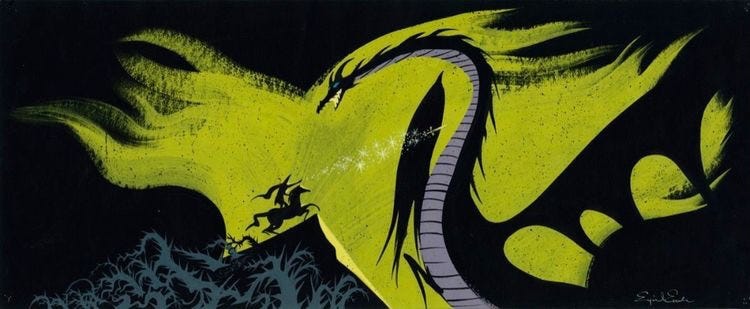
Compared to eastern storytelling, Studio Ghibli blurs the lines of good and evil. They instead focus on the human experience. Humans aren’t perfect in Miyazaki films. They experience jealousy, hatred, laziness, gluttony, etc. These characters are just so human and I think that’s what makes them so relatable. There isn’t a one sided view in these films. Instead, they present a wide perspective of the world, showing contradicting ideas and putting these films in a state of ambivalence.
Everything is not seen through one lens in Ghibli
Ghibli films also focus on human interactions with nature, and the one film that focuses on this interaction the best is “Princess Mononoke.” The whole movie is about a conflict of an industrial town and the natural world of gods. But the film never does show that one side is better than the other, the film is just for the viewer to watch the film and take in what they see.
One of the most ambiguous characters of the film is Lady Eboshi, leader of the big industrial corporation. As the viewer, we’ve been conditioned to see her as the villain or someone who’s evil. But there are many moments in the film that challenges this prospect.
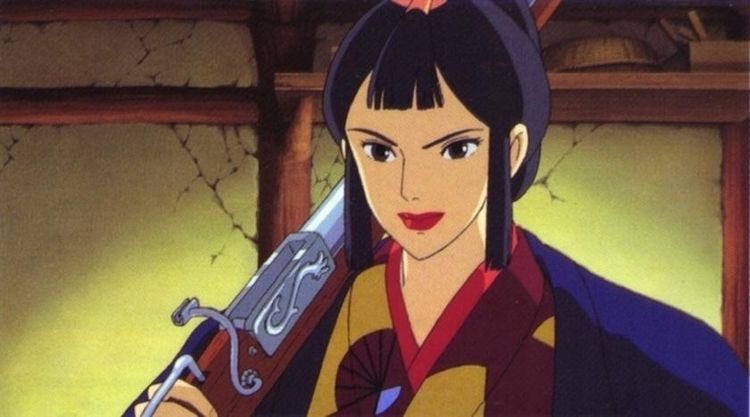
“You must not take your revenge on Lady Eboshi. She’s the only one who saw us as human beings. We are leper’s, the world hates and fears us. But she- she took us in and washed our rotting flesh and bandaged us.” — Princess Mononoke ( 1999 )
This scene forces the viewer to second guess their initial assumptions of Lady Eboshi. Do we view her as someone who’s evil and corrupt, or do we validate what she’s doing? We can’t. Ghibli presents these characters with depth and complexity that contradict each other, not because they want to confuse the viewer, but because that is what makes us humans.
Shintoism and it’s influence over Japanese storytelling
Japanese storytelling is influenced by many elements. But I think that the most distinct element, is the culture. Japan isn’t seen as a predominantly religious country. However, at least 80% of the Japanese population practices some sort of tradition of Shintoism.
Shintoism is a religion that acknowledges and respects the connections between divine beings in nature and the world. It believes in deities and spirits called kami. These elements and traditions can be seen in Miyazaki films quite frequently. When Mei and Satsuki pay respects to the forest god that they live in, ( My Neighbor Totoro, 1993 ) or when Sosuke vows that he would love all the Ponyo’s in the world — meaning he’ll love all the fishes in the ocean, ( Ponyo on the Cliff, 2008 ) respect towards nature is greatly emphasized in Ghibli films.
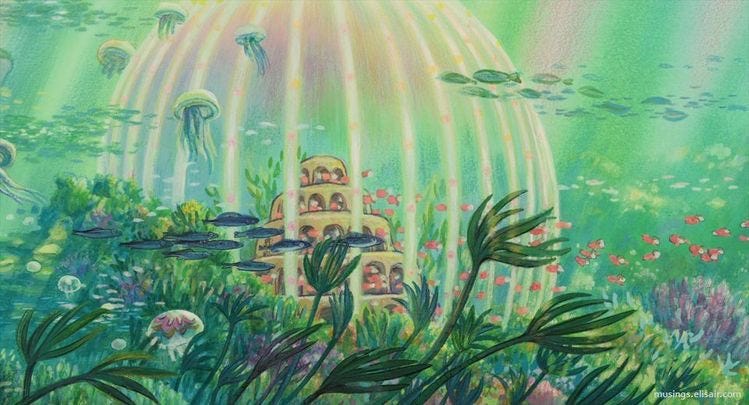
Hayao Miyazaki is a storyteller deep inside. His stories show great expertise in world building, character development, and visual elements. All of these elements are key to building not only a good story, but an impactful story.
Thank you for reading, — DEE


