
Having Privilege Does Not Make You Immune to Suffering
It just means you experience things a bit differently.
I write a lot about privilege in my articles. White privilege. Male privilege. Straight privilege. The privilege of being born into an upper-class family. Privilege is in the news a lot, whether it’s the left calling attention to it and pushing for equity or the hard-right griping about how it’s apparently going to be illegal to be a white guy soon.
But, and this is an important question, what does privilege even mean?
I have straight white male privilege, and with that comes a set of advantages in society that gives me a better shot at things. That is not to say I am guaranteed to succeed — I have put in a lot of hard work to get where I am. However I have also been very, very lucky to have opportunities that others may not have had, and my privilege has afforded me many of those opportunities.
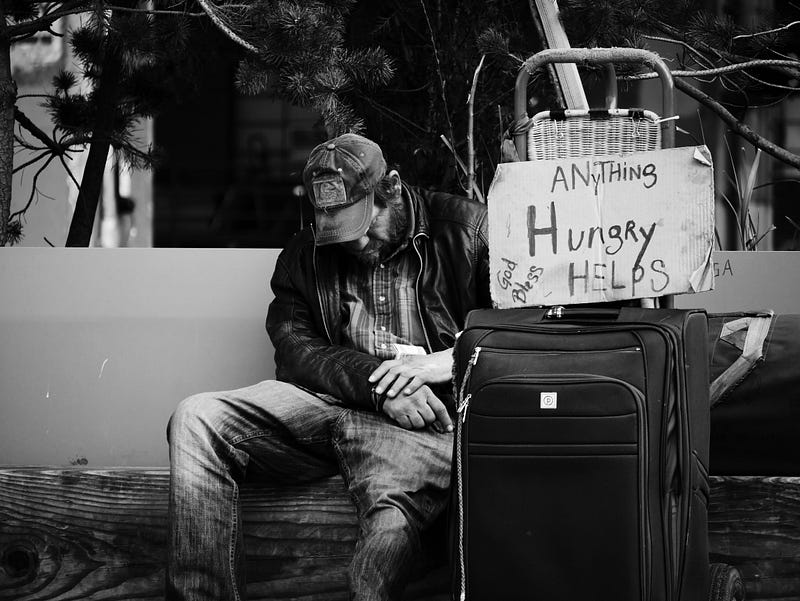
“But Matthew,” you might say, “what about John Smith, this random straight white guy who is incredibly poor and struggles to get by? Does he have this so-called privilege that you have?”
The answer is a clear-as-mud “kind of.”
We would have to know more about this hypothetical John Smith to get a better idea of what privilege he has or doesn’t have. Was he born into a poor ZIP code? Does he have a mental illness? A chronic illness or other disability? What are the factors in his life that have landed him where he is right now?
What we do know, though, is that he has straight white guy privilege. That is not a guarantee of his success in life — obviously, since this hypothetical guy is incredibly poor, after all. However, it means he does not and will not experience many of the things that someone who is not straight, white, or male might experience.
In America, being a straight white male is considered the “default,” even though they make up a minority of citizens. Being the default means society is built around what your needs are, and when that happens, you get to miss out on some of the challenges that others who are not straight, white, or male experience.
For example, you generally don’t get your body policed or get slut-shamed as women do, and you are held to different standards than women in many areas. You also don’t experience the systems of government and power like black and brown men and women do, since those systems of power are tailored to empower the default — that’s you.
Again, none of that guarantees that you will be successful or not experience hardship and prejudice — it just means that generally speaking, you get to skip a lot of the hurdles that non-white, non-straight, and non-male folx have to jump over to reach success. However, because you don’t get to experience those struggles, you cannot reasonably be expected to understand them.
You may still experience hardships, and that is something that we all experience, but you still hold a place of privilege. That privilege does not mean you are guaranteed success; it just means that you are not exposed to the problems that non-straight-white-male folx experience. That is not your fault, nor is it a moral judgment — as I have stated many times, being poor or disadvantaged in some way is not a moral failing. It is just a fact.
And, since you are not personally exposed to the problems that, say, a black woman might face in life and society, you are likely to underestimate the problems that she might face. Again, this is not your fault or a moral judgment — you literally cannot experience the world the same way she does, so your perception of her problems is naturally a bit skewed.
Having privilege does not exempt you from being poor or experiencing negative life experiences. It simply means that you do not experience the world in the same way that people without privilege do and are thus more likely to underestimate their problems.
This becomes apparent in a lot of worldviews held by less progressive people. “All they have to do is work hard and they’ll succeed!” The implication is that the subjects of the statement are lazy and just need work ethic; it ignores the hurdles they may face because of their race, gender identity, or any other apparent factor in their lives.
I have heard that particular statement applied to the black community, implying that they are lazy slackers. This ignores several hundred years of laws and bias that have pushed nonwhite people — particularly the black community — to the status of second-class citizens in many ways.
Experiencing discrimination in the job market creates more unemployment and poverty among black folks, and things like poverty and unemployment often lead to higher crime rates. This is then weaponized against them using privilege as an amplifier — someone with straight white male privilege might look at a black man and call him a lazy criminal despite having fewer hurdles and more opportunities than he does.
Privilege is often seen as a slur against white men, some sort of moral judgment or failing based on demographic factors, and the backlash is generally harsh. “You’re judging me based on my gender and skin color, so you’re just as bad as racists and bigots!” This rhetorical judo is often employed by right-wing commentators to stoke hatred against anyone who tries to push for social justice issues, painting them as no better than the people they’re fighting against.
The fact is that having privilege is not a moral failing, but a fact of life. It doesn’t mean that you are better or worse than anyone else and does not automatically make you a racist or bigot; it is just that your perspective is, by default, different from someone without privilege. You do not experience the problems that they are exposed to because of your privilege, and that disconnect causes you to underestimate their problems.
Not understanding someone else’s perspective does not make you a bad person — ignorance is a lack of knowledge and can be fixed. However, choosing to be ignorant of a problem — actively ignoring other perspectives or evidence contrary to your worldview — is selfish at best and destructive at worst.
That, I believe, is where many people take issue with having their privilege called out: they choose not to believe the existence of experiences different than their own. “That person had all the same opportunities that I did,” is a common deflection that minimizes the experiences of someone who is BIPOC or a member of the LGBTQIA+ community. They didn’t have all the same opportunities that you did because of something about them — their skin color or gender identity — and pretending that they did is willful ignorance.
Unfortunately, a lot of people who believe these things fall victim to the American Dream mentality: anyone in America can be successful if they just work hard. They often fail to see that the American Dream is on life support. Wages are suppressed and the tax code favors the rich, which continues to marginalize BIPOC and low-income folks; the middle class is shrinking and upward mobility is increasingly hard to achieve.
Pundits railing against the idea of privilege as a slur against white people — particularly poor white people — is a redirection of the problem. It is designed to absolve white people of their guilt while demonizing the “woke” leftists, BIPOC, and LGBTQIA+ communities as the real problem. This works to further entrench the privilege that they fear is being taken from them — the fear that more rights for minorities means fewer rights for white people drives a lot of the right-wing rhetoric.
I have news for you: rights aren’t pie: someone getting more rights and privilege doesn’t mean someone else gets less, and when more people have more rights, everyone wins and society improves.
Having privilege is not a moral failing or a negative thing; it is merely a fact of life for some of us. It can be tough, but we all need to recognize that it’s okay to be called out on your privilege; it’s not an insult but a chance to educate yourself. The negative stuff comes in when you use that privilege to deny rights for others and cement your own privilege.
Use your privilege as a chance to learn more about the issues that people who look differently from you face every day, then use your privilege to help level the playing field. When everyone is truly equal, we all win; until we are all free, none of us are free.
If you appreciate my work, why not join Medium as a paying member, which allows you access to unlimited stories (not just three free stories per month). Click this link or the image below. I will receive a little portion of your membership fee, but it won’t cost you any extra.
If you liked this, please subscribe to my publication, Thing a Day. I publish something every day on a variety of topics, so you never know what you’re going to see!
Here are some other things I’ve written:


