
Having a Penis Doesn't Necessarily Make You a Man
Intersex births are more common than you may think
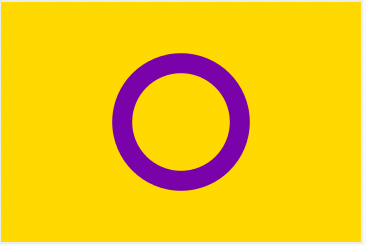
According to the Intersex Society of North America, the total number of people whose bodies differ from standard male or female is one in 100 births. About one in every 1500 babies requires a sex differentiation specialist to be brought in to make a determination, but subtler forms of sex anatomy variation that are hormonal or chromosomal may not become apparent until later in life. In other words, a person with a penis isn’t necessarily a man because they may also have ovaries, a vagina, or a scrotum that is empty and resembles labia. Someone born with a vagina may also have internal testes.
Deciding that a person’s genitals alone determine their sex is too simplistic to be accurate. It is a fairly rare condition (1 in 150,000 births) but someone with complete gonadal dysgenesis (Swyer syndrome) has female external and internal genitalia despite the 46,XY karyotype (one chromosome is male).
Sometimes, a baby can have genitalia with some male characteristics and some female characteristics. And even deeper than external appearance, some people are born with a mix of male and female biological features (such as a uterus and testicles) that can’t be seen on the outside.
It could be that a child’s status as intersex doesn’t become obvious until puberty, when their body produces more of a hormone that doesn’t match their assigned sex.
Or perhaps certain expected puberty milestones — like a deepening voice or growing breasts — don’t happen. Or maybe the ones that happen are characteristic of what you thought was the “opposite” sex.
In these cases, a person who had more biological male features as a child might look more feminine after puberty according to a society slow to reject the traditional binary system. Or a person who looked female as a child might start to look more stereotypically male as a teenager.
A culture that is deeply attached to gender as a binary — one that is always conflated with sex characteristics — may have a hard time coming to terms with this. It’s easier to understand things when they fit neatly into boxes with clear parameters. A boy is like this, a girl is like that. But those who do not fit neatly into those boxes often face discrimination and rejection, even within their own families.
Some intersex people have been surgically or hormonally altered without their consent to create more socially acceptable sex characteristics, although increasingly, these are considered human rights abuses. “In 2011, Christiane Völling became the first intersex person known to have successfully sued for damages in a case brought for non-consensual surgical intervention. In April 2015, Malta became the first country to outlaw non-consensual medical interventions to modify sex anatomy, including that of intersex people.”
The term “hermaphrodite” once commonly used is now considered misleading and scientifically inaccurate for humans, as well as inappropriate and stigmatizing. Intersex people or people with intersex conditions is the preferred terminology.
Many experts calculate the number of intersex births to be 1.7%, about the same number of people who are born with red hair. Being intersex is not a gender identity. In fact, intersex people may have a variety of gender identities, depending on their individual bodies and experiences. There are over 40 intersex variations known to science. Some people with intersex traits have a high rate of sex reassignment later in life if they were involuntarily forced to conform to a particular gender expression and subjected to surgical intervention as children.
Countries such as Australia, Germany, and Malta which allow for a third category (X) on birth certificates, may not necessarily solve all the problems of having a non-normative sexual identity however. Assumptions are often made that this third category is homogenous and it also does not necessarily deter strong culturally held inclinations to alter babies to become more gender binary. Sex and gender continue to be conflated in many cases and there is still a strong societal desire to do so.
“Failing to recognize the distinctiveness and heterogeneity of intersex populations and often medicalizing intersex bodies in the process (Colangelo 2017), such actions paradoxically reinforce ideas that gendered identities need to match sexed bodies in order to be valid.”
Without even delving into gender identity, it seems clear that we ought to be seeking ways to be more accepting and accomodating of those who do not fit into a sex characteristic binary. “An emerging human rights consensus demands an end to social prejudice, stigma, and forced medical interventions, focusing on the right to bodily integrity and principles of self-determination.”
© Copyright Elle Beau 2021