
Have You Ever Won a Contest?
The true price of…FREE!
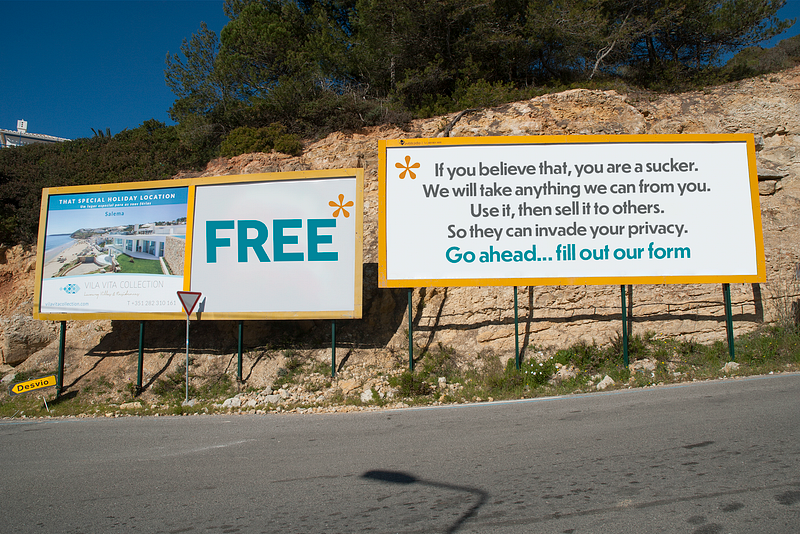
The email subject contained one word: contest. It had been sent by a friend. The body of the email contained a link to a Canadian Railway website and a quick message “Hey u never know.” It all looked legitimate but I did not click on the link.
I do not recall the last time I entered a contest, but it has been many, many years. The email inspired me to think about my relationship with contests and how my attitude towards giveaways has changed over time.
Label me…disappointed
My first contest required that I collect 10 labels from cans of Milo — a chocolate and malt powder similar to Hot Chocolate mix.
The product is marketed to children by associating it with sports. In my youth, the image of a soccer player on the label made the drink irresistible. Milo has been around since 1934 and remains popular in many parts of the world.
Collecting 10 labels was no small task, as one heaping tablespoon of the power is all that is needed to produce one large glass of the sweet concoction. I started drinking the stuff for breakfast, lunch, and dinner. I would invite classmates to stop by for a glass of Milo.
It was hard work to finish the can so mom would buy another; throwing it away was unthinkable — it would have been wasteful.
With help from a couple of friends who gave me their Milo labels I eventually reached the lofty goal. I mailed the ten labels as required, and waited for the prize to arrive.
I don’t recall what the Grand Prize was, but it must have been something I really wanted in order to have put all that effort into fulfilling the entry requirements.
A few weeks later, I received a letter with an attached coupon redeemable for a prize to be picked up at the Milo headquarters office.
I asked my dad to take me to pick up the prize. The building was located in an industrial zone on the outskirts of the city. After a long taxi ride, at considerable expense, we arrived.
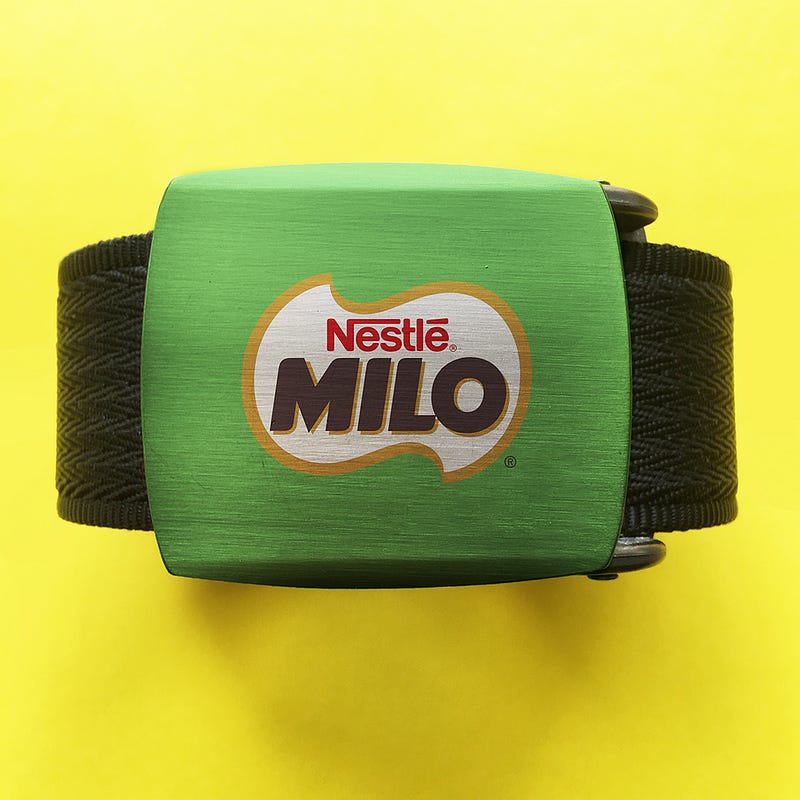
I entered the building and collected my prize: a military-style canvas belt with the Milo logo printed on the buckle.
I didn’t know how to respond to the prize. I guess the amount of effort that had gone into getting it seemed to deserve a better reward. A belt?…
Well, it was “free,” yet it felt unsatisfying. I wore the belt. Nobody else I knew had one like it, so from that standpoint, it was special. The painted logo eventually flaked off and the novelty wore off.
Enticing consumers to purchase multiple quantities of your product by offering a prize in exchange for cereal box tops, enclosed coupons, bar codes, or proof of purchase, ruled the commercial contest world for decades.
It was an effective and profitable marketing strategy.
The first person who used a prize draw as a sales promotion was an Italian merchant who in 1552 was sentenced to death for rigging the draw. His prize pack included a roll of silk, 1,500 golden ducats, and a live wild cat. No belt.
Winner, winner…
A few years later I entered another contest. A popular music radio station announced that you could mail in a request for a song to be played on the air. The letter would be considered a vote to move the song up the weekly pop music chart.
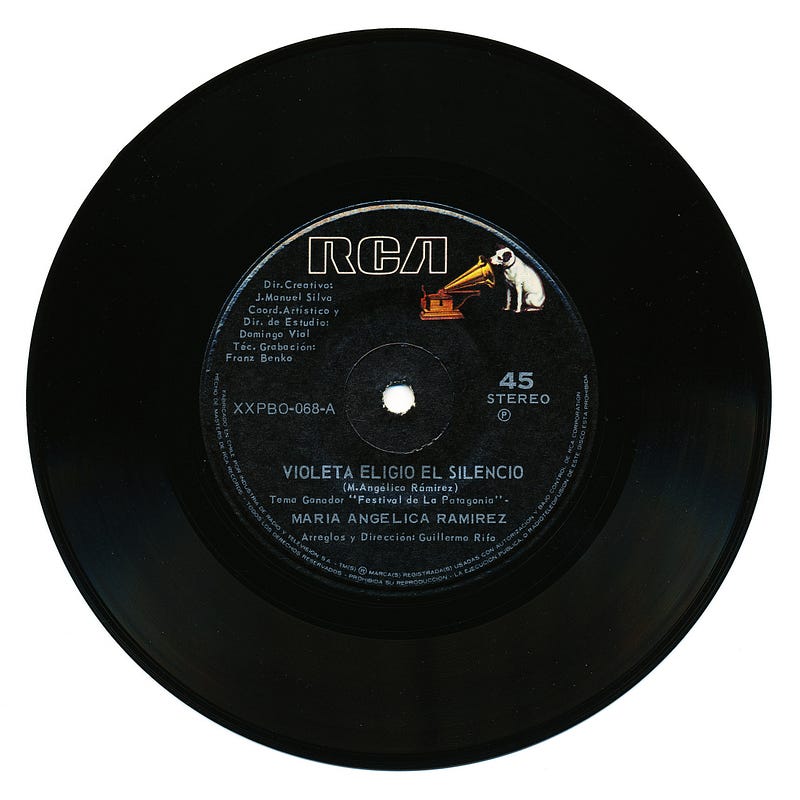
My sister had just released a new single and I wanted to support her by requesting her song on the radio.
The top ten most popular songs were played in descending order on Friday nights. Two listeners who had mailed in their votes were chosen at random and awarded a prize.
I don’t know how many kids bothered to write a letter, stuff it in an envelope, then paid for postage, for a chance at an undetermined prize. I figured my chances were good.
One Friday night my name filled the airwaves. My dad took me downtown to the radio station where one of the disc jockeys asked me to choose between a few vinyl records he was holding.
I came home with Brenda Lee and her immortal hit single “I’m sorry.” The only remarkable thing about those two contests is that they came without lasting consequences. Milo wanted me to purchase more of their product and the radio station was fishing for loyal listeners. They got exactly what they wanted, rewarded me with a cheap trinket and I never heard from either of them again.
Imagine that! They respected my privacy. Oh… the innocence of the analog days.
The innocence started to fade
In the 1970s I lived in a rural community. I did not have a television set and as you know, the internet had not yet been invented. So one way to connect to developments in my areas of interest was to subscribe to magazines.
I had subscriptions to photography, art, design, and cooking magazines. They were one of my main forms of information and entertainment.
As the 70s rolled into the 80s I started to notice a gradual increase in the number of magazine subscription offers that I was receiving in the mail.
Not just renewal offers from the rags that I subscribed to, but from unrelated publications. Field and Stream? Car and Driver? Hmmm… how do they know where I live? I don’t hunt and have no interest in cars, so why are they doing this?
On the road to find out
In 1978 I got an offer to subscribe to a brand new magazine titled Food and Wine. What’s not to like. Hard to say no, don’t you agree?
The offer was juicy, so I mailed in my subscription form with a purposely misspelled name. It did not take long for me to start receiving magazine subscription offers with that misspelled name.
The innocence was starting to fade. My private information was being shared with others, without my permission.
I resented that behaviour from businesses that I had supported for years. It did not sit well with me, but I felt powerless to do anything about it.
Information exploitation
It took me years to connect the dots that every time I filled out a ballot at a trade show — be it the Boat Show, the Golf show, the Home show, or the Wine Festival — I was voluntarily sharing my name, address, and phone number in exchange for a chance at a cheap trinket or useless giveaway.
In a matter of days, I would get phone calls asking if I needed a new roof, or if I was planning to purchase a sailboat. That would be followed by countless mail offers to service my furnace. The innocence was definitely gone. For a time, if you were the first person arriving at the workplace, you would be greeted by reams of faxes overflowing from the printer collection tray onto the floor. Advertisers had found a new way to reach you. SAVE ON TONER! they offered. It seemed so ironic.
Then we got electronic mail.
It seemed too good to be true. I can contact my cousin in Valparaiso for FREE!
What we did not understand at first was that just as you could contact your loved ones for free, advertisers could contact YOU, also for free. Spam was born.
That was when the innocence turned into a nightmare. Your email address became a prized possession, one that the advertising industry was more than willing to offer you a carrot for. Want a trip to Vernon? A free night at a hotel? A free round of golf? A dinner for two? A free car wash?…fill this form, give us your email address.
Air riles
The concept of “there is no free lunch” revealed itself when I got my first loyalty card. In 1992 the Air Miles program was launched in Canada after a successful run in the UK.
The concept is simple: purchase items from Air Miles sponsors and you collect “miles” towards your dream “free” trip. That was the initial idea. The Air Miles logo has a huge airplane as its principal element; coincidence?
It all seemed rather innocent at first. My bank was a sponsor, therefore I automatically collected miles for using their services. I started purchasing fuel from their sponsored gas station, and my groceries from their sponsored supermarket.
Soon I noticed special Air Miles bonus offers at the grocery store: Buy 5 jugs of SunnyD and get 20 BONUS Air Miles, or buy 3 boxes of corn starch and get 10 BONUS Air Miles. Well… does corn starch go bad? Ah, who cares, I’ll take six! So in 2007, after fifteen years of collecting “miles”… let that sink in for a moment. After FIFTEEN years I decided to cash in my Air Miles for a free flight for two to New York City.
To my surprise (horror) I learned that Air Miles did not cover taxes or fees, therefore my “free” trip cost me $733 in today’s dollars.
After spending tens of thousands of dollars at their sponsors — for a decade and a half — the entire exercise turned out to be a shameless scam. There was no free trip.
The program was designed to track my purchases and sell that information to advertisers. There was NO free lunch. I cut my Air Miles card in half.
Ring ring
The new battleground for your attention is now your smartphone. Spam emails, robocalls, and text messages sent directly to your pocket or purse.
Just like your address, then your home phone, then your fax, followed by your email, now your cell phone number is the primary target for advertisers.
I find the tactics incredibly annoying and intrusive. Now, I am not paranoid about privacy. Of I do an Internet search asking “What is the best brand of port in Portugal” and then later I see an ad for Fonseca Port on my social media feed… I don’t see that as a bad thing. It’s a bit creepy, but not offensive. Better than seeing a Dolce & Gabbana perfume ad.
I really don’t care if Google knows that I enjoy porn. PORT!, not porn. Port. Argh…! So that tells the story of why I don’t enter contests. I don’t need discounts, special offers, two-for-ones, loyalty cards, or VIP status. I am financially secure. I rather pay full price and keep the sharks at bay.
However, if I am at a small function, where all you need to do to win is to write your name on a piece of paper and throw it into a hat where someone will reach in and draw the winner… you don’t have a chance!… because I know the magic fold.
My ticket will be drawn every time, and I will take the trinket home with me. It has been proven time and time again. And please, don’t ask me how it’s done. It is magic.


