
Have You Ever Heard About Fear Benefits
The art of converting the negatives to positives.
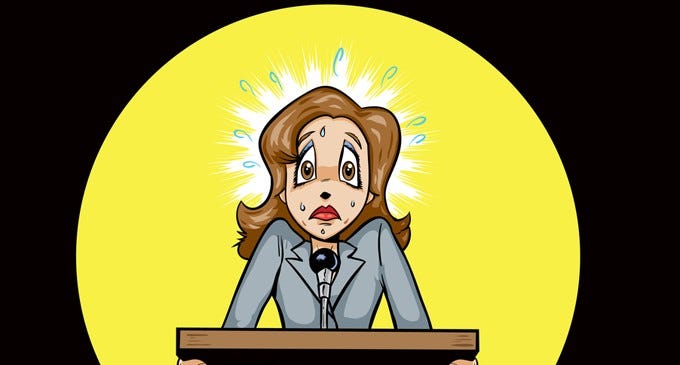
Did you know that there is a positive side to fear and that some benefits can be derived from these feelings that may appear negative and bad?
We may consider feelings of fear and anxiety as a kind of negative feeling that impedes us from progress and success, or even at best, enjoy some calm and tranquility, but it is not so bad. In this report, we learn about the benefits of fear that we can achieve as individuals or society.
First of All what’s Fear?
Fear is a vital response to a physical or emotional risk that has evolved with the human race as an instinct for survival. If we feel unable to protect ourselves from legitimate threats, we are afraid.
However, we often feel afraid of situations that may be far from life or death, which is called “irrational fear”. The psychology of this type of fear indicates that a person has the ability to address a higher type of possibility of something that may actually happen.
Many of us declare quite happy that we prefer to travel in cars rather than on a plane despite the fact that statistics clearly show that more people die in car accidents than flying accidents every year. This irrationality is caused by a person’s ability to amplify the possibilities of an event that he or she has already seen before.
In our modern era, fear is caused by events that have nothing to do with keeping life or continuing life, such as fear of an exam, or fear of running a seminar in front of the public. The human response to fear is either by fighting or running away.

What is anxiety? What is his relationship with fear?
Fear and anxiety often coincide, but fear is associated with a known or understood threat, while anxiety stems from an unknown or well-defined threat.
Fear and anxiety produce responses similar to certain dangers, but many experts believe that there are important differences between the two.
These differences can explain how we interact with different stresses in our environment. Muscle tension, increased heart rate, and shortness of breath are the most important physiological symptoms associated with fear and risk response. These physical changes are necessary to maintain our survival, and without responding to these changes, our minds will not receive an alert danger signal and our bodies will not be able to prepare to flee or remain and fight.
Anxiety is not the result of a known or specific threat. Rather, it occurs as a result of your mind seeing potential risks that may arise immediately. It is often accompanied by many uncomfortable physical sensations, which include: headache, sleep disturbances, feeling of pain throughout the body, and especially in the head, neck, jaw, and face, chest pain, ringing, or pulsing in the ears, excessive sweating, and tremors.
Benefits of fear Yes, fear has positive aspects, including:
1- The role of fear in preserving survival:
Without fear, many types of animals could have ended, and the Neanderthal could have gone extinct as well and had their fate as lunch for a hungry predator. Fear prompted us to learn how to make hunting weapons, which made us able to live with predators and even protect ourselves from them. Imagine a lion coming forward you and you have no response of fear. The result will be a dead man immediately. That’s how fear is very important for survival.
2- Fear and anxiety help professional development:
Fear creates a feeling of anxiety and anticipation for the event that is causing you this kind of feeling. If you were going to give a public presentation to an unlimited audience, this could be a scary event for you.
The positive thing is that this fear creates a challenge for you, which is the condition that makes you give your best because anxiety gives you the adrenaline to make an attractive presentation.
In this case, calming yourself is often wrong. Research by Alison Wood Brooks at Harvard Business School found that when participants described their nerves as aroused, they were able to make better general presentations than those who tried to relax and calm themselves.
Fear may arise from imagining the worst-case scenario, which would prevent us from actually occurring it. It also teaches us to deal with and control our thoughts if we confront ourselves by being illogical.
For me, my best interview that I was accepted at a great company to work was the one I was afraid the most. My very best exam was the one I got full marks.
3- Fear and anxiety help make better decisions
Experience has proven wrong to believe that we make our decisions better when we control our feelings and control our feelings of fear and anxiety.
There is a lot of research showing that higher levels of fear and anxiety can make us more risk-averse when making a decision.
In a 2009 study that asked participants to choose from a set of cards loaded with different opportunities for rewards and penalties, you might find on one card that you received a sum of money, and you may find on another card that there is a penalty that must be applied to you.
Researchers Martina Kirsch and Sabin Windman found that children and adults who were more anxious performed better, and showed that they were more able to track benefits and avoid relative risks.
4- Maintaining good moral behavior
According to an experiment published in PLoS ONE, 177 university students in Turkey were divided into 3 groups:
The study showed that the group that was motivated by analytical and rational words the moral sensitivity was enhanced by respecting the civil system and the results of its violation and the penalties that will result from this violation.
In other words, the primary factor guaranteeing our ethical behavior, regardless of whether it is a religion or a civic institution, is fear.
5- Fear that leads you to anxiety means that you are a smarter person.
Another study published in 2012 revealed that people who score higher on anxiety scales also tend to perform better on IQ tests, especially verbal intelligence. This seems self-evident, as fear and anxiety lead you to research in the future and imagine possible scenarios, including bad ones.


