
Have We Been Reading the Narnia Series out of Order All This Time?
There are three options, but only one of them is the best and it’s the fourth
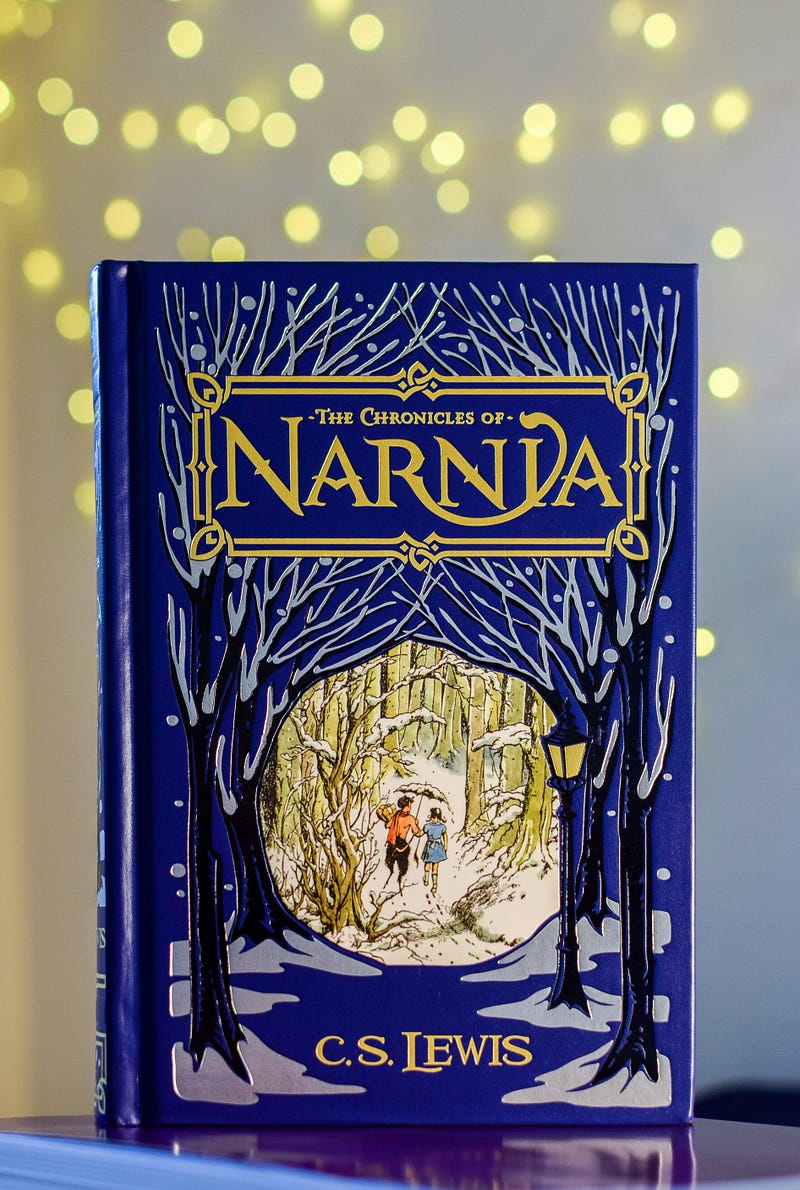
I recently revisited C.S. Lewis’ iconic young adult fantasy series The Chronicles of Narnia and learned two things:
- There are strong reasons to think that the book order stated on the covers is wrong, and
- The series has not aged well at all.
Leaving aside the question of whether these books should still have a place on your bookshelf, you may want to at least put them in a different order. If you want to know what I think that order is but you don’t want to read any spoilers for this 70-year-old series, scroll down to the section that starts with “Some Flexibility,” read the first paragraph, and then stop.
The Three Options
Readers and scholars of Narnia (yes, they exist) have devised three acceptable orders to read the seven books of The Chronicles of Narnia. They are the:
- Publication order
- Order in which they were written
- Chronological order
Under the Publication Order, the series would be:
- The Lion, the Witch, and the Wardrobe (published in 1950)
- Prince Caspian (1951)
- The Voyage of the Dawn Treader (1952)
- The Silver Chair (1953)
- The Horse and His Boy (1954)
- The Magician’s Nephew (1955)
- The Last Battle (1956)
The Order in Which They Were Written would be slightly different, kicking The Silver Chair back one and ending with The Magician’s Nephew:
- Lion/Witch/Etc.
- Caspian
- Dawn Treader
- Horse + Boy
- Silver Chair
- Last Battle
- Magician’s Nephew
And then there’s the Chronological Order, which is a complete wreck:
- Magician’s Nephew
- Lion/Witch/Etc.
- Horse and Boy
- Caspian
- Dawn Treader
- Silver Chair
- Last Battle
Exactly zero of these three reading orders maximizes the emotional impact of the books while still retaining textual continuity.
The Numbers on the Covers are the Publisher’s Recommendation, and Should Be Ignored
Let’s start with the Lawful Evil version of the series: Chronological Order, or based on the order of events in Narnia.
Unfortunately, unless you have an old edition, the covers of The Chronicles of Narnia explicitly state that this is the order to read them in:
- The Magician’s Nephew
- The Lion, the Witch, and the Wardrobe
- The Horse and His Boy
- Prince Caspian
- The Voyage of the “Dawn Treader”
- The Silver Chair
- The Last Battle
In the books’ front matter, the current American publisher of the Chronicles, HarperCollins, states that this is “the order in which Professor Lewis preferred.”
How do they know which order Lewis preferred?
It seems to be based entirely on a letter that Lewis wrote in response to a piece of fan mail. In 1957, an 11-year-old American reader named Lawrence Krieg wrote to Lewis and asked him what the correct order was. It being an old edition, the order was not specified on the boy’s books. His mother suggested reading them by publication order, but the boy thought he should read them chronologically by Narnian time.
I think I agree with your order for reading the books more than with your mother’s. The series was not planned beforehand as she thinks. When I wrote The Lion I did not know I was going to write any more. Then I wrote P. Caspian as a sequel and still didn’t think there would be any more, and when I had done The Voyage I felt quite sure it would be the last. But I found as I was wrong. So perhaps it does not matter very much in which order anyone read them.
But the fact that Lewis didn’t answer a child’s question negatively does not a strong argument make. Sometimes, every once in a while, occasionally, and only on sunny days, people are nice to each other. Just because Lewis didn’t say, “lol ur mom’s right dummy” doesn’t make his statement canon.
Even more importantly, though, Chronological Order creates textual problems. When Aslan appears in The Lion, the Witch, and the Wardrobe, there’s the line, “None of the children knew who Aslan was any more than you do.” This doesn’t make sense if The Magician’s Nephew is the first book and Wardrobe the second. We’ve already been introduced to Aslan as he sang Narnia into existence in Genesis: The Musical. Furthermore, the last line of Wardrobe is, “And that is the very end of the adventure of the wardrobe. But if the Professor was right it was only the beginning of the adventures of Narnia,” which would be weird if it wasn’t actually the beginning of The Chronicles of Narnia.
Chronological Order also creates unforced errors in the narration. The Lion, the Witch, and the Wardrobe is widely considered to be the best book in the series, while The Magician’s Nephew one of the worst. Starting with The Magician’s Nephew rather than Wardrobe makes the series much less captivating. It could even make readers abandon the series after reading Nephew. Additionally, there is a distinct plotline that runs through the following five books:
- Lion/Witch/Etc.
- Caspian
- Dawn Treader
- Silver Chair
- Last Battle
These depict the Pevensie children, and later their cousin Eustace and his friend Jill, leaving England to go on quests in Narnia. Slotting The Horse and His Boy between Wardrobe and the other three creates an unnecessary and disorienting disconnect.
The Order in Which They Were Written is Better But Still Not Great
Another way to order The Chronicles is by reading them according to when they were written by Lewis:
- Lion/Witch/Etc.
- Caspian
- Dawn Treader
- Horse + Boy
- Silver Chair
- Last Battle
- Magician’s Nephew
This starts the series off on the right foot. However, The Horse and His Boy still interrupts the main plotline. Perhaps worse, the series no longer ends on The Last Battle which, as the title strongly implies, is where things end. The white, Christian utopia that is Narnia gets overrun and ruined by Arabs because people stopped believing in Him so God, sorry, so Aslan calls a Judgment Day, destroys the world and our heroes go to Heaven.
Aged. Like. Milk.
Anything after the destruction of Narnia would read like an addendum. Like Lewis was trying to get one last drop out of his franchise, and was willing to spoil a good ending in order to do so.
It would be like The Hobbit movies.
No. The Order in Which They Were Written solves a few problems, but it creates others.
The Publication Order is the Closest to Ideal
The order that most readers seem to prefer is the books’ Publication Order, or reading them in the order in which they came out:
- The Lion, the Witch, and the Wardrobe (published in 1950)
- Prince Caspian (1951)
- The Voyage of the Dawn Treader (1952)
- The Silver Chair (1953)
- The Horse and His Boy (1954)
- The Magician’s Nephew (1955)
- The Last Battle (1956)
The five-part plotline is largely preserved, the series ends on The Last Battle with the winding down of Narnia and the death of the protagonists, and the two intervening books sort of delay the climax to build anticipation for it. Even better, putting The Magician’s Nephew right before the finale shows us Digory, who we may have forgotten about since his minor appearance in Wardrobe, as well as Polly and Fledge, who all appear in The Last Battle.
But I think we can do just a little bit better.
Some Flexibility in the Publication Order Could Enhance the Series
I would read The Chronicles of Narnia by Publication Order, but either without The Horse and His Boy or, alternatively, you could read The Horse and His Boy whenever you want to, so long as it’s not last. The order would therefore be:
- Lion/Witch/Etc.
- Caspian
- Treader
- Silver Chair
- Magician’s Nephew
- Last Battle
Here’s why.
Here be spoilers.
In The Silver Chair, the Narnian prince Rilian is enslaved by the book’s primary antagonist, the witch called The Lady of the Green Kirtle or just the Green Lady. She gets killed by Rilian in the book’s climax.
In The Lion, the Witch, and the Wardrobe, the main antagonist is the White Witch, a dictator who rules Narnia in a reign of terror and perpetual winter. She gets killed by Aslan in the book’s climactic battle.
In The Magician’s Nephew, the main antagonist is Jadis, an evil witch from a different land. During the book, she eats an apple from what is clearly the Garden of Eden and becomes immortal.
It is clear that Jadis is also the White Witch, and also an allegorical stand-in for Satan.
(And yes, the villains are all women. Aged like milk)
But Narnia scholars think that the Green Lady is someone else, mainly because she is referred to as one of the “Northern Witches” in The Silver Chair and because Aslan killed the White Witch in Wardrobe.
I disagree. I think that Jadis is the White Witch is the Green Lady. I think this way for six reasons:
- Why would Jadis eat an apple of immortality just so she could be killed off?
- Why would Lewis make her a witch and name her the Green Lady if not to draw parallels to the White Witch?
- Lewis wrote The Chronicles as an allegory for Christianity and the constant return of Satan would fit into it
- In The Silver Chair (page 61) an owl says of the Green Lady, “we think this may be some of the same crew” as the White Witch
- In Prince Caspian, Nikabrik wants to call on dark powers to break the siege that they’re under and brings a magical Hag and a Werewolf who strongly imply that the White Witch is not dead and further connect her to the Green Lady: “[Caspian] needn’t mind about the White Lady — that’s what we call her — being dead… Who ever heard of a witch that really died?” (170)
- In what children’s book would we see a Chekhov’s gun not go off?
Why does all of this matter for the reading order? Because in Silver Chair we see the end of the Green Lady, and in Magician’s Nephew we see the beginning of Jadis. Putting these two back-to-back would make the prequel, Magician’s Nephew, deliver the White Witch / Green Lady’s origin story right away.
There are two problems, though:
- The Horse, and
- His Boy.
I would solve both these problems with a simple and yet bold and what is sure to be a controversial move: Take it out of the series. Treat it as “a story of Narnia” rather than as a fixture in The Chronicles, kind of like what The Children of Hurin is to The Lord of the Rings. Horse and Boy are, after all, already outliers in the series, and for several reasons:
- We never see the main characters in any meaningful way in any other book
- Only Lucy and Edmund appear in the book, and only very briefly
- The narrative structure of The Horse and His Boy is strikingly different from the others in that the quest is vague — nothing more than to escape — and only takes on meaning towards the end
- Aslan’s role is different in The Horse and His Boy, guiding events in subtler ways and without an explanation until after they’re done
Treating The Horse and His Boy as “a story of Narnia” lets you read it whenever you want or, and this is my suggestion, not at all. Because of all the books in The Chronicles of Narnia, The Horse and His Boy is the one that has aged poorly and in the worst way.
Even if you’re fine with Narnia being a Christian allegory — read in this way, The Lion, the Witch, and the Wardrobe is like the bait to get you invested in Narnia, and everything that follows is the switch that uses the story as a vehicle for talking about Christian ideologies (another reason to think Lewis wanted you to read Wardrobe first) — it is in The Horse and His Boy where that allegory goes further and attacks Islam.
Creating strong associations between turbans, scimitars, and minarets, on the one hand, and slavery, child abuse, and the wanton abuse of power on the other has no place in a children’s book in the 21st century. This anti-Muslim sentiment still exists in other books — in Dawn Treader the turban-wearing Calormen are described as a “wise, wealthy, courteous, cruel, and ancient people,” and in The Last Battle their god Tash takes on some traits of the Christian devil — but it is in The Horse and His Boy that the details are dropped that make it impossible to deny the Calormen-equals-Arab concept.
Personally, I don’t think that children’s literature should be creating such negative associations.
But if you were to read The Chronicles of Narnia, the stated reading order is not the one to follow.