
Have Doctors Stopped Listening to Their Patients?
The consequences can be devastating.
“Every patient tells a story.”

Several years ago, I was the physician who picked up the chart of a five-year-old girl who presented to the emergency department with her mother reporting that her daughter had sleepiness, nausea, and vomiting. This is a very common problem, and children are brought to both the doctor’s office and the emergency department. We usually do a pretty good job of treating these people.
I took a history from the mother, and I examined the child. She was awake but appeared ill. Her belly was not tender when I examined her. I believed that she was dehydrated and had some sort of viral gastrointestinal illness. I directed the nurses to draw blood and to start an intravenous line so we could give the child some fluids. Her lab work was normal, and she perked up considerably after getting the fluids.
After the treatment, the child was happy and playful. I gave them one of my often-used discharge instructions, which talks about viral illnesses, what to give the child to eat and drink, and then instructions to follow up with her pediatrician.
I was completely wrong about nearly everything.
She was dehydrated, and giving her fluids did help her in the short term. But her vomiting and dehydration was not due to a viral illness, it was due to the presence of a brain tumor.
You might be wondering how I missed this. In hindsight, which is 20/20, I did not pay attention to one aspect of the history that the mom told me. She mentioned that the child had been having some symptoms on and off for the prior three to four weeks. She had been seeing her pediatrician during that time, who also missed the diagnosis.
I have kicked myself many times over this. I was clearly looking for a non-serious, treatable illness, and through the magic of confirmation bias, I found it. I went looking for evidence to support what I already believed. I pretty much ignored the information that went against the presence of this issue being viral in nature, that it had gone on for so long.
I was not looking for the rare and uncommon diagnosis of a pediatric brain tumor. That diagnosis is rarely made in the emergency department. The delay in the child’s diagnosis did not change her treatment or her outcome. When I saw the father, years later, I apologized profusely, and he said he forgave me. He updated me on his daughter’s condition, and I can report that she lived through her treatment.
I learned another harsh lesson that day. I jumped to an incorrect conclusion about an illness that I wanted the child to have. My new bias would be to consider brain tumors more prominently for children who had prolonged vomiting.
My sense of confidence and proficiency as a physician took a tremendous hit. Going forward, I tempered my instructions to patients and remembered, with humility, that I could certainly be wrong.
In today’s parlance around medical care, the child’s mother was victim to an all-too-common occurrence of “medical gaslighting.” The New York Times ran an article by Melinda Wenner Meyer in March of 2022 entitled Women are Calling Out Medical Gaslighting.
In this phenomenon, a physician or other medical professional dismisses or downplays a patient’s physical symptoms or attributes them to something else, such as a psychological condition. Thousands of people responded in the comment section that they had also experienced medical gaslighting.
I certainly did not intend to gaslight the family. The improvement in the child’s condition gave me false reassurance that I had been correct. Several prominent physician writers have written about the wayward ways of thinking that are prominent in physicians. In the classic book How Doctors Think, Dr. Jerome Groopman explains how attribution errors and faulty assumptions, both positive and negative, can cause errors in how physicians arrive at a diagnosis.
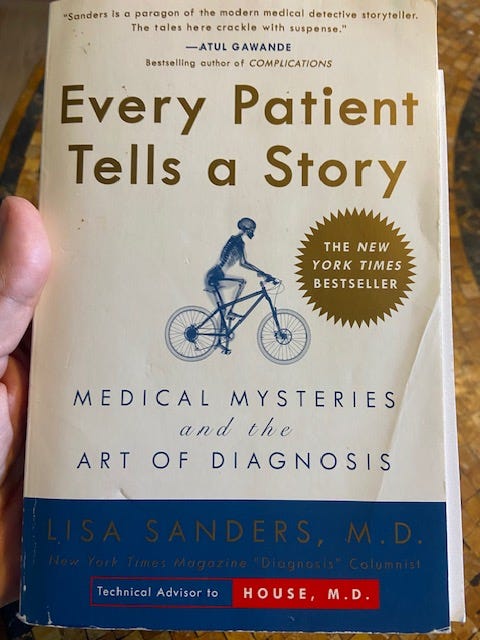
Dr. Lisa Sanders, Assistant Clinical Professor at the Yale University School of Medicine, reminds us in her wonderful 2010 book, Every Patient Tells a Story: Medical Mysteries and the Art of Diagnosis. (Harmony Press). Will the physicians treating that person will even bother to listen to the story?
More importantly, Sanders explores the general decline in the art and practice of the physical exam and its use in making an accurate diagnosis for the patient. All it took was one deadly pandemic to take the ancient practice of physical exam, that was surviving on life-support. to total flat-line status in our emergency departments and medical office settings.
Sanders’ work will be familiar to many through the “Diagnosis” column in the New York Times and her role as contributor and technical advisor to the medical TV show House MD. She also explores the effect of physician biases, the use of computers, the use of Google searches, and the use of artificial intelligence systems in making diagnoses for our patients. The results are not reassuring.
The lay public might be genuinely surprised at how formulaic and thought-free patient assessment has become. It seems like every patient gets the same generic algorithm-driven work-up. While for most conditions this works, when anything out of the ordinary presents itself, the weaknesses of our healthcare education and treatment model becomes glaringly apparent.
Sanders explains how we got to this place but emphasizes the benefits, in case-study style, of thorough and intelligent investigations on both the practitioners and the patients. As a former journalist, Sanders lays out the suspense of several rare conditions and the successful investigation by physicians who took the time, listened to their patients, and examined them thoroughly.
The value of this book lies in the questions it asks of both the members of the medical profession and future patients. To the profession, it asks what might be done to not only improve diagnostic tests and techniques but also how to communicate medicine’s limitations to the public.
To the patient, to trust physicians in their abilities but to realize the profession is still evolving. Even with the plethora of available biochemical and imaging tests and studies, we simply do not know everything. While explaining the complex process of sifting through a differential diagnosis, the author writes in her introduction,
“In medicine, uncertainty is the water we swim in.” (page XXIV)
Dr. Sanders explores the intricacies and uncertainties of the diagnosis of Lyme disease and the label of “chronic Lyme disease” in the chapter “Testing Troubles.” For the trusting public, the lengthy discussion highlights the uncertain nature of medical diagnosis that appears ripe for charlatans to prey on unsuspecting patients. She questions the chronic Lyme disease diagnosis and believes most patients likely have some yet-to-be-diagnosed rheumatologic condition.
Sanders explains the occurrence of the overdiagnosis of chronic Lyme disease by the discomfort most physicians feel with ambiguity and uncertainty.
“And the doctors most uncomfortable in this way are the ones most likely to seize upon a diagnosis or diagnostic label and distort their own thinking in an attempt to prove to themselves and their patients that they know what’s going on.” (p 182)
I might add that physicians who benefit monetarily from the return visits and the sham treatments significantly contribute to the problem.
The book is not just a collection of fascinating medical mysteries. The author uses these “difficult to diagnose” cases to illustrate important lessons about what is needed in medical training to equip doctors with the necessary skills and open-mindedness not to fall into the trap of relying too much on lab tests and technology. She eulogizes the death of the old-fashioned, hands-on physical exam.
Mourning the loss of the physical exam
In a section titled: The Old/New Chapter of the Physical Exam, she tells the story of a patient who had the cause of her med-resistant hypertension missed over several years. Of course, a relatively simple but rarely done method of obtaining the vital signs was never done. Every student, resident, and attending physician who sees a patient assumes that a proper physical exam has been done previously, and it most certainly has not.
Sanders relates the story of a crusader in teaching the physical exam, Eric Holmboe. He realized that his own training in the techniques of physical exam were lacking, and to make matters worse, he was almost never observed while performing it. He discovered that teachers were reluctant to observe their students because they, themselves, felt inadequate at the intricacies of performing physical exams. A training program was implemented with an emphasis on continued observation and reinforcement of skills.
The author’s recurring theme is that a careful physical examination, combined with truly listening (with curiosity) to what the patient says, are the bedrock of diagnoses. The new practice of virtual visits was not even a thing in 2010 when this book was published. A doctor certainly can’t apply her stethoscope to her patient’s chest or abdomen during a virtual medical visit. The evidence of the physical exam is lost.
Dr. Sanders is very honest about medical misdiagnoses, including her first “miss” when she was an inexperienced intern. She failed to recognize someone with impending respiratory failure. Her attendings came by shortly thereafter, and no real harm was done to the patient. The patient was transferred to the intensive care unit.
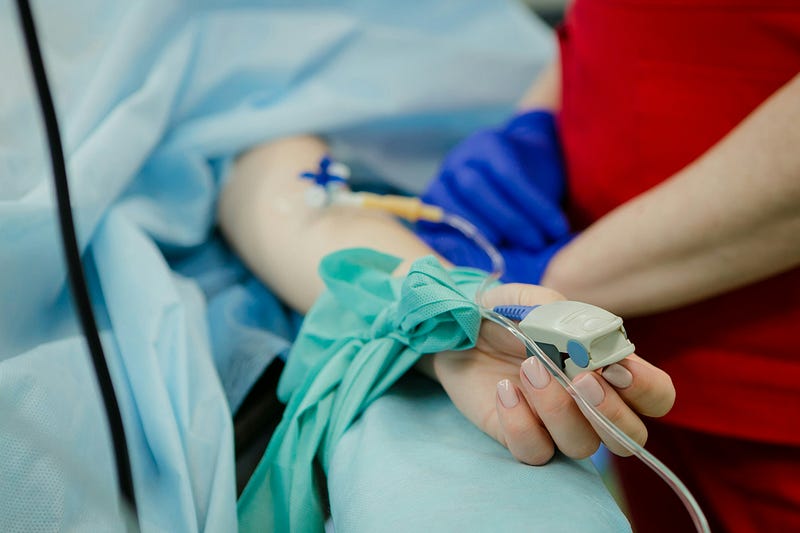
Learning what “sick” really looks like is what students and residents need to do in their training. She discusses how “looking sick” does not tell physicians enough about all their patients. Acquired biases and heuristics (shortcuts in thinking) may still fail us.
I found myself disagreeing, in theory, with Dr. Sanders over the “missed diagnosis” of a young man with chest pain. During his first two times in the emergency department, he was ruled out for myocardial ischemia and discharged for an outpatient workup. Of course, the patient never followed up with a cardiologist or internist. According to Sander, atypical symptoms were either unheard of or ignored by the emergency physicians. (full disclosure: I am an emergency physician)
When the patient returns to the emergency department, where the physicians only have (metaphorically) a hammer and screwdriver, everything tends to look like a nail or a screw. In the diagnostic study, the patient's requirements were only ordered by an internist when the patient was admitted after his third visit. Dr. Sanders calls this a missed diagnosis.
I view it as a delayed diagnosis. It would be ideal if we could identify all of the uncommon diagnoses during the four hours of the first visit, but of course, our system is not set up that way. Not all testing is available 24/7 to be ordered by an emergency physician.
The Systems of Digital and Artificial Intelligence
The author also explores the systems of digital and artificial intelligence that might aid the diagnostic dilemmas that befall our beleaguered physicians. What, on the surface, seems to be an advanced, impartial answer for diagnostic dilemmas is still mitigated by humans with their strong biases and judgments. These include, as just two examples of many, incorrect race-based data on numbers in pulmonary function and kidney function testing.
If a physician feels certain about her provisional diagnosis, she will not consult the computer database to search for other possibilities. One cannot find a thing that she does not think to look for. A nurse who does not question the dose of a medication prescribed will not take the time to look it up to confirm. On replacing the fallible humans with computers, Sanders writes,
“There will always be choices to make — between possible diagnoses, between tests to order, and between treatment options. Only a skilled and knowledgeable human can make those kinds of decisions.” (p.238)
Physicians and other healthcare professionals will find much to like and ponder in Sanders’ book. Which one of us has not cut a patient off less than thirty seconds before he starts telling us his problem? Who among us would not benefit from a refresher course on the intricacies of the physical exam? Were we even taught how to do it correctly?
Many of us have observed the current deficiencies in patient interviewing and the physical examination that Sanders described. Some of the problems lie within the systems, the time-pressures, and the electronic documentation systems. Sanders still believes that physicians can do better and rededicate themselves to the basics. I found myself shaking my head in agreement with the author’s idealistic point of view.
This book should also be read by anyone who might be a patient of a medical professional one day — which would be everyone. Nobody is perfect, and Dr. Sanders points out that people in medicine are no different. However, the implication is that medical professionals all want to be — and can be — better. It just takes a work, curiosity and commitment.
Regarding the integration of computer databases and testing, Sanders leaves us with this thought:
“… of course, people need more than the right treatment for the right disorder. They need to be heard, they need reassurance, explanations, encouragement, sympathy- the full range of emotional support that is a critical part of what we doctors do: heal.” (p.238)


