
Have Carrots Failed Me?
Seeing the world through a pair of readers
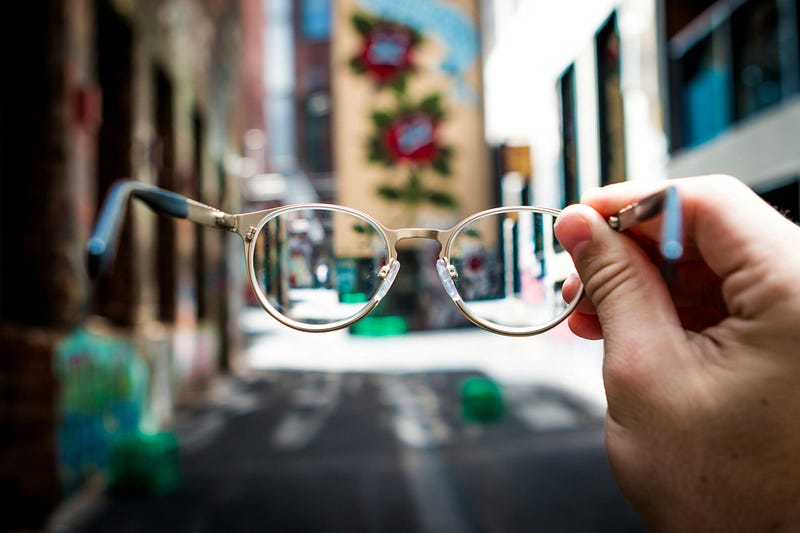
You’ve heard it before. The common myth: — “Carrots will help your eyesight”.
I’ve heard this rumor so many times that I never thought to question its veracity. That is, until I reached 50 and my vision began to blur.
Now I’m navigating the world through a pair of readers. You can find readers on my bedside table, in my computer bag, and in my coat pockets. I’m the one squinting at menus and the text on my phone if my glasses aren’t within reach.
Curiosity from a Carrot Consumer
The issue is that I’m a voracious consumer of carrots. I eat them every day — raw or cooked. It doesn’t matter. They’re always in my fridge and I’m like Bug’s Bunny when it comes to carrot consumption. That’s why I became curious.
If eating carrots helps your eyesight, why is mine worsening as I age?
I’ve also heard that carrots can improve one’s night vision. As someone who has always struggled to see at night, I decided to investigate.
Uncovering a Carrot Controversy
I did what anyone in my position would do and Googled “Do carrots really help your vision?”
Up popped an NPR article that addressed this topic. The article highlighted the words of Rebecca Taylor, an ophthalmologist and clinical spokesperson for the American Academy of Ophthalmology.
Her title sounded wonderfully official and I figured she must know what she’s talking about. In the article, Taylor enthusiastically endorses the consumption of carrots.
“There’s a reason why these adages become adages: in large part because they’re true,” says Taylor. “When you eat a carrot, you’re helping your body take a light source [and interpret it]. … That makes food pretty darn important. That’s the stuff that will keep me up at night, it’s so exciting.”
Taylor clearly was “over the moon” about carrots. However, I continued to be dubious. Not only did my own experience not jibe with what Taylor was saying, I also tend to doubt people who say things like “There’s a reason these adages become adages”.
I wondered, “Does she really know what she’s talking about? Has she ever really investigated this adage about carrots?”
From my perspective, the issue needed more Googling. I conducted another search and found this study from the National Library of Medicine which stated that the “increased consumption of carrots…was associated with significantly increased reporting of poor night vision among women.”
Sounds about right from my personal experience.
These contrasting ideas were making my head spin. Time for another search. This time, I found an article from Smithsonian Magazine, which talked about “the faulty carrot theory”. According to them, it’s just a myth that eating carrots improves your eyesight.
Hmmm….
The “Faulty Carrot Theory”
Who should I believe? I read further. According to the Smithsonian article, the myth began during World War II and was part of a British propaganda campaign, used as subterfuge against the Germans.
Here’s the gist according to the article:
The Germans were attacking England at night. To stop this, the Brits ordered citywide blackouts, which prevented the Germans from seeing their targets. However, the British were still bombing the German planes at night.
How could the British see their targets when the Germans couldn’t?
According to the article, Britain’s Ministry of Information created a myth that their cat-like, superior, night vision was due to a high intake of carrots. However, this was a false campaign. The truth? The Brits were using a new, top secret, radar technology that enabled them to see at night.
“Ah ha!” I thought as I read the article from behind my readers. More, myth-busting evidence. I felt further justified in my disbelief of the American Academy of Ophthalmology.
The Cost When Carrots Aren’t Consumed
However, another article caught my eye, which refuted these historical claims. It was a Scientific American article, which stated that the Germans probably knew about the secret radars and were unlikely to fall for the carrot/night vision fallacy.
It also talked about the importance of Vitamin A to eye health, which is found in carrots.
“In addition, the cornea (the clear front of the eye) can literally disappear if the body does not get enough vitamin A. Every year an estimated 250,000 to 500,000 children become blind as a result of vitamin A deficiency.”
This fact was confirmed by the American Academy of Ophthalmology, website which further states, “Vitamin A deficiency is the leading cause of preventable blindness in children worldwide.”
This put everything in perspective. I’m lucky to even see! Clearly, a life with readers isn’t so bad after all.
The True Super-Vision Superheros
Then I searched, “Best Vegetables for your Vision” and the top listing was from the Eye Clinic of London. It seemed only right to hear what the Brits had to say about this topic in 2024. After all, they’re the ones who started the entire myth over eighty years ago.
Here’s what they say are the top 5 vegetables for great eye health.
- Leafy Green Vegetables. Spinach, kale, and broccoli are leafy green vegetables (These veggies are also ranked number one in the Scientific American article.)
- Sweet Potatoes and Butternut Squash
- Bell Peppers
- Avocados
- Carrots
Maybe it’s time to reduce my carrot intake and follow Popeye’s example — more spinach, please. However, then I ask myself, if spinach is so great, why is Popeye always squinting?