
Neuroscience
Have a Blast with your Brain Waves
The Electric Truth about your Neurons
Background
In my last story we returned to the 1970's, where Prof Michael Merzenich discovered neurogenesis by accident. Almost 50 years later, we accept as empirical that our brains flex and adapt — we can rewire them! And we can continue birthing new brain cells until our last breath.
This may shock to you, but there are electric currents, oscillating at different frequencies to create overall brain wave patterns. Further on, you will master a few letters of the Greek alphabet — Alpha, Beta, Gamma, Delta and Theta — and not in alphabetical order. (I don’t understand why neuroscientists defied convention in naming these brainwaves.)
Before we go there, I want to provide a context for the neurons I’m always droning on about.
(That’s unfair. Brain cells rock!)
The Neural Landscape
Our brain cells don’t operate in a vacuum. You need a minestrone of neurochemicals. These are essential components of neural (brain) activity; also referred to as neurotransmitters — they send electric nerve impulses across a synapse, the tiny gap between two nerve cells. At the same time, a chemical process occurs.
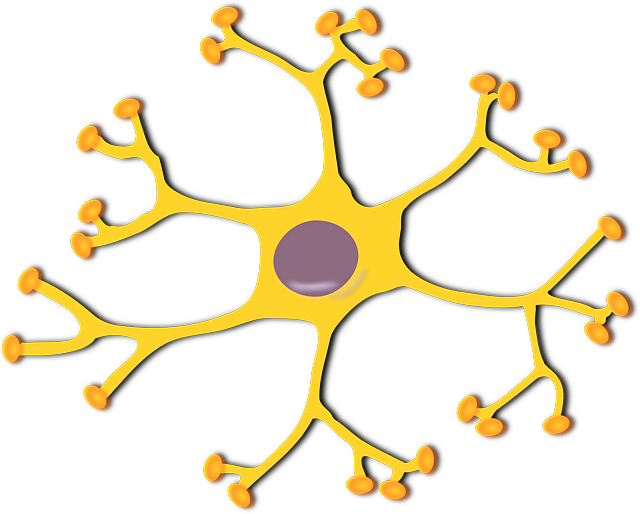
Our brains contain about 100 Billion neurons (nerve cells) which send information to each other, both electrically and chemically through the 800 trillion ever changing connections. And neurons come in a wide variety of configurations too. Wow!
As I keep repeating, the neural networks or pathways of these transmissions can adjust, adapt and improve. You have the power to do that.
There are two components to this brain activity — electrical signals and neurochemicals (neurotransmitters)
Much like a car only operates at optimum performance with oil to lubricate the engine, petrol (gasoline) for the spark plugs to ignite, combust and drive the cylinders in the motor and water in the radiator to keep things cool, so the brain is more efficient with the correct balance of neurochemicals, sending clear signals along the neural networks.
You are the driver; you steer the car in whatever direction you choose with the thoughts you think, with the images you paint, with the language you use.
Brain Waves
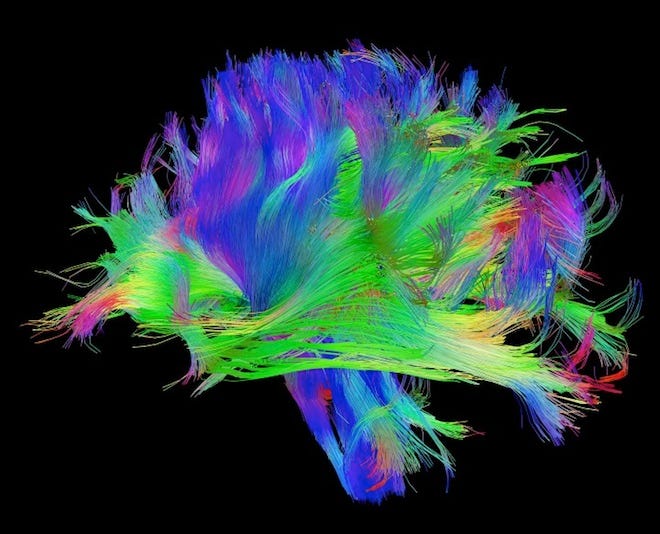
Let’s recap on two of the components I mentioned earlier — the electrical and chemical signals between the neurons. With some 800 trillion ever changing connections happening concurrently, this combination of signals creates an overall pattern superimposed over all this activity — brain waves.
Definition — “apparent telepathic vibration transferring a thought from one person to another with no other medium,” — 1869 (Source: Online Etymology Dictionary)
They were onto something there although they didn’t know it.
It would be another 50 years before German neurologist Hans Berger discovered brain waves in 1924.
“Though Berger’s path to this discovery began because he wanted to record what he thought was psychic energy in the brain, he eventually narrowed his focus and successfully made the first recording of electrical waves in the brain: an electroencephalogram, or EEG. Since his discovery, EEGs are used to provide useful information about one’s mental state and functioning, as they can lead to the diagnosis of epilepsy, sleep conditions, Alzheimer’s, and other issues related to brain functioning.” — goodtherapy.org
Yet another scientist who made a discovery by mistake. (Let’s have more mistakes please!)
The updated definition of brain waves is: “a sudden idea or a moment of inspiration; a brainstorm” — Farlex Dictionary of Idioms 2015
The Fantastic Five
No comic book characters here — this is for real.
As with sound waves and radio waves, so too is the frequency of brain waves measured in Hz. (Hz is the abbreviation of hertz — the speed at which a wave completes a full cycle in one second.)
As you read on, forget about the alphabet and focus on the wavelengths. I have failed in creating a mnemonic for brain waves — your suggestions are welcome. The sequence I’ve used below is high frequency to low frequency.
- Gamma Wave (30–100Hz)
This is the highest brain frequency or, if you like, the fastest. It is the best time for active learning, retaining new information and increasing focus and short-term memory. We associate them with higher levels of cognitive functioning.
- Beta Wave (13–30Hz)
These are present most of the waking day when we are in an alert state of mind for analyzing, planning, assessing and categorizing. They can also manifest when one is feeling stressed, agitated or afraid.
- Alpha Wave (9–13Hz)
This is when we are in a state of physical and mental relaxation but still aware of what is happening around us. We are calmer, more peaceful and grounded. Meditation, yoga or a walk in nature create an Alpha state; we become more lucid and reflective and the left and right hemispheres of the brain are more balanced.
- Theta Wave (4–8Hz)
Now we move from verbal and thinking mode to a more meditative, visual mode where the mind reaches a deeper state of awareness, perhaps feeling drowsy, but with stronger intuition and a greater capacity for complicated problem-solving.
- Delta Wave (1–3Hz)
This is the state of unconsciousness, or deep, dreamless sleep. Tibetan monks who have been meditating for decades can maintain this state even when they are alert and awake! Healing and regeneration occur when the brain is in this state.
Brain Waves and Mental Health
The level of activity in your Neuroverse predicates which wavelength patterns will predominate though one wavelength does not exclude another. What a force field we have in our brains!
As with neurochemicals, so too should there be a balance of brain waves. Any imbalance can manifest as emotional and neuro-physical health problems.
I had an EEG when I was an in-patient at a mental health clinic almost 20 years ago. Before the nurse attached the electrodes to various parts of my skull, I insisted on her reassurance that this was not electric shock therapy.
(It horrified me to read last week that medical “science” is looking at shock therapy for treatment of depression — back to the Dark Ages?)
The procedure was painless and pointless at the time as I had no clue what the EEG measured or why. I can only assume they were checking the balance of my brain waves and that I passed the test as I heard nothing further on the matter.
An EEG is a useful weapon in the arsenal of tools to measure and monitor mental health, which equates to brain health; a scientific way to self-regulate and train your brain as the EEG detects your brain wave activity.
The method used is neurofeedback.
“A therapeutic technique used to monitor and change brain wave patterns to modify behaviors and improve mental health. This therapy teaches individuals to alter the flow of brain waves. A therapist uses EEG readings to determine the level of brain waves and assess the predominance of abnormal activity and then rewards the desired brain wave activity to encourage its production. In an individual who has depression, for example, the therapist will use sound and visual effects to reward beta waves to help relieve the symptoms of depression.” — goodtherapy.com
This therapy has worked for people suffering from Alzheimer’s disease, who have redeveloped their ability to perform lost functions such as recognising forgotten relatives.
Other beneficiaries are ADD/ADHD, anxiety, depression, learning disorders, lack of motivation, sensory processing disorders and brain injury or concussion.
(EEG headsets for individuals to monitor their own brain waves are still in their infancy and not very accurate, so I would steer away from them.)
Conclusion
I’ll say it again.
You are the driver; you steer the car in whatever direction you choose with the thoughts you think, with the images you paint, with the language you use.
This creates new neural pathways and you can maintain balanced brain wave activity.
Sometimes we need a nudge along the way to a healthy mind. If neither CBT nor meditation nor yoga nor psychotherapy are doing it for you, neuro-feedback therapy may be the boost you need.
Keep going. Keep growing your brain.
Enjoy this video from Smarter Every Day on The Backward Bicycle Experiment, brought to my attention by Sunaina Sainath.
(I never mastered riding a bicycle, so I’ll pass on this.)
“Knowledge without understanding is like water on the sand.” — African Proverb
Further reading you may enjoy:


