
Has Bitcoin Put Us on the Verge of a Decentralized Finance Revolution?
What is bitcoin and how does it work?
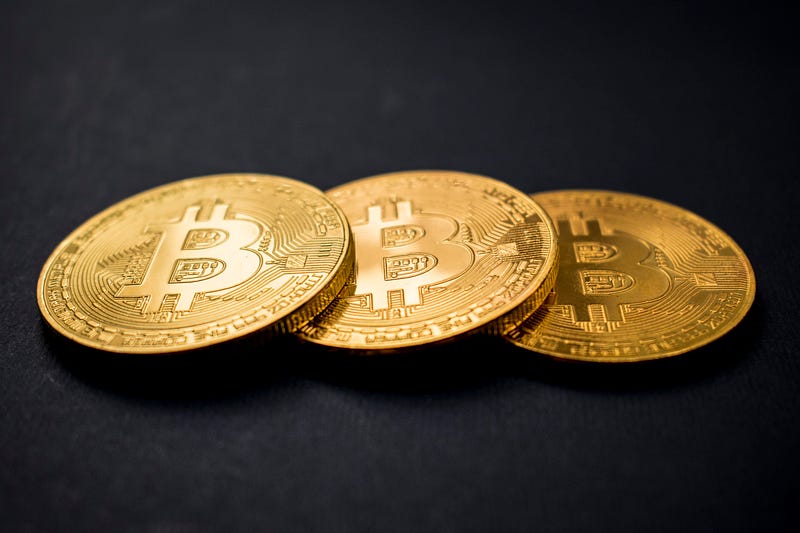
I’m a former banker, yet I often find Bitcoin articles a challenge to understand. I’m no expert, but I aim to explain Bitcoin as simply as possible and give you a comprehensive overview of the topic.
Not everyone believes that cryptocurrencies are the way of the future. Some say that it’s the next bubble waiting to burst, just like the internet boom of the 1990s.
Many dot.com companies failed, and those that didn’t were highly overvalued. Investors bailed out when they started to lose money and the internet bubble burst. This was a primary contributor to the stock market crash of 2001.
However, out of the ashes, a few Phoenixes emerged. Companies like Amazon and eBay not only survived the dot.com crash but have become great success stories and household names.
I’m convinced that the same will happen with cryptocurrencies. The bubble might burst, investors may lose money, but a few Phoenixes will once again rise out of the ashes. Will it be Bitcoin? Or another cryptocurrency? Only time will tell.
One thing I’m sure of, though, is that the face of currencies, payment systems, and retail banking is about to change. We are on the verge of a Defi (decentralized finance) revolution in global financial services.
It’s essential to understand some of the basics and terminology:
Fiat Currency
When it comes to money, we think of US Dollars, British Pounds, or perhaps Euros. These are “Fiat” currencies — physical coins and bills (paper money) — issued by their respective governments such as the USA, Great Britain, or the European Union.
The word “Fiat” is Latin and means “by government decree.” Many years ago, currencies used to be backed by gold, but now only the government stands behind that currency. A “bill” is like a receipt backed by the government’s promise to pay.
Risks of Centralization
When a currency is controlled centrally, this can create the following risks:
Corruption: When one country or central bank is in charge of a currency, there is more corruption potential. The government controls the money supply, and this gives them unlimited power.
Mismanagement: Governments can decide to print more money, which devalues the currency when you flood the market with cash and causes inflation. The prices of goods and services increase, and there is no limit to how much money can be printed. Governments can also decide to spend money as they wish, such as bailing out individual companies.
Control: Central banks are in complete control. Your bank account could be frozen overnight or other restrictions placed on your money or the movement of money in general.
Digital Payments
Most of us don’t even carry coins or bills anymore. Instead, we make payments digitally using credit cards, PayPal, wire transfers, or smartwatches. In this case, you’re still paying US dollars (or another Fiat currency). But instead of handing over hard cash, the money is paid out of your bank account electronically.
These payments are still controlled by a central authority who keeps track of the money. Banks maintain a ledger that says who owns what. You trust the banks and the banks trusts their computer to store the information.
The Risks of Digital Payments
You’re probably aware of the risks of these transactions, and you’ve been warned about the dangers of online purchases. Cybersecurity risks include things like online fraud, information theft, and malware or virus attacks. Your computer can be hacked, and your identity can be stolen.
Everything we buy today has to go through a bank, credit card company, or payment processor. First of all, they charge a transaction fee to act as the intermediary. Then you have to trust your credit card company or bank to keep your details safe. These risks increase when banks store the data in a central location. Carnegie Endowment identified approximately 200 cyber incidents involving financial institutions between 2007 and 2020.
Digital Currency
This is money used on the internet, which is only in digital form. It doesn’t exist in physical form (coins or bills). You can buy, transfer, and exchange it for another currency, or you can spend it on goods or services.
China was the first country to implement a sovereign digital currency — the digital yuan. The US Federal Reserve is also looking to issue a digital dollar in the future, and many other central banks will follow suit. Bitcoin is a type of digital currency.
The Double Spend Risk
A significant risk for digital currencies is the “double-spend” — the money can be spent twice. This can’t happen with physical cash, but a digital token can potentially be copied or reproduced and spent more than once. In the past, attempts to create a digital currency have failed because of this risk.
Bitcoin Founder
In October 2009, Satoshi Nakamoto wrote a white paper. He suggested a way to create a digital currency that addressed all of the risks listed above. It solved the double-spend problem without the need for a central authority and made fraud and data theft impossible. Voila — bitcoin was born!
Satoshi Nakamoto is a pseudonym, and his or her true identity is not known. This could be because he or she might already be a famous person in the public eye who doesn’t want their identity to take away from their vision for bitcoin. Or perhaps he or she owns a vast amount of bitcoins, which could make them the wealthiest person in the world.
Over the years, a few people have claimed to be Satoshi Nakamoto, including London-based businessman Craig Wright, computer engineer and scholar Nick Szabo, and Japanese-American Dorian Nakamoto.
Bitcoin Basics
Bitcoin is a digital currency that uses cryptography. Cryptography is a way of storing or transmitting data so that only those who are meant to have it can read it and process it. It protects the data from theft or alteration. It can also authenticate users, and it makes counterfeiting or double-spending almost impossible.
Bitcoin uses a decentralized network, so there is no need for a central authority. There is a global network of participants in the bitcoin community. No one — user, government, or bank — can charge a transaction fee or control bitcoin’s flow. There is no risk of corruption.
And bitcoin uses blockchain technology where network participants in the bitcoin community all maintain the open ledger. Every computer that participates in the system is keeping a copy of the ledger. The ledger is known as the blockchain. It can be seen by anyone, and all transactions need to be placed in the open ledger, which makes the process transparent.
Every transaction is linked to the previous one — this is how a “chain” is formed. This chaining makes alterations impossible because you would also have to change every prior link in the chain.
You know how much cryptocurrency each participant holds, and you can see every transaction. But you can’t determine the identity of participants or who is behind a transaction, so it’s pseudo-anonymous.
The amount of bitcoin that will ever be created is finite — 21 million coins — you can’t print more like other Fiat currencies. Some have been lost on old computers and hard drives in the early days, so realistically there are only about 16+ million. Sometime in 2140, the last block will be mined, and the last bitcoin created.
Bitcoin Nodes
A node is a computer in the bitcoin blockchain network. These nodes constantly monitor the blockchain and look for transactions that aren’t legitimate or for attempts to double spend.
Light-nodes require a lot less storage capacity as they only download block headers and do not store the entire blockchain. Their task is simply to verify transactions in the blockchain.
Full-nodes can fully validate individual transactions and blocks. They host and synchronize a copy of the entire bitcoin blockchain. Full-node computers can be further divided into the roles they perform. One of these is the mining-node.
Bitcoin Mining
The way transactions are verified and added to the open ledger on the bitcoin blockchain is through miners. Bitcoin miners are the individuals (computers) who verify these transactions and add them to the log.
To do this, you need to have a lot of computing power to run a program that finds a mathematical equation solution. The miner who solves the mathematical problem will succeed in adding the transaction to the open ledger. Bitcoin is created and rewarded to the miner who finds the solution.
The amount of the reward is halved every 4 years. This will make bitcoin more valuable as less and less is available over time until 2140.
To earn the bitcoin payout, a miner needs to do two things:
1. Verify one block of bitcoin transactions. 1 block is equal to 1MB worth of transactions, which could theoretically just be one transaction (though highly unlikely) or thousands of transactions.
2. Be the first miner to arrive at the correct, or closest, answer to a numeric problem. This process is known as “proof of work.” The answer is a 64-digit hexadecimal (16 different digits from 0–9 and A-F) number, known as a “hash” that is less than or equal to the target hash. There is no advanced math involved here — it’s just guesswork to come up with the correct number. The possibilities are endless — 16 to the power of 64 = 11579208 9237316195 4235709850 08687907853269984665 6405640394 5758400791 3129639936 — not quite infinite, but a mega number indeed.
Example
The computer network participants running full nodes are also miners. If A wants to transfer $50 to B, the transaction will be broadcast so that all miners can see the new transaction.
The miners will use specialized computers and extraordinary computing power to do 2 things:
1. Determine if A has enough funds to send to B. The ledger will be checked to confirm that A has $100, enough to send $50 to B.
2. The miners will solve a complex mathematical equation to link the transaction to the chain. All the miners are trying to find the solution first, which is what creates the competition. The first one to find the equation’s solution will add the transaction to the ledger and link it.
The winning miner will receive a fee (transaction fee) and bitcoins — the amount of bitcoins will be halved every 4 years. This is how new bitcoins are created and brought into the system as rewards to miners. Miners are currently paid 6.25 bitcoins for every block they mine. In May 2020, this number was halved.
The ledger is synchronized, and the other miners will move on to the next problem. All of the ledgers are the same on the full nodes. The transaction is put into a block, and the block will be added to the blockchain.
Is Bitcoin mining profitable in 2021?
The answer is “yes,” but it can be pretty complicated.
In the early days, people used to mine on their personal computers. Today it is nearly impossible to succeed with such small computing power. You will need an ASIC (Application-Specific Integrated Circuit) mining rig, which could cost you hundreds or thousands of dollars. You may even find it difficult to source one, as they’re in great demand.
It’s almost impossible to compete with the large mining farms if you have a single machine, so you may want to consider joining a mining pool. Here you provide your computing power to a group. When bitcoins are mined, the rewards are divided between members based on the computing power you supply.
Before you buy a mining rig, you’ll want to calculate the potential profitability of mining. This is based on your rig’s parameters, your cost of electricity, the fees you need to pay the mining pool, and the level of difficulty. Unless you have access to very cheap electricity and modern mining hardware, it may not pay.
Buying Bitcoins?
Don’t worry if you can’t mine bitcoins; a much easier option is to buy them. You can buy bitcoins from a cryptocurrency exchange, of which there are many. The purpose of this article is not to evaluate exchanges, but you should consider security issues and fees.
There are both centralized and decentralized exchanges. For reasons already covered in this article, decentralized exchanges are more secure, but there may not be much liquidity.
At the moment, one Bitcoin is valued at $42,250, but this doesn’t mean that you need to invest that amount of money to purchase a bitcoin. You can divide a bitcoin into 8 decimal places (.00000001), so it is possible to buy less than one.
Here is a list of the top bitcoin exchanges ranked by volume.
Bitcoin Wallets
Once you purchase bitcoins on an exchange, you will need to send them to a wallet. A wallet holds the bitcoin address as well as the public and private keys. The private key is a randomly generated string of digits that allows the bitcoin to be spent. The public key is mathematically related to the wallet address, but it’s still a different number. The wallet also stores a log of your incoming and outgoing transactions as well as your preferences.
Wallets can be cold, warm, or hot, depending on how secure they are:
Hot Wallets (low security)
This is a wallet that you have on an exchange where you purchased your bitcoins. The exchange is holding your bitcoins for you. Exchanges are central points and, therefore, a weakness of the system — more likely to be hacked or attacked.
You could also transfer funds from the exchange to an online wallet. Any type of online wallet is hot as well because it is less secure.
Warm Wallets (medium security)
Desktop and phone apps are wallets that you download onto your computer or phone. These can be very functional with a lot of different features. They are more secure than centralized exchange wallets but still not completely secure as your computer could be hacked, or you might lose your phone. They’re acceptable if you only hold small amounts of cryptocurrency, but I wouldn’t recommend them for more significant investments.
Cold Wallets (high security)
The best bitcoin wallets are hardware wallets and paper wallets. Paper wallets are where you write down your private and public keys on paper. Hardware wallets are little devices that look like USB drives. You will own your private keys, and they will be off of your device, but remember that bitcoins are bearer instruments. This means that anyone who gets their hands on the keys will own the bitcoins.
Spending your bitcoins
The retailers that accept bitcoins are growing, including Microsoft, Home Depot, and Starbucks. Here is a list of 11 major retailers accepting bitcoins in 2021.
Conclusion
We are at the start of a Defi (decentralized finance) revolution that will change the way we live just as much as the internet has changed our world. Bitcoin has harnessed the power of blockchain for payments and currency. Blockchain technology will soon also be used for peer-to-peer (P2P) lending, crowdfunding, insurance, or other applications that directly link sellers to buyers.


