Harlem Riot of 1943
One Hundred Years of Disbelief And Despair of Blacks Towards Whites
The Harlem area of New York is well known to black Americans due to the frequent visits of black painters, singers, and artists. But white Americans have a different view of the area. They know Harlem as riot-prone, and as a black-inhabited area. However, there are many reasons for this.
City authorities have imposed a curfew in New York City since the first day of last month. They took such an initiative to stop the riot after the assassination of George Floyd. This is the first curfew in New York in the previous 77 years. The last curfew imposed in 1943 was because of the Harlem riot.
History has shown that after white people killed black people, US citizens took to the streets many times. The US government has always paid an outrageous price. Blacks have repeatedly demanded full civil rights since the First World War, but have not found a solution. The disbelief and mistrust of blacks towards whites because of the lack of adequate civil rights for hundreds of years is responsible for the riot in Harlem in 1943.
According to the Gotham Gazette, in 1910, Ten percent of Harlem’s population was black. But in 1943, the number of blacks increased to 89 percent. The reason for such a significant change is the interest of blacks in a better life. Earlier, blacks lived in the south for a long time, but in the 1940s, they started settling in the north. Most of those who came to New York chose the Harlem area to live.
Despite the black majority, most of the businesses and buildings were owned by whites. As a result, the attitude of the buyers and the working-class blacks towards whites was different and opposite. And this is one of the prime reasons for the Harlem riot. Today we will learn about the causes and consequences of this historical riot.
Riot Background -
On August 01, 1943, many years old, caste discrimination arose. The incident took place at the Braddock Hotel on 126 West Street in Harlem.
In the 1920s, the Braddock Hotel was known as a regular meeting place for black artists. That evening, a female guest named Marjorie Polite got up at the hotel. She didn’t like the room she took to stay. She asked the manager to show her another room. After visiting more than one room, she decided to check out because she didn’t like any of them.
Then, when she checked out, she argued with the manager, and at some point asked to return the one dollar bounty she had given the hotel boy. Marjorie Hoflich also got into an argument with the hotel boy because he refused to return it. James Collins, a white police officer on patrol, entered the hotel after seeing a scuffle in the reception room.
Arriving there, he arrested Polite for disorderly conduct. Another guest at the hotel, Florine Roberts, witnessed the incident. This black woman was originally from Connecticut. Florine got up at the Braddock Hotel to visit her son, who lives in Harlem.
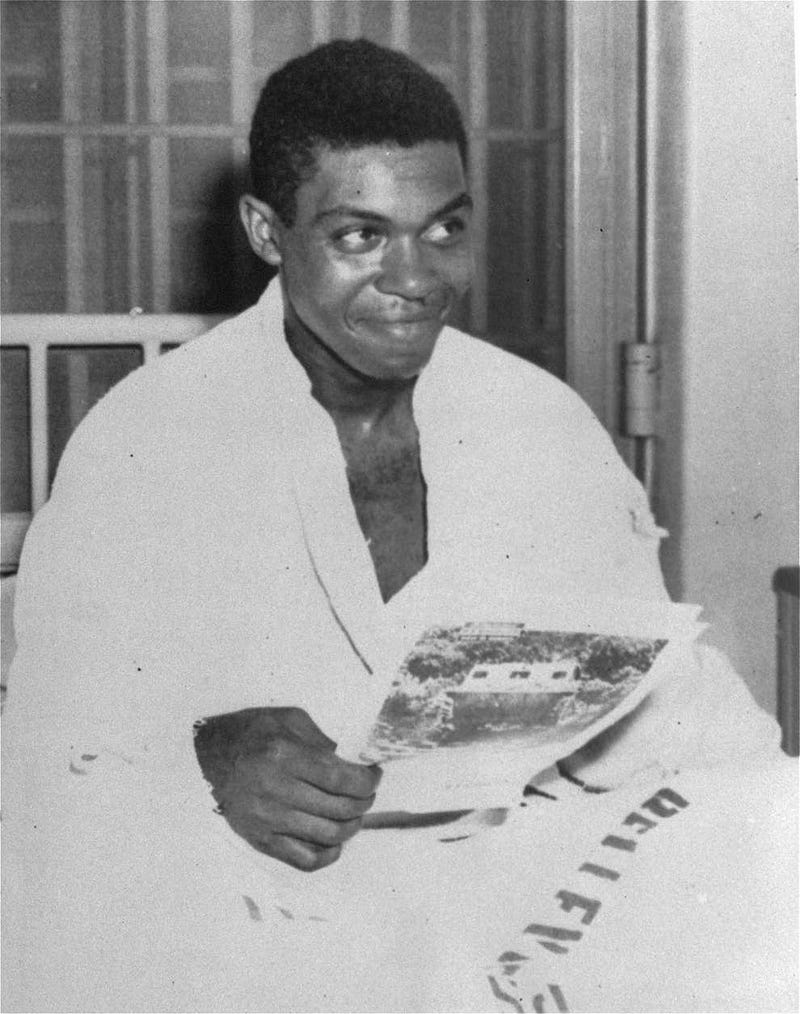
She went to help Polite and got involved in a scuffle. Meanwhile, Florine Robert’s son Robert Bandy arrived at the scene. He was a member of the 703 Military Police. Bandy came to the hotel to have dinner with his mother.
Dominic Capesi, a professor at the University of Missouri, wrote a book about the 1943 ethnic riots. In one part of the book, he describes the whole incident that happened that evening. In the book, he quoted the views of Collins, a white police officer, and Robert Bandy, a black member of the army.
An official police statement said, Bandy attacked Collins with threats. At one point, Collins shot Bandy in the arm as he tried to escape.
However, Robert Bandy’s statement did not match with the police statement. According to his comment, he arrived at the hotel and saw Collins forcefully grabbing Marjorie Polite and trying to arrest her. Policeman Collins also threw her night-stick. Bandy grabbed the night-stick and proceeded to return it to Polite. In such a situation, Collins shot at him. The police arrived shortly after and took Collins and Bandy to the hospital.
Rumors Spread in Harlem -
Rumors spread in Harlem that night. Some people continue to preach that a white policeman has killed a black army member. Both the shooter and the victim were hospitalized. The gathering of black people on the streets of Harlem began to overgrow. Thousands of people were involved in the riots within 12 hours. But even then, no one could know the truth of the incident.
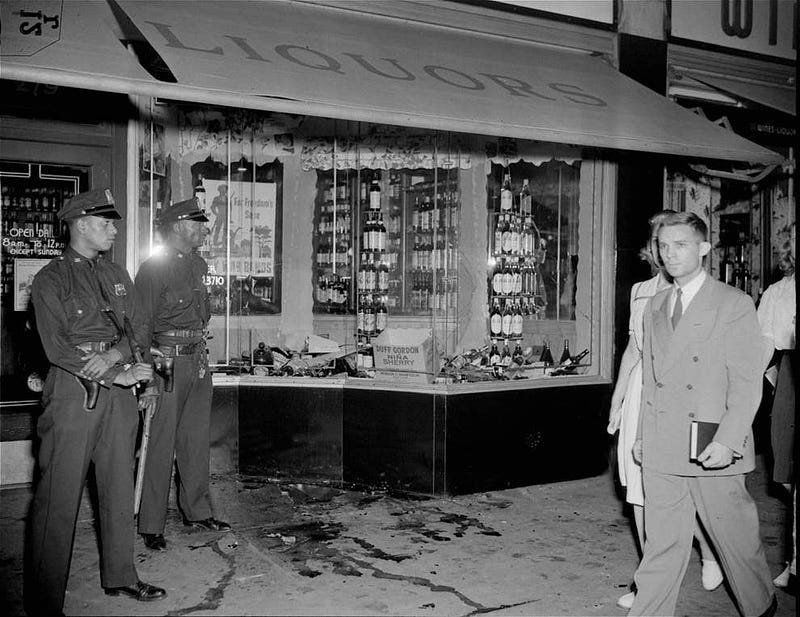
It has already been said that in 1943, 89 percent of the citizens of Harlem were black. But they were second-class citizens there. And they knew it very well. But hundreds of years ago, their ancestors gave their lives for American independence. But even after a hundred years, they did not get their full civil rights. And when people heard that a white policeman had shot Robert Bandy, the reaction spread like wildfire among the people of Harlem.
The socio-economic situation can be blamed for the adverse reaction among blacks in this case of untrue murder. The place of black mistrust towards whites was not only created by the events of that day. And it is understandable how such rumors will affect black people living amid this ongoing social and economic inequality. Because in the past, there have been many actual incidents in this independent United States territory in which whites have killed blacks.
Michelle Flame, a professor of history at Wesleyan University in Ohio, said: The rumor spread like wildfire among the citizens of Harlem. In this sense, there was frustration among blacks because, at the same time, their brothers and friends were engaged in an armed war against the fascists to protect America’s dignity. Even then, policymakers have not been able to resolve the ongoing racism in the United States.
Widespread Frustration And Looting -
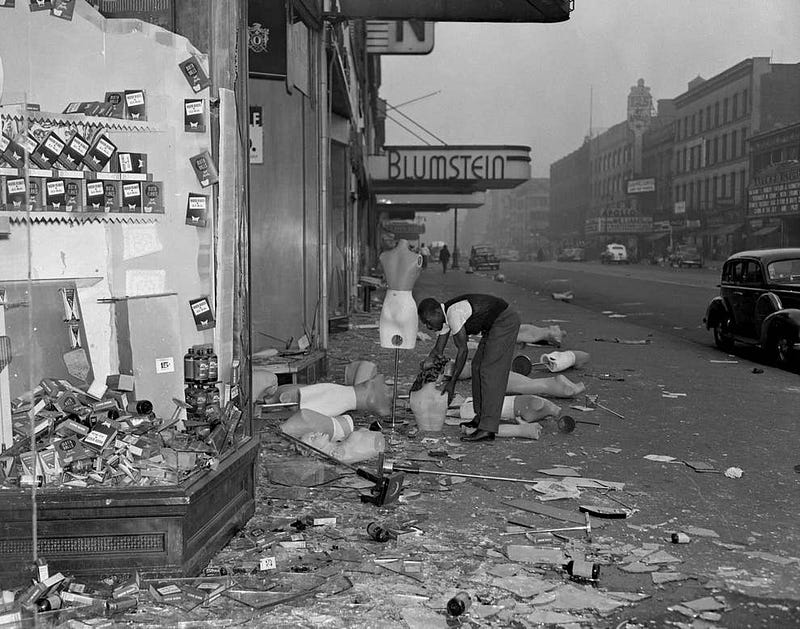
The morning after the incident at the Braddock Hotel, people began to gather on the streets. Then they started looting shops and empty plots. This is not the first time that ethnic looters have been looted there. Earlier, during the riots of 1935, some blacks looted. It was a way to express the anger of the discriminated blacks.
Later, however, the local administration called for an investigation to find those involved in the looting. To prevent the investigation, black leaders have always blamed white property owners for various crimes.
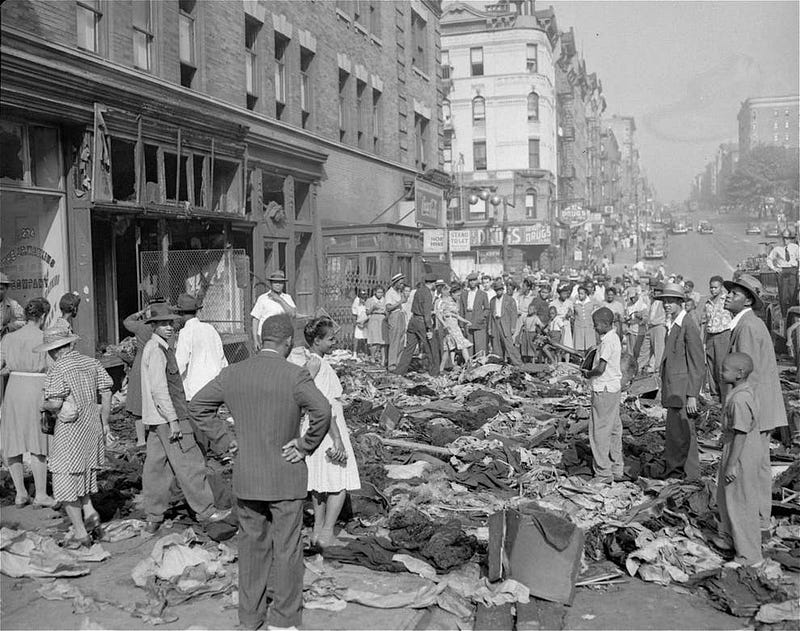
According to Professor Capsey, blacks were not employed in white owner’s shops in some places. It is a different matter of how white citizens view such looting, but in the eyes of blacks, it was their only task against bias and social discrimination. Now maybe many will talk about the law! But when the state has left the road of discrimination open without giving them full civic benefits, there is no other way open for them except to take to the streets and create riots. Nicky Jones, a professor of African-American studies at the University of California, Los Angeles, said:
What was the meaning of white people’s business? This can be seen as economic and social exploitation. Otherwise, it can be said that black people are isolated or oppressed.
The then-mayor of New York, Fiorello La Guardia, immediately imposed a curfew. A few years ago, he also arranged specialized training for the New York police to deal with riots. He immediately ordered the deployment of 8,000 members of the National Defence Forces and volunteers to all of Harlem’s streets. Mayor La Guardia deployed 6,600 police in Harlem during the devastating riots in Detroit a few months earlier. He did so to prevent the Detroit riots from spreading from Michigan to the black community in New York.
He sent Sam Battle to Harlem, who was well known in black society. He was the first black officer in the New York police. He could convince them that Robert Bandy did not die. He is alive.
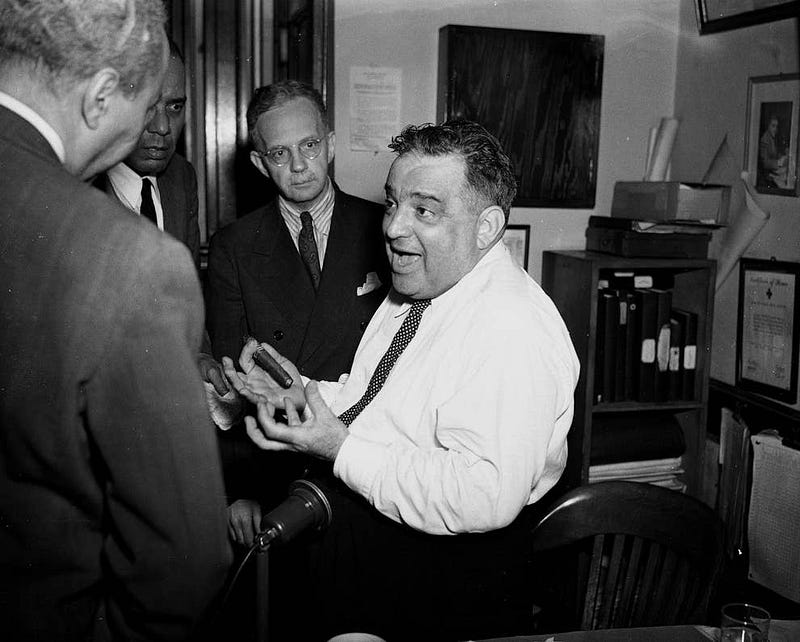
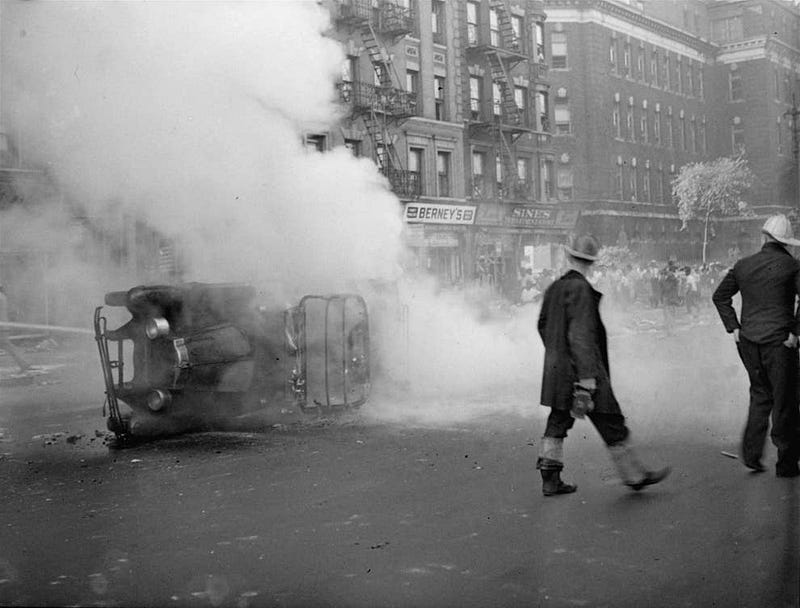
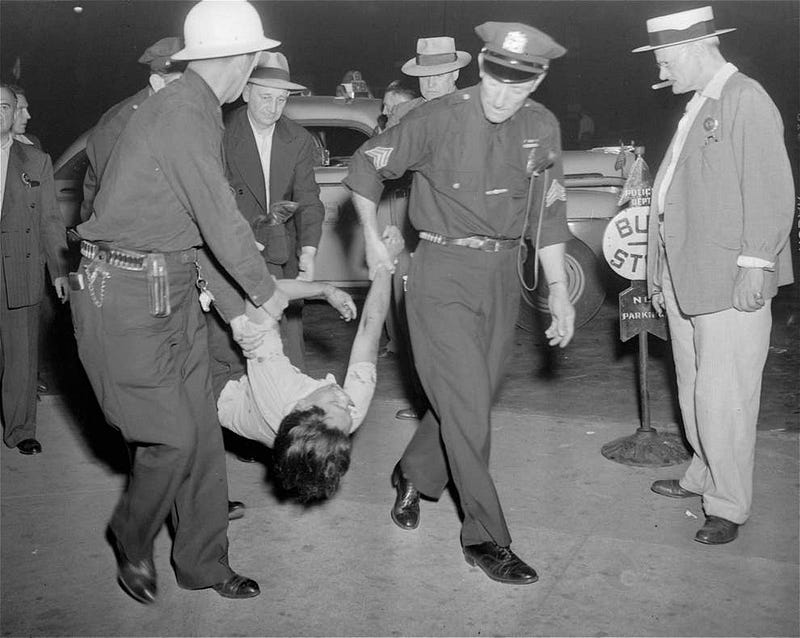
New York police then cut off Harlem’s access to all kinds of information. Originally it was one of the principal ways to deal with riots. Even after the rumors were stopped, some blockers showed positive and some negative attitudes. Then, on August 02, the riots continued all day. The police arrested 600 black citizens. 06 people were killed. Another 200 people were shot and injured in clashes with police.
Authorities lifted the curfew in the area after the situation returned to normal. Looting in the Harlem ethnic riots resulted in a loss of 5 million US dollars (current value). After the looting, most of the white citizens left Harlem for trade and commerce.
That time there was probably a riot based on lies. But the wall of mistrust that the whites and the US government have built for hundreds of years without giving full civic benefits to blacks has not been destroyed.