
Harlem Renaissance, Homosexuality, and Passing
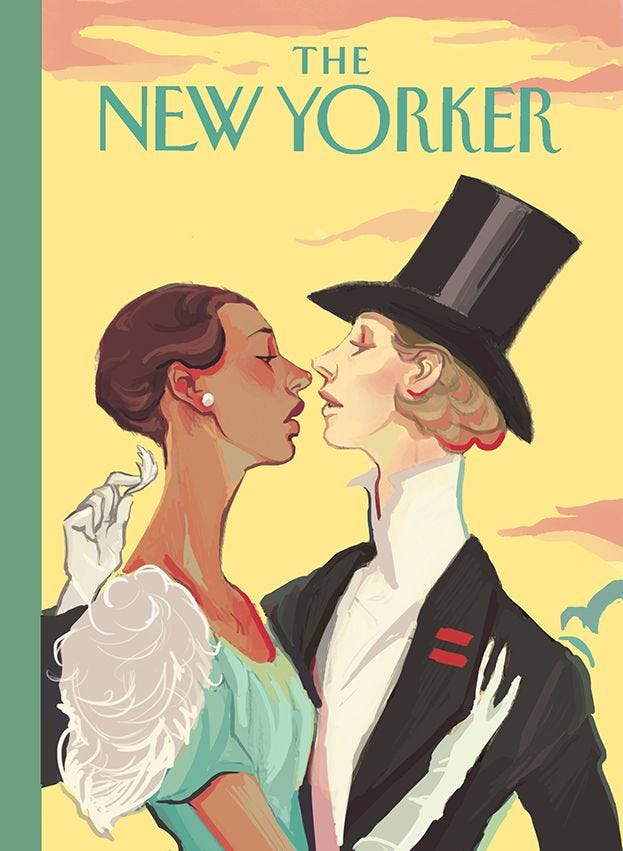
Judith Butler
In Judith Butler’s article Passing Queering: Nella Larsen’s Psychoanalytic Challenge, she explores the homosexual ideas in Nella Larsen’s novel Passing. In the novel Passing, one of the main characters, Irene hints her feelings for Clare who is the same sex as her. Throughout the novel Irene expresses not just her love, but her desire to be Clare since she represents everything Irene is not. Clare lies throughout the novel which gives her this “sexual freedom” and passion that Irene denies herself. This results in Irene hating Clare because she awakens a sexual passion inside herself for Clare. Irene tries to push these feelings away by refusing to respond to her letters as well as refusing to invite her anywhere. Another way Irene tries to make up for her feelings of desire is when she passes these feelings onto her husband, Brian. She starts to hallucinate that the two are having a secret affair behind her back. These feelings come into a full circle in the last chapter where Irene is last seen holding onto Clare’s arm as she is either pushed or jumped out the window. If Irene did push Clare maybe this was her way of finally getting rid of her desire for Clare. There was also the issue of both of them being black and the social constraints on black women’s sexuality. Throughout the novel Irene is trapped by these social constraints of being black as well as having feeling for someone of the same sex. Maybe the title Passing not only means to pass as being white but for Irene it means to pass her feelings she has for Clare.
Quotes that describe Irene’s perception of Clare and her possible “queer” desire.
- “An attractive-looking woman…with those dark, almost black, eyes and that wide mouth like a scarlet flower against the ivory of her skin” (Larsen 9)
- “One moment Clare had been there, a vital glowing thing, like a flame of red and gold. The next she was gone” (79)
- “Clare exquisite, golden fragrant, flaunting, in a stately gown of shining black taffeta, whose long full skirt lay in graceful folds about her slim golden feet” (53)
- “Clare who suddenly clouded all her days” (65)
- “And all because Clare had a trick of sliding down ivory lids over astonishing black eyes and then lifting them suddenly and turning on a caressing smile” (66)
- “What she felt was not so much resentment as a dull despair because she could not change herself in this respect, could not separate individuals from the race, herself from Clare Kendry” (71)
- “The soft white face, the bright hair, the disturbing scarlet mouth, the dreaming eyes, the caressing smile, the whole torturing loveliness that had been Clare Kendry” (80)
Irene and Brian’s relationship
Brazil was a hub not only for all races but also for all sexualities. There is a possibility Brian was attracted to Brazil for both its racial freeness and its sexual openness. Also the fact that Irene and Brian sleep in separate rooms could prove that he was not happy in their marriage. “He slept in his room next to hers at night. But he was remote and inaccessible. No use pretending that he was happy, that things were the same as they had always been. He wasn’t and they weren’t”(Nella Larsen pg. 68). While Irene and Brian rarely made sexual contact, Clare and Irene often touched in an affectionate nature throughout the novel.
Carl Van Vechten
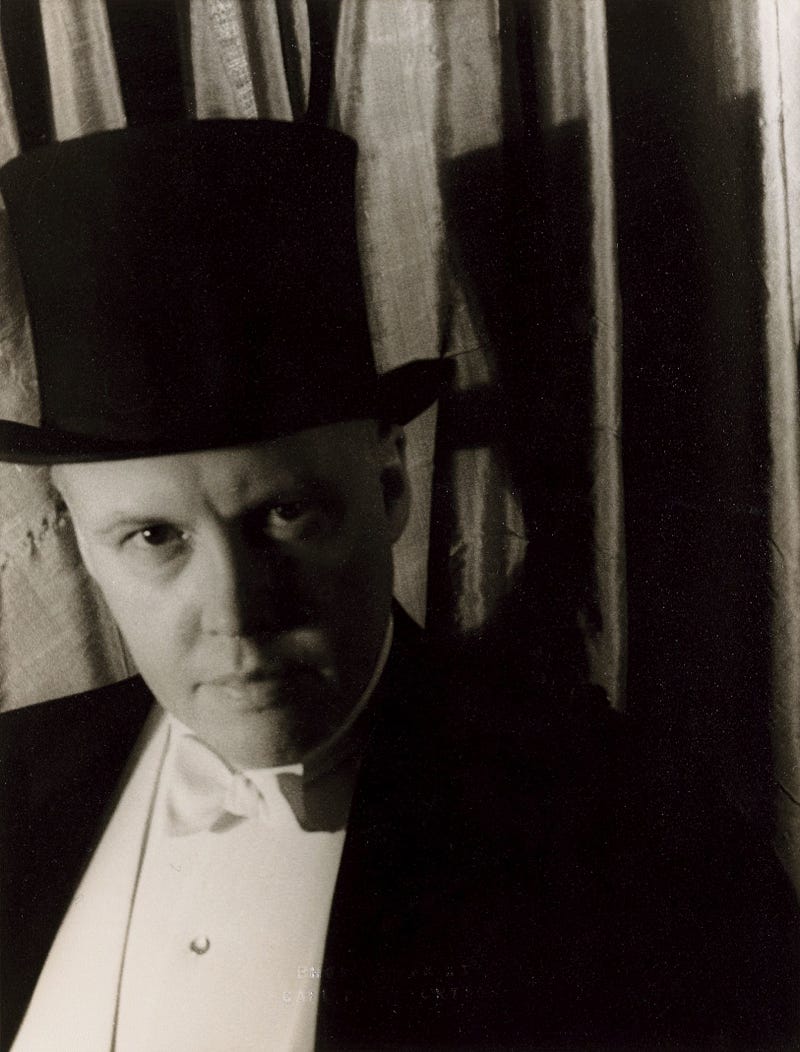
Nella Larson’s character, Hugh Wentworth, is based on the white Harlem Renaissance figure Carl Van Vechten. Van Vechten began his New York career as a critic for the entertainment industry. He became very involved with the entertainers of era, as well as there homosexual social circle. It was there that Van Vechten formed a deep connection to the nightlife of Harlem. Van Vechten was among many gay downtown whites who went uptown in search of sexual recreation. According to The New Yorker, he published his novel “Negro Heaven”, which presented Harlem’s African Americans as stereotypically lascivious that drew scores of white Harlem to “go slumming,” many of whom were gay.
In Van Vechten’s social life he was open about his homosexual desire. Despite being married, he had many male lovers. Scholars have discovered extensive flirtatious behavior in letters from Van Vechten to a myriad of men. Van Vechten’s wife was distraught by the situation; she often felt as if she had to wait in line for an audience with her husband. Richard Bruce Nugent, the first black writer to produce frank descriptions of same-sex desire, remembered an odd exchange with Van Vechten, later in his life. At a party, he touched Nugent’s shoulder and said, “If you had just patted me on the head and said, ‘Carl, you’re a nice boy,’ you could have had anything you wanted.” But, to Nugent, this seemed less like a proposition and more like an older man’s plea for acknowledgment (The New Yorker).”
Homosexuality during the Harlem Renaissance
The Harlem Renaissance can be characterized by a movement of African American arts and culture. Historians state that this era can be defined by both race and sexuality. According to an article from The New Yorker, “The Harlem Renaissance was, in Henry Louis Gates’s formulation, “surely as gay as it was black”. There was a growth in art, jazz and blues, and drag balls. This time period was defined as “homosexual mecca” or queer paradise. One of the most popular attractions was Green Which Village where homosexuals found freedom (Sherouse, Glenda Elizabeth).
The 1931 novel Strange Brother, by Blaire Niles, sums up the period’s complicated social geography best: “In Harlem I found courage and joy and tolerance,” notes one gay character. “I can be myself there … They all know about me, and I don’t have to lie.” Harlem provided refuge because it had no separate community based on shared sexual orientation. Scholars have said that during the 1920s and 30s, Harlem had one of the most vibrant queer communities of color in the 20th century. During this time artist were forced to either retire or hide their sexual preference. Jazz Age Harlem offered a combo of license and sexual ambiguity that provided a comfortable environment for those attracted to members for their own sex (Villarosa, Linda).
Despite this kind of freedom and pageantry, homosexuality wasn’t universally accepted. Harlem’s most powerful minister, Adam Clayton Powell, pastor of the Abyssinian Baptist Church until 1937, campaigned against what he saw as the growing scourge of sexual perversion and moral degeneracy. The annual Hamilton Lodge event where homosexuals would come together and dress in drag, was openly referred to as the “parade of the pansies,” “dance of the fairies” and “faggots’ ball.”
Homosexual Performers from the Harlem Renaissance include Bessie Smith, Ma Rainey, Alberta Hunter, Jackie “Moms” Mobley, Josephine Baker, Alain Leroy Locke, Bruce Nugent, Wallace Thurman, Ethel Waters, and Madam C. J. Walker who is said to have had affairs with women, and was instrumental in bringing about the acceptance of gays in Harlem social circles.
The Blues, Homosexuality, & Harlem Renaissance
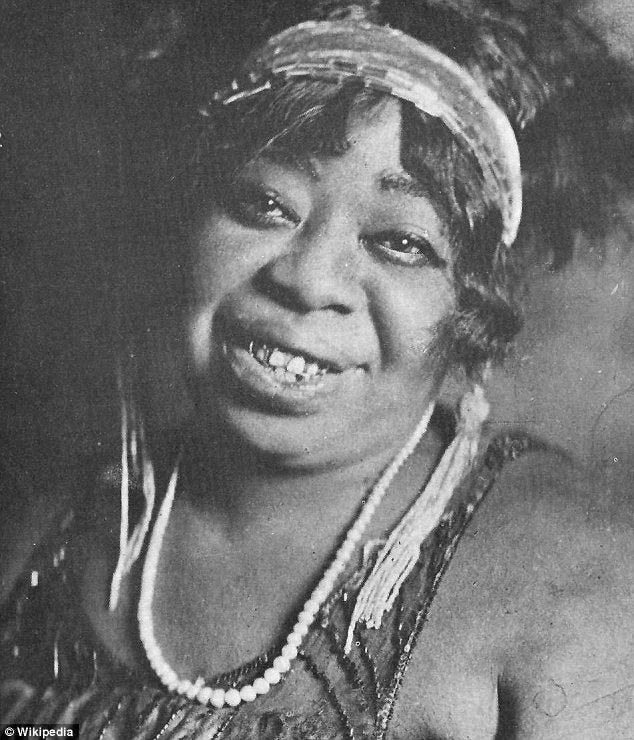
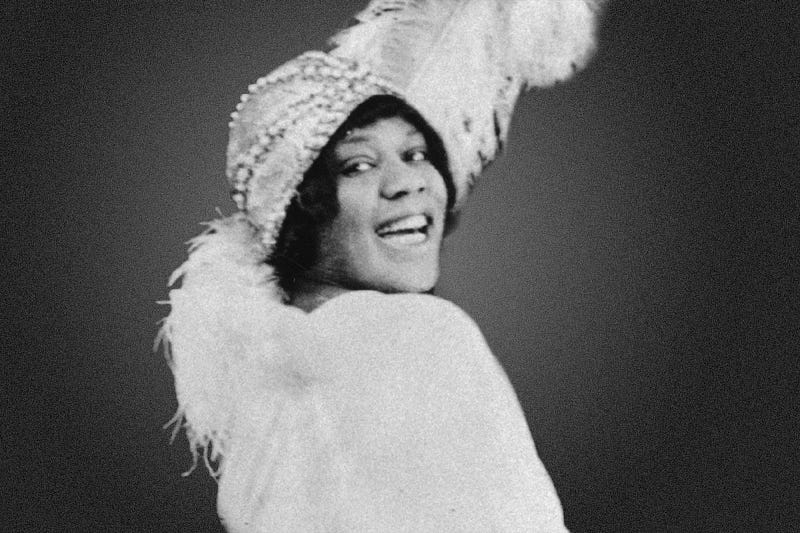
As it turns out, the blues world was the perfect realm for people who were thought of as “sexual deviants” to reside, in part because people in the entertainment industry had far more leeway to flout sexual mores. Blues music also thrived far outside the scope of the dominant white American culture in the early 20th century. During the Jazz age there was speakeasies, dive bars, and private parties where blues singers had the freedom to explore alternative sexuality, and on a rare occasion, they even expressed it in song. It's likely that the flapper movement took some cues from these blues divas, who were on the cutting edge of that sexual revolution during the 1900s which consisted of conventions about proper women left and right. Gertrude ‘Ma’ Rainey who is known as the Mother of the Blues, hinted at her sexuality in her lyrics, “It’s true I wear a collar and a tie. . .Talk to the gals just like any old man” and Bessie Smith, a married woman who kept a female lover, also sang “When you see two women walking hand in hand, just look ’em over and try to understand… They’ll go to those parties — have the lights down low — only those parties where women can go”(Peppers, Margot).
Laws from:The Politics of Homosexuality In the Twentieth Century of Black Freedom Struggle
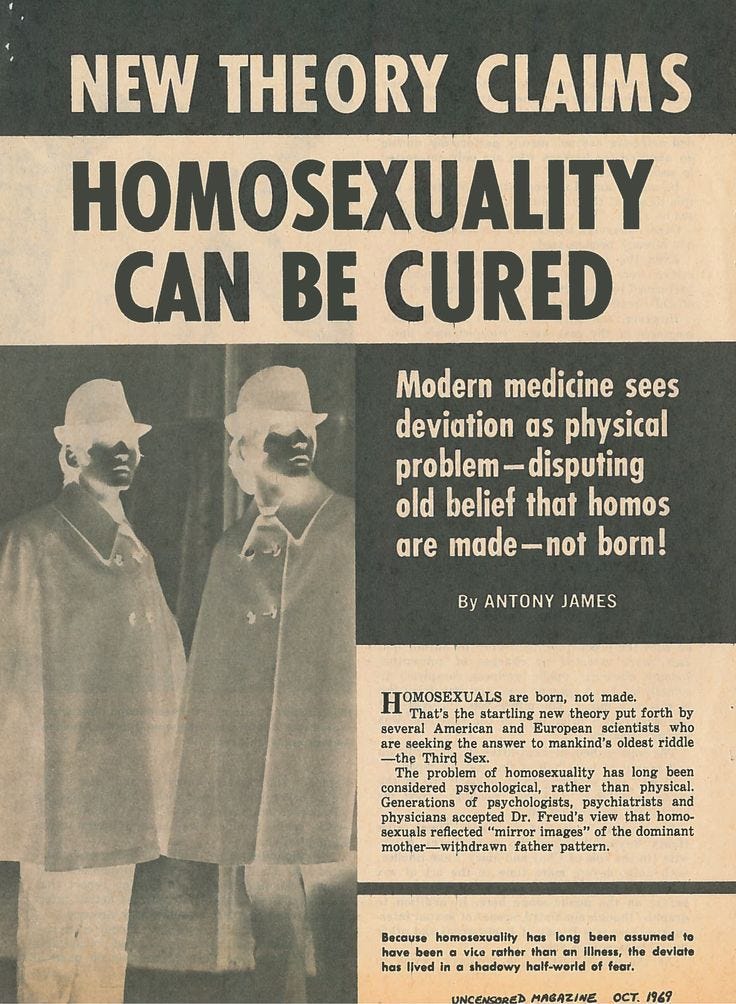
Antisodomy laws and others modeled after British statutes banning “crimes against nature”, had been in effect across America since colonial days (Gay 30’s). Conservative laws regarding sexual conduct began to appear in the 30’s. There was also an emergence of both laws and attitudes that sought to define proper middle-class black masculinity and femininity in strictly heterosexual terms.
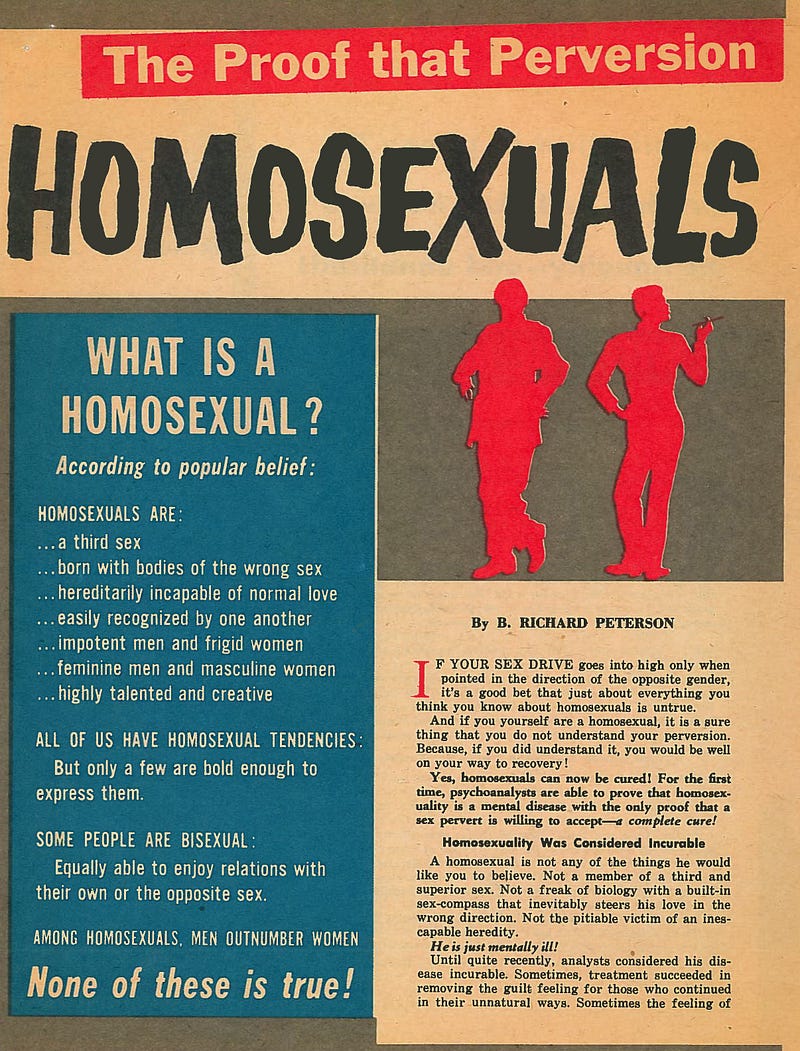
During the Jim Crow era, southerners viewed homosexuality as wrong and it was treated as another form of black sexual deviance. There was a not an official term for a person who practiced homosexuality in the 20’s and 30's. Therefore, scholars referred to them as “indeterminate”, “third sex”, or "degenerate”. This era was the beginning of modern queer black culture and the beginnings of anti-homosexual attitudes within black communities.
Queer sexuality represented another possible source of arguments for black inferiority and exclusion from citizenship. This intensified during the decades as African American's increasingly came to embrace white middle-class ideas about gender and sexuality as a means of strengthening their arguments for access to full citizenship rights. For African Americans that belonged to or wished to be apart of the middle class in Harlem, suffered immensely if they were not heterosexual. This was because homosexuality carried bigger consequences than it did for working class blacks (Sherouse, Glenda Elizabeth).
Lesbian blues singers had to appear bisexual at least in their public image. Blues Singer Ma Rainey got into trouble with the police for her lesbian behavior in 1925, she was arrested for taking part in an orgy at her home involving the women in her chorus. She was charged with running an indecent party. A large migration of southern African Americans eventually left to head toward the north, more specifically New York City. There was sexual freedom especially in Greenwich Village which was famous for its gay community because “it was the only place where black men could congregate in commercial establishments” making it the center of black gay life in the urban North (George Chauncey).
Gay Nightlife in the Harlem Renaissance
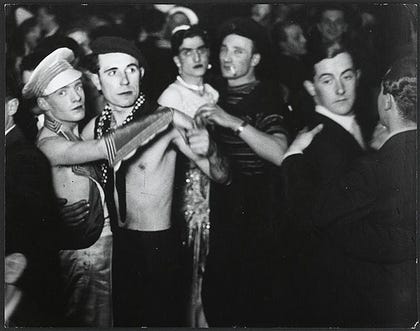
Nightlife was a very important element of gay culture. The suppression of the era drove people in search of gay interaction to the furtive night club scene. The gay nightlife can be identified by three different scenes: rent parties, buffet flats, and drag balls.
There was an intense increase in public homosexuality following the Prohibition. The Pansy Craze, of both Chicago and Harlem, was a surge of popularity for gay performers. “African American drag entertainers performed for racially mixed audiences at some of the South Side’s most famous ‘black and tan’ [cabarets]. Mexican ‘queers’ carved out a space for themselves along Ashland Avenue, and ethnic working-class ‘queens’ from the city’s North, South, and West Sides met at private parties and public drags throughout the city (Blackmer).”
The Entertainment Industry became a safe place for homosexuals to make social connections. The blues music industry quickly became a hub for lesbian entertainers. These artists even occasionally expressed their homosexual desires in their music. The blues woman were precursor to the flapper generation defined by sexual freedom.
It was not only those practicing homosexuality that partook in the nightlife scene. Many bystanders came to observe the “sexual deviants.” This culture declined quickly following the Stock Market Crash of 1929 and the beginning of the Great Depression.
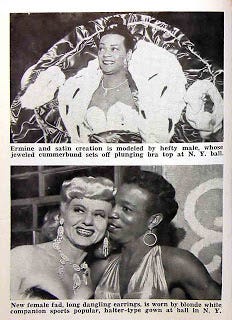
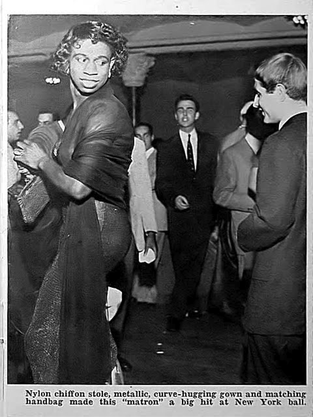
Drag balls took place at the Rockland Palace Savoy. Men would dress as women and women would dress as men. Males would wear flowing gowns and feathered headdress’s and females would appear in tuxedos and box black suits. For the men, there was also a fashion parade. There was also prizes which were given to the most gorgeously gowned of the whites and negroes who, powdered, wigged, and rouged, and competed for awards. People came from Boston, Philadelphia, Pittsburgh, and Atlantic city to attend. The show was presented by other former “queens” of the ball, prize winners of years gone by wearing the costumes that won them their prizes. The costume balls, parties, speakeasies and buffet flats of Harlem provided an arena for homosexual interaction, but not for the development of homosexual networks. One area where black lesbians and gay men found particular bonds of friendship was within Harlem’s entertainment world.
Race and Sexuality in the Harlem Renaissance
Geographically, Harlem was located conveniently for white New Yorkers: African Americans lived “too far away to be dangerous yet close enough to be exciting.” Those white visitors in search of sexual and homosexual adventures had less reason to fear social ostracism or the loss of family ties and employment, as they could retain a sexually inconspicuous image in their everyday white environment (Schwarz).
E. Franklin Frazier points out that the black middle class has “striven to mold themselves in the image of the white man” — an aspiration which to some extent implies attempts to emulate the “best” white Americans in terms of looks, taste, morality, and value system. A more accurate analysis seems to be that the black bourgeoisie sought respectability. African Americans had been portrayed and treated as sexually suspicious and excessive in the form of sexless “darkies” and “mammies” or oversexed studs” and “Jezebels.” The black bourgeoisie aimed at sexual “normality” by means of an adherence to higher moral standards that whites, who had the power to define respectability, had denied them for centuries. This may be why Irene seems to be fixated on Clare whenever they are together, but also tries to avoid Clare at every opportunity; she tries to hide her desire for Clare in order to maintain her respectable role as a mother, wife, and leader in her community.
Hazel Carby notes the emergence of “fears of a rampant and uncontrolled female sexuality… and fears of the assertion of an independent black female desire that has been unleashed through migration.” The fact that migrant women were often unmarried meant that they not only stood outside a family structure, regarded as fundamental to black America’s “racial uplift,” but also seemed to reject the role of motherhood. (Schwarz)
Lesbians were viewed as particularly deviant. According to bell hooks, the “prevailing assumption was that to be a lesbian was ‘unnatural’ because one would not be participating in child bearing.” In the milieu of Harlem, Schwarz notes, gay men were slightly more acceptable than lesbians. (Schwarz)
Concerns about female sexuality were mainly voiced in black middle class circles, but a woman’s choice of a female sexual partner was presumably equally perceived as a serious threat in a black working class environment. In this social context, lesbians were, evoking an “inverted,” masculine image, derogatorily known as “bulldaggers” or “bulldykers.” Significantly, their gender role inversion seems to have met with far less favorable reactions than that of their male counterparts, the fairies. While this is not to imply a sympathetic treatment of fairies, it seems that, for instance, in newspaper reports on drag balls, cross-dressing men were favored: Fairies and their elaborate costumes were often described in detailed, long columns as “gorgeous beyond words,” whereas cross-dressing women were mentioned only briefly, if at all. While their costumes were certainly fundamentally different and men’s clothes, as could be argued, can only to a limited extent be admired for their fabrics or colors, it is noteworthy that usually any tone of admiration is lacking in the description of cross-dressing women. They appear to be implicitly blamed for their lack of colors and elegance, or, in short, their lack of femininity.(Schwarz)
Gladys Bentley
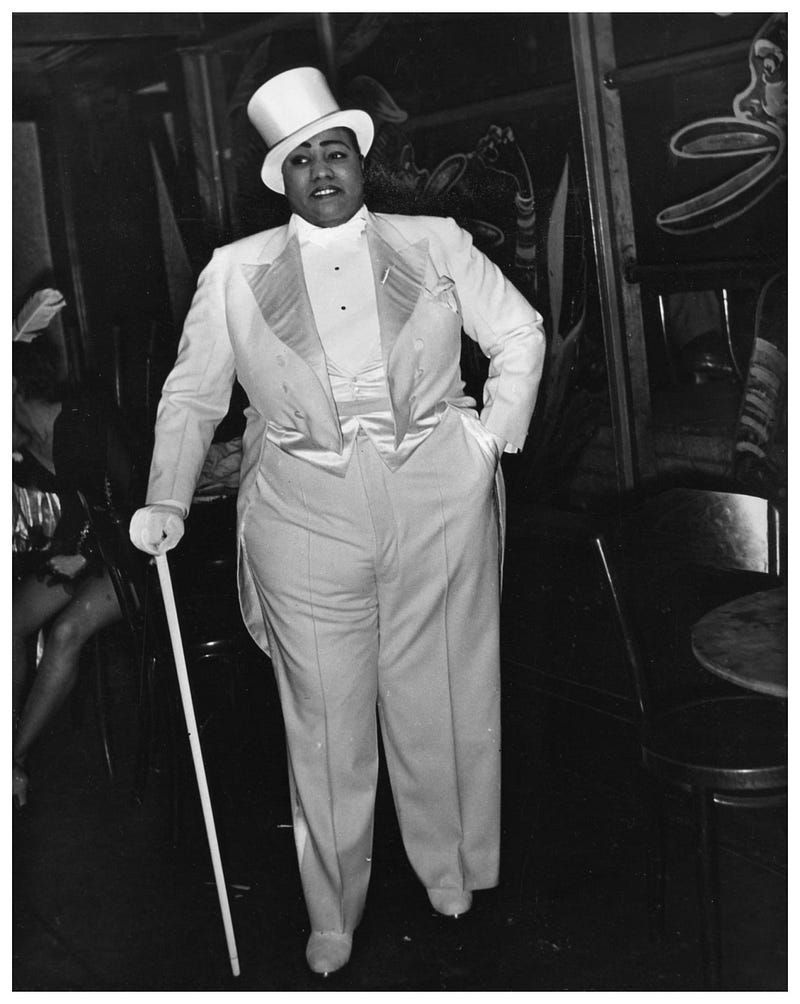
Bentley thrived during the Black Renaissance in Harlem during the ’20s and early ’30s, becoming unquestionably Harlem’s favorite “bulldagger.” Wearing box ties, Eton jackets, and short straight hair, Gladys created a sensation wherever she went. She expressed her creativity and her sexuality flourished free from prejudice or scrutiny by either the White or African American community. Unfortunately, this all-too-brief period of freedom ended by the close of the 1930s. Homophobia, uniting with racism, sexism, and classism, destroyed Bentley’s ability to live creatively and freely (Wilson).
On top of being an African American, Gladys was a woman. Her race, gender, and sexuality triply marginalized her in the eyes of the white, heterosexual, masculinist world. She had no place to hide from homophobic or sexist attitudes. Unlike many of her white lesbian and gay counterparts, she couldn’t retreat behind a facade of white and heterosexual normalcy. The open and accepting environment of Gladys’s friends melted back into the closet. Gladys’s overt sexuality and public persona, however, prevented her own retreat. Gladys lost her financial support when her sexuality and race became an issue. In the end, she had to sacrifice her sexuality for survival (Wilson). Because Irene does not pass in her community, she can’t risk having a relationship with Clare, who can pass. Irene would be too ostracized for being both black and a lesbian, unlike Clare, who would be able to hide behind the facade of being white.
Glossary
Chicago’s shadow homosexual world of the 1930s was so well developed that participants devised their own cant. The use of the word “gay” did not become popular until the 1940s and 50s. Professor Ernest W. Burgess compiled a “Glossary of Homosexual Terms.”
Auntie — Older queer, or one who acts old
Belle — Any homosexual person; one who is usually aware of his condition
Bitch — Term for homosexuals, usually among themselves
Blind — Homosexual traveling with a girl, or who marries to conceal his condition
Brownies- gay man, term from Philadelphia
Bulldagger- a masculine woman
Chorus moll — Type of young homosexual who is effeminate, uses rouge, lipstick, dresses foppishly
Dirt — Persons, often trade, who blackmail or rob homosexuals. Usually picked up in public places
Faggot — A gay man
Fairy — A gay man
French — Fellatio
Green — Homosexual who is ignorant of his condition; average person who is ignorant of homosexuality
Marjorie — Homosexual who is affected, flirty, very effeminate, “sweet and lovely”
Miss Lesbos — Term applied to lesbian girl
Party — Sexual act; usually involves fellatio
Sissy — a feminine male
Tea room — Public toilet
Trade — One who will permit homosexuals to have sexual relations with him, usually for money
Rent Parties — known for their wild, sexually charged atmosphere, and bootleg liquor.
Queer — A person with homosexual tendencies
Buffet flats — apartments converted into sex clubs that featured shows and prostitution.
Works Cited
American Studies @ The University of Virginia, xroads.virginia.edu/~ug97/blues/garber.html.
Clayton, Joana. “Closet Ain’t Nothin’ but a Dark and Private Place for . . . ?.” [“text of performance piece”]. Art Journal, vol. 55, Winter96, pp. 51–54. EBSCOhost, doi:10.2307/777654.
Blackmer, Corinne E. “ The Veils of the Law: Race and Sexuality in Nella Larsen’s Passing .” The Johns Hopkins University Press, www.jstor.org/stable/pdf/25112208.pdf?refreqid=excelsior:9b2f76b35a3864222a91deee46709d1cwww.chicagomag.com/Chicago-Magazine/November-2005/The-Gay-30S/.
Fleeson, Lucinda. “The Gay ‘30s.” Chicago Magazine,
www.chicagomag.com/Chicago-Magazine/November-2005/The-Gay-30S/.
Garber, Eric. “A Spectacle in Color: The Lesbian and Gay Subculture of Jazz Age Harlem.”American Studies @ The University of Virginia, xroads.virginia.edu/~ug97/blues/garber.html.
Hix, Lisa. “Singing the Lesbian Blues in 1920s Harlem.” Collectors Weekly, www.collectorsweekly.com/articles/singing-the-lesbian-blues-in-1920s-harlem/.
Larsen, Nella. Passing. Penguin Books, 2003.
Peppers, Margot. “The Lesbian Blues Singers of 1920s Harlem: How Speakeasies and Underground Jazz Bars Became a Home-from-Home for New York’s ‘Sexual Deviants’.” Daily Mail Online, Associated Newspapers, 12 July 2013, www.dailymail.co.uk/femail/article-2360792/The-lesbian-blues-singers-1920s-Harlem-How-speakeasies-underground-jazz-bars-home-home-New-Yorks-sexual-deviants.html.
“Renaissance in Harlem.” Out of the Past: Gay and Lesbian History from 1869 to the Present, by
Neil Miller, Alyson Publications, 2006, pp. 135–143.
Sanneh, Kelefa. “White Mischief.” The New Yorker, The New Yorker, 18 June 2017, www.newyorker.com/magazine/2014/02/17/white-mischief-2.
Schwarz, A.B. Christa, et al. “Gay Voices of the Harlem Renaissance.” By A.B. Christa Schwarz,
www.goodreads.com/book/show/1106683.Gay_Voices_of_the_Harlem_Renaissance.
Sherouse, Glenda Elizabeth. “The Politics of Homosexuality In the Twentieth Century Black
Freedom Struggle.” University of South Carolina Scholar Commons, 2013, https://scholarcommons.sc.edu/cgi/viewcontent.cgi?referer=https://www.google.com/&httpsredir=1&article=2478&context=etd
Villarosa, Linda. “The Gay Harlem Renaissance.” The Root, Www.theroot.com, 23 July 2011,
www.theroot.com/the-gay-harlem-renaissance-1790864926.
Wilson, James F. Bulldaggers, Pansies, and Chocolate Babies : Performance, Race, and Sexuality in the Harlem Renaissance. University of Michigan Press, 2010. Triangulations. EBSCOhost, athena.rider.edu:6443/login?url=https://search.ebscohost.com/login.aspx?direct=true&db=e000xna&AN=1527078&site=eds-live&scope=site.


