
Hard to Wear a Mask? Here Are Other Habits People Found Hard to Adopt in the Past
Many are puzzled by the opposition of some Americans to wear a face mask in this pandemic. Looking at the past, this opposition to “do what you are told” is not that unprecedented.
It is 2020 and some social norms are widely accepted and encouraged to become habits. You get into your car and fasten your seat belt. You don’t smoke indoors or, at best, you don’t smoke at all.
Anyone opposing these rules could come across as reckless, unconsidered and tends to be corrected by societal controls, for example, in the form of a fine.
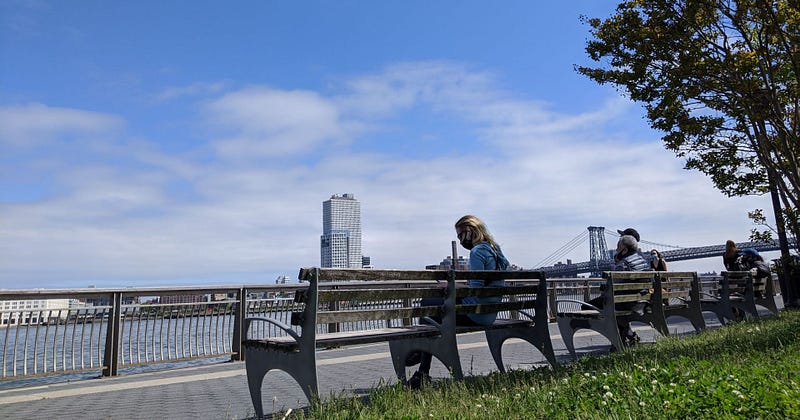
Come to think of wearing a face mask and then everything is different, right? We are not sure if the people who just “don’t want to wear it” should be socially pressured to do so. In the United States, this harmless habit that has been welcomed in many countries as a matter of public health, soon turned into a matter of political stance.
“We don’t live in a communist country! This is supposed to be America,” said a Texan bar owner who did not only oppose wearing a face mask herself, but who had banned customers from wearing one at her bar, reported The Guardian. The reasoning does not only include “personal freedom” but also a belief that it is just “not worth” the bother if such masks are not “completely” preventing contagion.
But, is this fierce opposition really that different from other previous changes in collective behavior? Looking at the past, many “normal” habits today in the United States steamed from heated battles between defenders and opponents to such conventions, with regulation somewhat shaping the final result. What we are living today resembles the experiences of imposing smoking restrictions and rules for safe driving, for example.
For the relief of many of us, we might just be at the tipping point of this battle on mandatory mask wearing. By last week, more than half of U.S. states have issued mask mandates, with the District of Columbia joining the list today. Businesses such as Walmart, Kroger, Starbucks, Best Buy, Panera Bread, Trader Joe’s, Harris Teeter, Giant Food (you name it) are on board with adopting this new habit.
Smoking indoors
“This is Big Brother. This is Carrie Nation. This is good old-fashioned prohibitionism run rampant […] It’s an attempt to dictate behavior, and Americans are not very good at having behavior dictated to them, especially by self-righteous moralists who have decided it’s not good for you to smoke.”
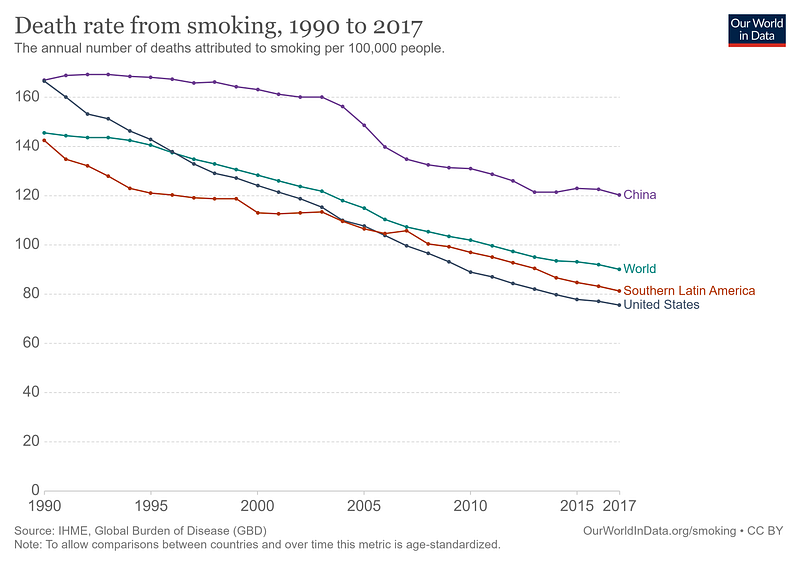
It is February of 1988 and these are the words of a spokesperson for the Bakery Confectionery and Tobacco Workers International Union, quoted in the St. Petersburg Times (today Tampa Bay Times). The story that quoted him showed that by 1987 the non-smoking movement had successfully convinced 32 states to regulate smoking in public offices and 14 states to do the same for private workplaces.
More regulation was coming ahead, although not based on some “self-righteous moralists” but on the first surgeon general’s report that linked smoking to lung disease in 1964, followed by two other reports touting the harm cigarettes caused in industrial workers (1985) as well as the danger of second-hand smoking (1986).
The defenders of “smoking whenever, wherever” went to some pretty astonishing extremes, some people may think today. In Beverly Hills, Co., it was reported that “one recalcitrant smoker paid a $100 fine rather than snuff out a butt” while dining at a local restaurant. Doctors used to diagnosed some smokers as “physically dependant” on cigarettes — similar to what happens today with the opioid crisis — which was used by some smokers as an argument to be allowed to light one during working hours. Oh, there were organizations named “Smokers’ Rights Alliance” (say what?) to fight new restrictions.
But much as we are seeing today with wearing a mask, hundreds of businesses had already took matters into their own hands and banned smoking in their locations, without the need of local rules. At a federal level, though, the clear stance was to continue restricting smoking, as the Ronald Reagan administration had passed a law of $600 billion in earmarked federal aid to airports and transit agencies to ban smoking in their premises. Did it work? Yes. Like we say in Spanish, con la plata baila el mono.
Fasten your seat belts
I was still in my teen years when the use of car seat belts became mandatory in Peru. I remember bus drivers “pretending” they were wearing a seat belt, and I remember myself pretending to do the same in the co-pilot seat. Not that I didn’t want to wear one, but the buckles were so old and rusty that they could not hold the belt. And I really just wanted to get home. We did that every time a police officer would approach to the bus windows on a red light to check if we were law-abiding citizens.
But truth is some people simply did not want to wear one. In the media, I would hear comments from people saying someting along the lines of “in the United States everyone buckles up their seat belts, for years now. Peruvians don’t want to comply with the law and that’s ignorant.” It was 2006 and the government had just mandated drivers and front seat passangers to wear a seat belt or face big fines otherwise. But what these people so knowledgable about life the U.S. never said was how spectacularly controversial this type of law was over there too.
Between the 50s and the 60s, opponents to using seat belts argued that it should be a matter of personal choice, and that such devices could cause personal injuries and prevented easy escapes in case your car would submerge in water, as this story by the Winsconsin Public Radio shows. Of course, seat belts were not the same then as they are now.
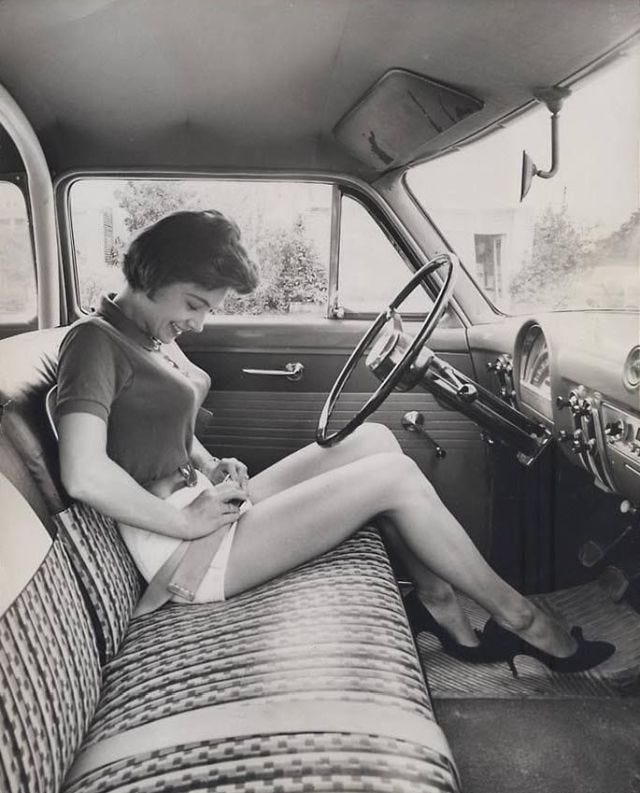
It wasn’t until the late 50s that the three-point seat belt, which is what we know today, was invented. But automakers did not hold this as the standard in car manufacturing. Finally, in 1968 a law mandated all new vehicles manufactured in the U.S. come with a seat belt. Almost 20 years went by, and despite all the research desmonstrating the effectiveness of the new design, people just did not want to use one.
A Business Insider story found that even as late as in 1983, fewer than 15% of Americans said they used seat belts consistently. Then, there was a turning point. In 1984, the U.S. Department of Transportation required all cars to have air bags or seat belts unless some of the most populous states adopted seat belt laws. The automakers figured they would lobby to get everyone to like seat belts so that the government wouldn’t force them to install airbags. The socially responsible campaign was pretty good, but it didn’t work out as a political strategy. (Airbags have to be installed in cars today.)
New York state was a first mover in the seat belt law movement. Many states followed suit, but it took all the way to 1995 to get all states to ride the wave of safe driving, with Maine as the last state to add this type of regulation. Now most car engines will even turn off if you’re not wearing a seat belt.
“It’s my personal choice”
Everything is, in the end, a matter of personal choice. You could choose to drive without any safety measures and smoke indoors, not caring how you affect others, but then, that government that felt so oppresive will be left to lead a community with high death rates from car accidents and even more victims of lung cancer. And then someone will wonder: why isn’t anybody doing something about it?
There are times when there is more than just our tiny little selves out there. We are free to cause harm just as we are free to care for the others, expecting they will care for us as well. The fact that you get to act as if your actions didn’t have a collective effect doesn’t make it true. We are all constantly affecting each other in multiple ways. If we haven’t realized yet, this is an inherent part of living in society, whatever the political ruling of the moment may be.
But if you still are not convinced, at least have mercy on this guy: