
Middle-Pause Pump-Priming Prompt
Happy Valentine’s Day! Celebrating Black History Month with Love Stories
I’ll Start with Alma Powell and Lydia Hamilton-Smith
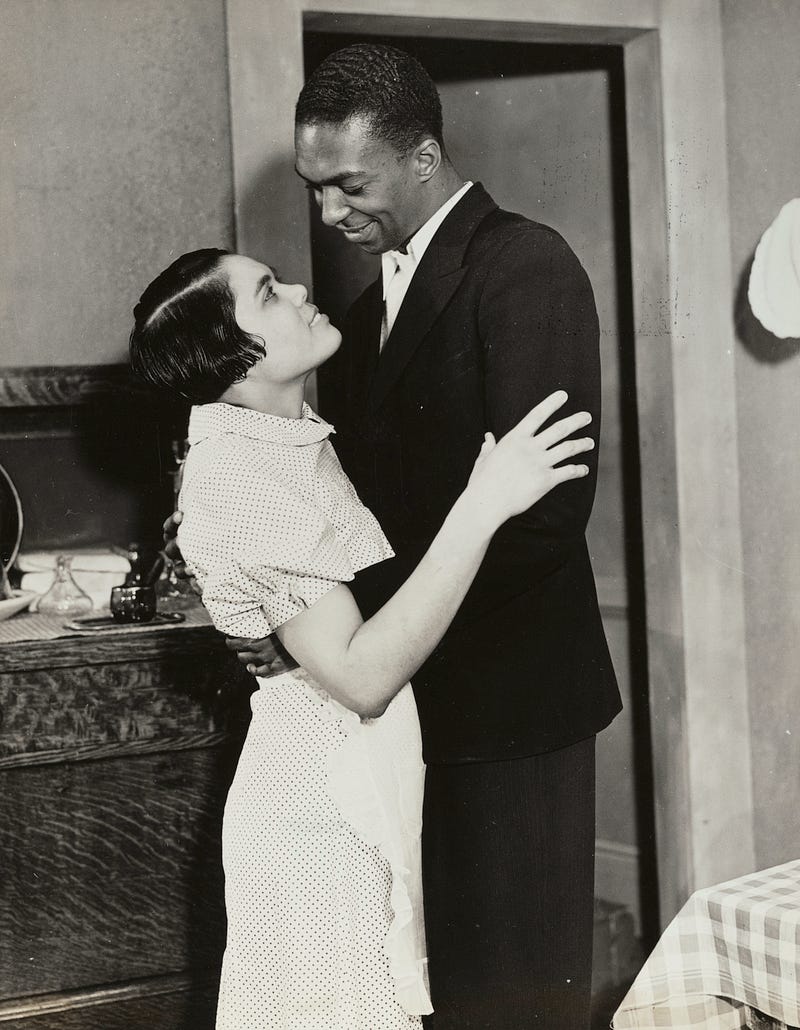
It’s February. Black History Month. And today’s Valentine’s Day,
Like any good improviser, I’ve learned to respond to situations with the iconic yes/and.
Its more exclusive, excuse-making cousin, yes/but, can stop the flow of creative ideas, or force people to chose between two good things.
Like love and Black history.
Yes/and allows us to enjoy and appreciate the beauty and complexity of both.
Which brings me to this week’s Middle-Pause Pump-Priming Prompt: Share a love story from Black History. It can be recent history. The people can still be alive. They don’t have to be famous. Or even real. But love wants to be in there somewhere.
I’m fine going first.
I was all excited to share the passionate love story of Alma Johnson and her husband General Collin Powell. Especially when I discovered the story of their first encounter.
They met on a blind double date. Alma was not in the mood and determined to make a bad first impression. So bad that she piled on her makeup to grotesque excess. And wore an ugly outfit.
One look was all it took.
When she got a glimpse of young Collin, she ducked into the restroom, washed off her makeup, and changed her clothes. They were married within a year! Despite his making the military his career. And the fact that he was not much of a dancer.
Fortunately, she was a good teacher. He learned to do a decent twist when they cut some rugs in the early 1960s. And she learned to get used to moving. A lot. And having babies while he served overseas in Vietnam. They remained inseparable for 60 years until he passed last October.
I guess I managed to share it anyway.
And I have another love story: Lydia Hamilton-Smith and Thaddeus Stevens. Do you know them?
You may have seen them in bed together.
In Stephen Spielberg’s award-winning film, Lincoln, staring Danel Day-Lewis. If you’ve never seen it, promise me you will. It’s a moving and sensitively told story of the wheeling and dealing it took to pass the 13th Amendment, abolishing slavery, in 1865.
The movie depicts behind-the-scenes arm twisting, wild and wooly debates, and delicate choreography that went into getting the needed votes from both sides of the aisles. Sounds like we could use some of this today.
Thaddeus Stevens, Lincoln’s Chief of Staff was key to those debates and vote round-ups. And Lydia Hamilton Smith was his partner in shaping history as well as his common-law wife.
When I learned that she was born on February 14, 1813, and died on February 14, 1884, it took it as a sign.
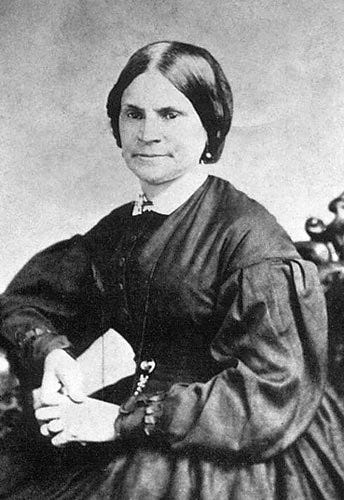
I’m supposed to tell her story.
According to Wikipedia: Lydia Hamilton was born near Gettysburg, Pennsylvania. Her mother was a free biracial woman of European and African descent, and her father was Irish. Smith married a free African man, Jacob Smith (died 1852), with whom she had two sons.
When she became Mr. Steven’s housekeeper in 1847, she was a widow with two young sons. He accepted her children and two nephews into his household. For 25 years, she managed his home and businesses in Lancaster, PA. She moved with him to Washington, D.C. to run his household and serve as hostess.
Rumors circulated about their relationship, since they weren’t allowed to marry, and segregation was the law of the land. Correspondence and personal accounts report that theirs was a deep and respectful relationship, personally as well as professionally.
Mr. Stevens treated her as an equal and with great deference at a time when blacks were considered inferior. Her expertise at managing his household and businesses allowed him to pursue his political life in the Lincoln cabinet at a tumultuous time in history.
This partnership most likely included the Underground Railroad.
Archeologists visiting the Steven’s home discovered an underground cistern that may have been used to hide runaway slaves. Stevens was a noted abolitionist who regularly assisted fugitives and paid spies to track the activities of slave catchers.
After Steven’s death, Ms. Smith went on the become a successful businesswoman in her own right. She owned and managed several properties in Lancaster and Washington D.C. — an extraordinary accomplishment for a woman of that era, let alone a woman of color.
Her D.C. boarding house drew some of the most powerful people of the time, including members of Congress and foreign dignitaries.
Not a lot is documented about their intimate life, despite screenwriter Tony Kushner’s showing she and Stevens in bed together reading the just passed 13th Amendment. While he referred to her as Ms. Smith, in keeping with custom, close friends referred to her as Mrs. Stevens.
It seems to me that Ms. Smith and Mr. Stevens must have shared a few smooches over the years on Valentine’s day. After all, it was her special day.
So join me in wishing Ms. Smith a posthumous happy birthday!
Now it’s your turn. Again the prompt: Share a love story from Black History. It can be recent history. The people can still be alive. They don’t have to be famous. Or even real. But love wants to be in there somewhere.
History offers lots of stories. Both public and personal. The hard part is narrowing down on which one to tell. So limit yourself. I didn’t. We look forward to hearing from you.
What are you ‘too old’ or ‘too scared’ to do? Let me show you how!
Marilyn Flower writes humor to laugh the changes she wants to see and make. She’s the author of Creative Blogging: Ninja Writers Guide to Character Development and Bucket Listers, Get Your Brave On: How to Do the Thing You’re ‘Too Old’ & ‘Too Scared’ to Do. Clowning and improvisation strengthen her resolve during these crazy times. Follow my Sacred Foolishness and Stay in touch!


