Happy Traditions
And Why I Do Not Participate In Most Of Them
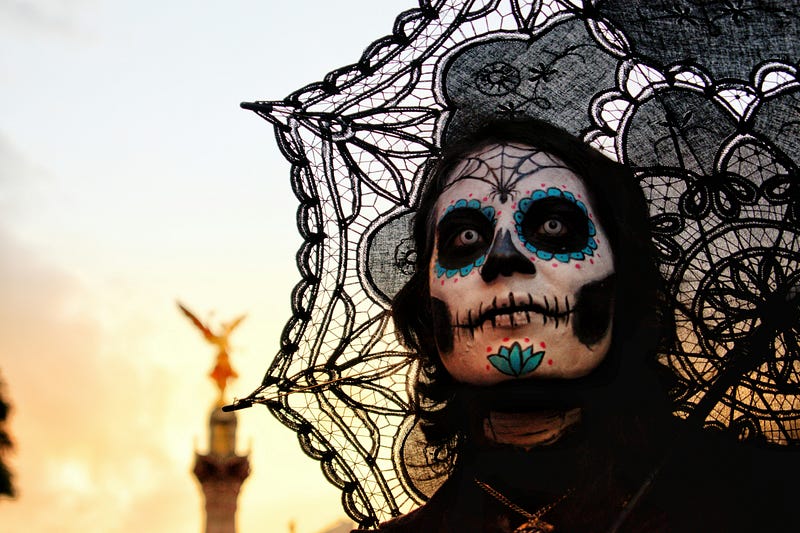
Valentine’s Day, Easter, Hanukkah, Halloween, Christmas, New Year celebrations, and other holidays and feasts.
For many, these are the most important events of the year, dedicating a lot of their time in order to prepare for them.
Some will find these events significant for their religion, while for others, it’s simply a time to celebrate or to gather with family.
Being raised in an atheist family and never finding my own path to any religious teachings, many of these events in our household were held without a “true” religious background.
So, Christmas in our home was mainly for family gatherings, laughter, and gift exchanges, Easter was a celebration of springtime, and Halloween was a time to remember those who passed, visiting a cemetery but not a church.
These traditions, even though affected by Christianity (or maybe better say originating from it), were not understood for us as “Christian holidays” but rather as “special events” for us.
It included simple activities like coloring eggs, making whips from willow twigs, visiting girls in the family and neighborhood with that whip to wish them longevity (yes, by lightly whipping them over their bottom), lighting candles and fireworks, wrapping gifts, decorating trees, baking sweet pastries… You name it.
If I were to describe all these traditions, I’d be repeating what’s written in articles sprouting every year around their respective times.
So, let’s focus on what is my view on traditions themselves and why I’ve opted out of most of them.
Please, Do Not Force Me Into “Your” Traditions
Firstly, why do we hold onto traditions? Is it merely because it’s customary? Because everyone around us does it, so we feel compelled to participate. Or is it because it’s been done that way for years, so we continue without questioning it?
Please, don’t misunderstand me.
I’m not saying that these holidays or any other special events in the year shouldn’t hold significance for you or anyone who enjoys them. Quite the opposite.
I find it fascinating how many people can make these days special for themselves for any reason they choose. I fully respect everyone’s beliefs and views (well, excluding ones disrespecting humanity, freedom, and similar ones).
What I’m trying to convey is that I don’t appreciate being told how to behave simply because it’s a particular date on the calendar, or why all these traditions should be significant to me because of… reasons.
A Simple Tie Example
Of course, traditions aren’t limited to yearly events. They can be related to anything imaginable.
Take wearing a tie, for example. It’s a custom in certain situations, part of formal attire for men.
But what if it were required in all formal situations, even if it seemed unnecessary? Wouldn’t that be forcing someone to adhere to a tradition?
What if the same were true for men’s garters? Or, to be more absurd, what if adults were required to wear diapers instead of trousers? Wouldn’t many be offended by such a requirement? Perhaps.
But in the same way, some could be offended by the requirement to wear a tie.
Tradition Keepers
I love teaching my kids about various traditions held around the world. If they ask what and why people are doing something traditional or simply regularly celebrating something, I’m glad to explain if I know, or we’ll search for more information together.
We speak about traditions themselves, how are important as they preserve culture. They allow us to act in ways similar to our ancestors and remember significant events from the past. And that it would be a shame if they were to disappear.
But who should uphold these traditions? Only those who are willing to, or even those who don’t see any value in them?
Reasons, Reasons…
You probably see where I’m going with this. Traditions are important; they can catalyze cultural growth but can also hinder it in various ways.
And that’s one reason why I say no to many traditions that I might have participated in before (like that whipping thing on Easter).
When I choose to do something in my life, it must be something I have a connection to, something I do with joy and passion. If someone or something forces me to do something I might not like, it only impedes that path.
I want to keep my spirit free, to have the freedom of choice, and not be confined to doing something just because others want me to, hiding the whole act under a “tradition” sticker.
Be Open To New Traditions
But despite my personal constraints, we should keep traditions alive, encouraging the young to participate in them, but, and this is important, never force anyone to act according to them.
Is perhaps a tradition held for generations for your family to gather every month?
That’s great!
Do your kids want to join you?
Yes? Fantastic; it’s great for family ties.
But if your kids tell you they don’t want to go, please don’t force them just because it’s tradition.
Explain why it’s beneficial, and find other reasons besides it being customary. If you can’t find those reasons, maybe you should consider other activities and perhaps even establish your own, new tradition.
Several Traditional Words To The End
So, if I were to summarize everything in just a few sentences, I’d say: “Please, don’t force anyone into your traditions, and don’t look down on them if they choose not to participate.”
If these traditions are important to you, that’s wonderful! Keep them alive and share them, and maybe others will choose to adopt and keep them too.
But please, don’t dictate how others should behave just because you believe it’s the only correct way.
Hi there! Could you help me write more stories like this? If you enjoyed this one, sharing it with your friends or posting it on social media would be amazing! ✨
Every comment is welcome, as your feedback helps me improve. And of course, thanks for reading — it truly means a lot!