
Art
Happy End Result with Acrylic Painting and Pouring
It was not planned
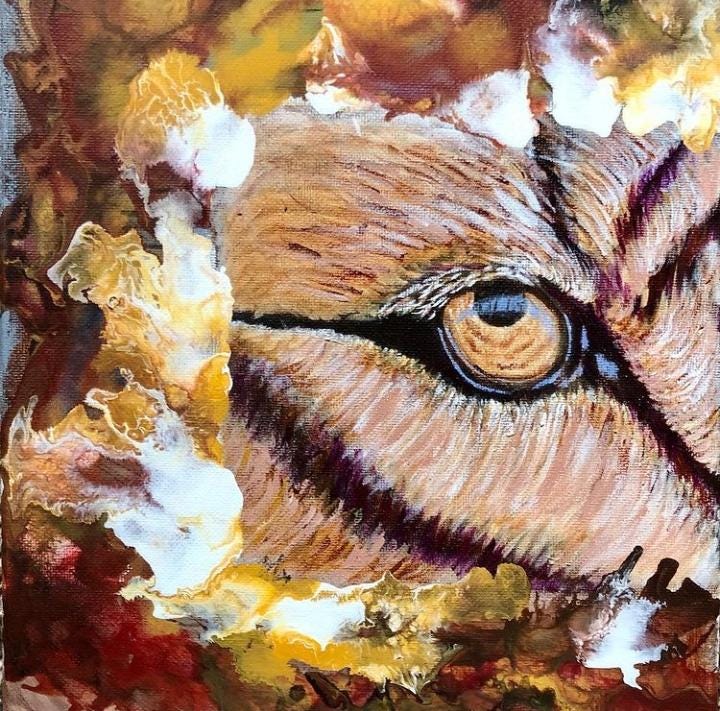
Art is subjective. We are unique individuals with different perspectives. How we respond to artwork may be different. To me, there are no mistakes when one is expressing their creativity. One person may not appreciate it, but someone else will.
I was learning to portray a tiger’s eye using acrylic on a small canvas. I centered my drawing and completed the painting. I wasn’t sure I would keep it. Sometimes when I practice on canvases, I reuse them when completing other projects. Please do not throw your canvases away.
Just imagine that view of a tiger’s face with a gray background only. Months later, I worked on a different piece and had leftover paint. I decided to do a mini acrylic pour. You can use specific materials such as silicone and floetrol with acrylic that act as a pouring medium. You can mix it in yourself or buy it at the store pre-mixed.
Benefits of Pouring Medium
- Help with the flow of paint
- Decrease cracks after drying
- Maintain vibrancy of color
It was my first time doing an acrylic pour. As a result, I did not have the pouring mediums. I substituted with a few drops of water. I poured slowly around the eye with no specific design in mind. Sometimes, I placed one color over the other and moved the paint with a straw. It is called a dutch pour technique. I intended to have fun and prevent waste.
A dutch pour is an acrylic pouring technique that uses air to manipulate the paints on a canvas. You can use a hair dryer, straw and lungs, or anything that blows air to make a dutch pour. Dutch pours are known for the ribbon like edges and cell lacing that can be achieved using the technique.
I would not recommend using a straw when completing larger art pieces. Your jaw muscles will be tired!
There are other pouring techniques. Below is a YouTube video demonstrating a few methods if anyone wants to try it out. It’s a fun thing to do! I loved my final result.
Note: Although acrylic dries quickly, acrylic pours take longer. It varies from a day to a few days. It depends on the thickness of your pour.
I wrote this piece to cheer me up for a bit. I appreciate everyone’s well wishes.
Thank you for reading. Your time is always appreciated! Till next time.
Upgrade your medium membership by clicking here. A part of your membership fee will be used to support me.


