
Politics
Happy 55th! Singapore.
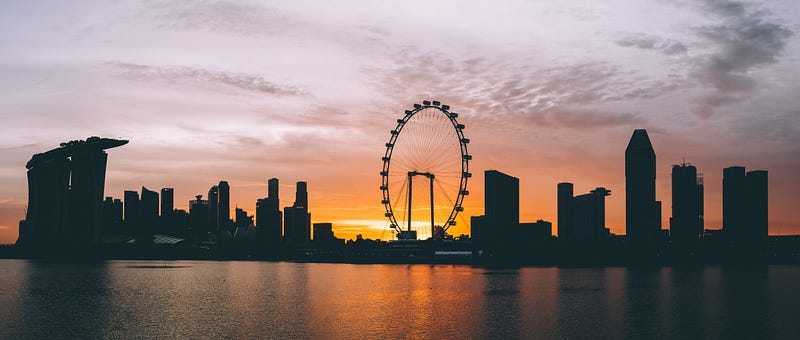
As Singapore gears to celebrate its 55th birthday this 9th August, its spectacular success, along with its faultlines, deserves some attention. Singapore gained independence, not so long back, in 1965 from Malaysia, its neighboring country, and the second-biggest trading partner — first being mainland China.
The city mesmerizes you while the green cover of trees all over the city takes over your senses, and that’s one thing you don’t get bored of. It’s attractive, clean, and safe public places sweep you off your feet. Just to put things in perspective, it’s only 0.02% the size of India. Yes, it’s a small beautiful island nation.
You wonder in befuddlement, looking at the bustling central business district, how a nation so small with just 55 years into its independence could achieve so much without even following a normal or recommended path of development. At least not a populist one.
What has gone into Singapore’s success? Can it be applied elsewhere? Just as a word of caution, I would say, “NO.” We have innumerable questions regarding what separates Singapore apart from the rest of the world. Is it the size, strategy, gold standards in public healthcare, ease of doing business, the rule of law, multiculturism — celebrating and embracing the icons of various cultures? I guess all of the above.
From Hainanese rice of Chinese origin to roti prata of Indian and satay of Malay to Singapore’s chili crab. It’s a melting pot of the world in Asia, and the culture in Singapore is, as they say, very “rojak.”
While there will always be examples where democracy got implemented in its most so-called purest and efficient form, but their outcomes turned out to be dud. On the other hand, Singapore did not adopt the premeditated versions of the western liberal model of democracy when the nation was in the making and chose instead to endorse the one uniquely made to support its needs and harsh conditions of those times.
“It was tailor-made for a globalized world.”[1]
They had examples of failing nations before them that, despite being textbook democratic, were failing its people on all spheres, including economic and political. Singapore found itself weak as Britain decided to lift its military operations not just from Singapore but also retreated from the global political space. That left a gap in leadership and could quickly be taken advantage of by China, Japan, or the Soviet Union. It was an era of the cold war, and Singapore feared the communist wave coming right towards them. So they devised a strategy to pass through this transformation — from being an abandoned nation to a world-class city — by adopting harsh measures that were low on civic participation but were primarily seen as practical and problem-solving.
In the words of Mr. S Rajaratnam, Singapore must become a “Democracy of deeds, not of words.”
There was a foreign and economic policy crisis due to external and internal chaos. Singapore chose to become increasingly centralist and selected the interventionist approach as opposed to upholding the partisan ideology of a genuinely democratic nation. The consequences of which turned out to be genuinely awe generating, so much so that it made researchers doubt the correlation and causality between democracy and economic development. Still, soon enough, Singapore started to be categorized as a “one-off” case, the external validity of which was questioned. There was no way it could be applied elsewhere.
It’s a bit hard to figure out when you are in Singapore as to why fully functioning democracies, with all their checkboxes ticked out, are considered ideologically and conceptually better. Why the democratic way to function politically and otherwise is considered better? Since Singapore is none of that, and still highly successful. It’s neither authoritarian nor a complying democracy. It can be viewed as an outlier on both the lists of democratic ones and authoritarians. It lies right in the middle somewhere. This has been verified and evidenced by Freedom House, which rates nations based on how democratic and hence free they are. It rated Singapore 50/100 and called it “partly- free.” It scored high on the factors mentioned below:
1. Freedom to move freely: Singaporeans can own, change their places of residence and move around freely without restrictions. It is even more applicable to private residences.
2. Freedom to own property and establish business: The ease of doing business is high, and in a matter of no time, a company can be set up with the help of a firmly established legal framework.
3. Economic freedom: Singaporeans are given equal and fair opportunities in matters of employment.
4. Social and familial freedom: Singaporean residents are free in matters of social and personal liberty. Barring a few issues where there is silence — like gay rights, headscarves in general. Though clarity prevails in public jobs that require uniforms. They don’t allow headscarves.
5. Safeguards against corruption: Its appreciated world over for its tough stance against bribery and corruption. I mention it later in the article about other agencies that hold Singapore in high regard in their respective reports. Governments operate with a high level of transparency and openness. Though, Singapore is yet to come up with a “freedom to information” law, which makes it easier for citizens to access some of the necessary government data.
Some of the areas where Singapore scored just 50% are:
a. Equal treatment of various segments of the population b. Protection from physical use of corporal punishments c. Due process in criminal matters, d. Freedom of assembly for political purpose e. Freedom of expression, including free and independent media f. The formation of competitive political parties g. Business domination in policy matters, and h. electoral opportunities to minorities. These are some of the average performing factors and need the government’s attention.
In most cases, the law prevents ethnic discrimination. It, however, is seen in matters of employment that, at times, profiling of nationality is carried out. Either due to language requirements or because it is designed to promote and generate jobs for locals.
Singapore is a multiparty system. Despite that, there are considerations due to which other political parties are demotivated from coming forward — media and court domination and campaigning restriction, and so on. Freedom of speech and expression, which form a basic democratic right, also have been subjected to penalties.
There is no doubt that Singapore raised the world standards in terms of what the “middle class” could become. More than 80% of the total population lives in decent government-subsidized homes, called HDBs (as Housing Development Board builds them), which cost 20–30% less than the market rates. Their living standards quickly developed in less than three years after HDB delivered its first 21000 homes. It’s a long ongoing housing project established in 1960. More than 90% of Singapore’s population owns their own home. This transformation is what matters to most of the citizens, and trust is the reward government gets in exchange for providing world-class facilities and infrastructure to them. Though the private share in the economy is significant and Singapore is defined as a market based open economy, the government defines “who’s who of the business.”
It has set an outstanding example in handling tricky, complicated social issues that hold the potential to throw off even well economically developed economies. Thanks to the rule of law and proper implementation of the same, Singapore is quite secular and tackles racism rationally. Given the situation in the U.SA,( #BlackLivesMatter) and the times we are experiencing, its good to see racism in Singapore, however little that exists, receding with the next generation setting different norms as compared to the previous.
TI-CPI (Transparency International Corruption Perception Index) ranked Singapore the 4th least corrupt country in the world in 2019. The only Asian country to gain that spot. This corruption-free perception is validated by other reports as well, including the World Justice Report (WSJ)Rule of Law Index 2020 and the Political and Economic Risk Consultancy, Singapore. WSJ placed Singapore at number 12 with a score of .79 on a scale of 0 to 1, one position higher than the previous year. Denmark attained the number one position at a score of .90. Singapore performed best on the “order and security” factor scoring the highest amongst all nations and second-best on “absence of corruption” and “regulatory enforcement” factors achieving .91 and .87, respectively, and attaining 3rd position in both.
Now that’s something that counts on an everyday basis, living life without fear. It appears that some laws don’t strangle the experience and instead give you freedom — freedom to walk without the fear of getting raped or killed, or in lesser evil circumstances, being gazed at, from top to bottom. Yes, a story many women from less safe countries experience and share — my case in point — India. Public safety is what makes Singapore stand apart, even amongst other developed nations.
The Singaporean government has always played to its base, and that’s the reason behind its spectacular economic success. However, they have upset those who route for freedom of expression and speech. Results/Outcomes, if appropriate, do foreshadow the process that causes them to eventuate. That’s one arduous task to keep progressing uninterrupted as one small political mistake can take away all the credit from hard work and put the entire burden of blame on the weak link that’s been carrying the amazement but waiting to be pounced upon, and rightly so. Singapore is increasingly becoming cognizant of the fact that inclusive politics is the way forward.
Singapore’s voyage is not complete, the better is yet to come….
[1] Ian Bremmer — on Twitter.