Free AI web copilot to create summaries, insights and extended knowledge, download it at here
940
Abstract
mpt: spiky</h3></div>
<div><p>medium.com</p></div>
</div>
<div>
<div style="background-image: url(https://miro.readmedium.com/v2/resize:fit:320/1*IS7usimmNdmHgdsuYIHx9g.jpeg)"></div>
</div>
</div>
</a>
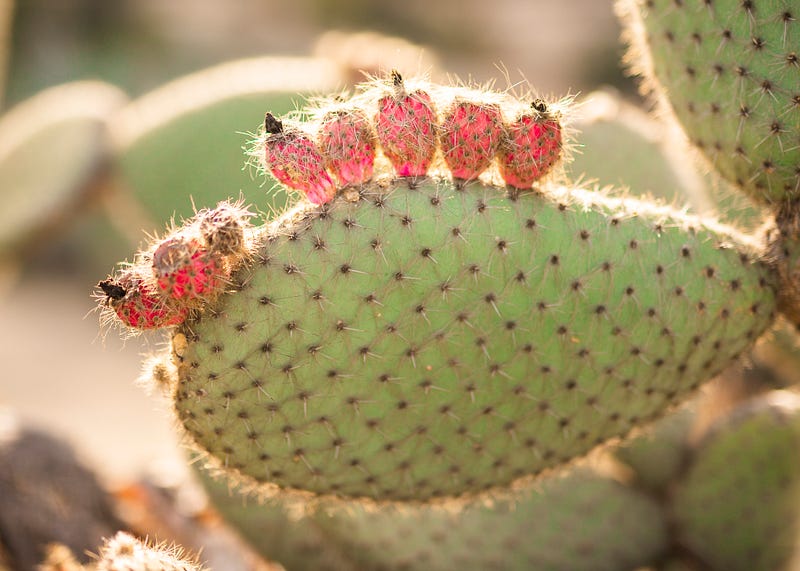
</div><p id="7734"><b><i>Tagging: all who have a thorny thought.</i></b></p><blockquote id="7f01"><p><a href="https://en.wikipedia.org/wiki/Opuntia">https://en.wikipedia.org/wiki/Opuntia</a></p></blockquote><blockquote id="bfc6"><p><b>Opuntia</b>, commonly called <b>prickly pear</b>, is a <a href="https://en.wikipedia.org/wiki/Genus">genus</a> of <a href="https://en.wikipedia.org/wiki/Flowering_plant">flowering plants</a> in the <a href="https://en.wikipedia.org/wiki/Cactus">cactus</a> <a href="https://en.wikipedia.org/wiki/Family_(biology)">family</a> Cactaceae.<a href="https://en.wikipedia.org/wiki/Opuntia#cite_note-cabi-1">[
Options
1]</a> Prickly pears are also known as tuna (fruit), sabra, <a href="https://en.wikipedia.org/wiki/Nopal">nopal</a> (paddle, plural nopales) from the <a href="https://en.wikipedia.org/wiki/Nahuatl">Nahuatl</a> word nōpalli for the pads, or nostle, from the Nahuatl word nōchtli for the fruit; or paddle cactus. The genus is named for the <a href="https://en.wikipedia.org/wiki/Ancient_Greece">Ancient Greek</a> city of <a href="https://en.wikipedia.org/wiki/Opus,_Greece">Opus</a>, where, according to <a href="https://en.wikipedia.org/wiki/Theophrastus">Theophrastus</a>, an edible plant grew and could be propagated by rooting its leaves.<a href="https://en.wikipedia.org/wiki/Opuntia#cite_note-2">[2]</a> The most common <a href="https://en.wikipedia.org/wiki/Culinary_art">culinary species</a> is the <a href="https://en.wikipedia.org/wiki/Opuntia_ficus-indica">Indian fig opuntia</a> (O. ficus-indica).</p></blockquote></article></body>