
“Halloween Kills” Is Creatively Dead on Arrival: Movie Review
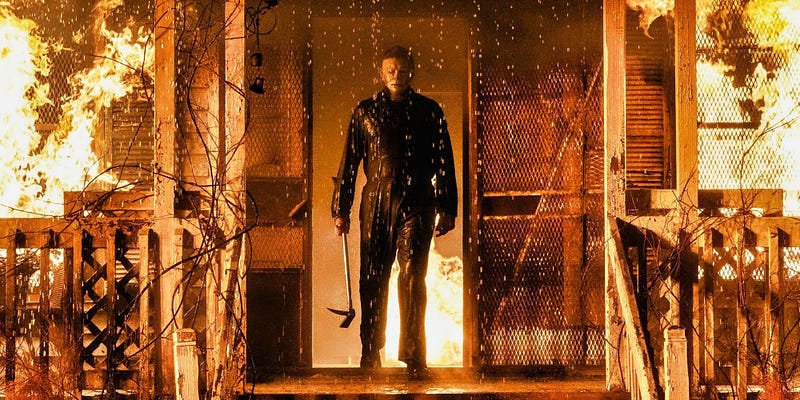
Last week, the 12th film in the Halloween horror film franchise debuted in theaters. It instantly became a box office smash and manages to provide a few laughs and jump scares for Halloween season, but ultimately it disappoints even more than its predecessor.
Click here for my review of Halloween (2018)
Click here for my review of Halloween Ends (2022)
When the 2018 version of Halloween was released, I was somewhere between intrigued and excited. I had recently seen the 1978 original for the first time and thought it was a masterpiece. I loved the idea that I could ignore the 10 (!) sequels, spin-offs, remakes, and reboots that came in between the 1978 and 2018 versions and watch a high-quality follow-up with the criminally underrated Jamie Lee Curtis front and center.
Unfortunately, when I finally watched it I was profoundly disappointed. It received very strong reviews for a horror sequel (it has a 79% approval rating on Rotten Tomatoes and a 67/100 average rating on MetaCritic) and was a huge hit at the box office (grossing $255 million worldwide on a $10 million budget), but I found that it paled in comparison to the original. To my surprise, the article I wrote comparing the original to the 2018 sequel became one of my most popular articles ever. (Click here for that article.) In light of that article’s popularity, a desire to give this new trilogy a fair shot, and my general desire for some fresh Halloween entertainment, I checked out the sequel.
Unfortunately, things only went downhill from the 2018 installment.
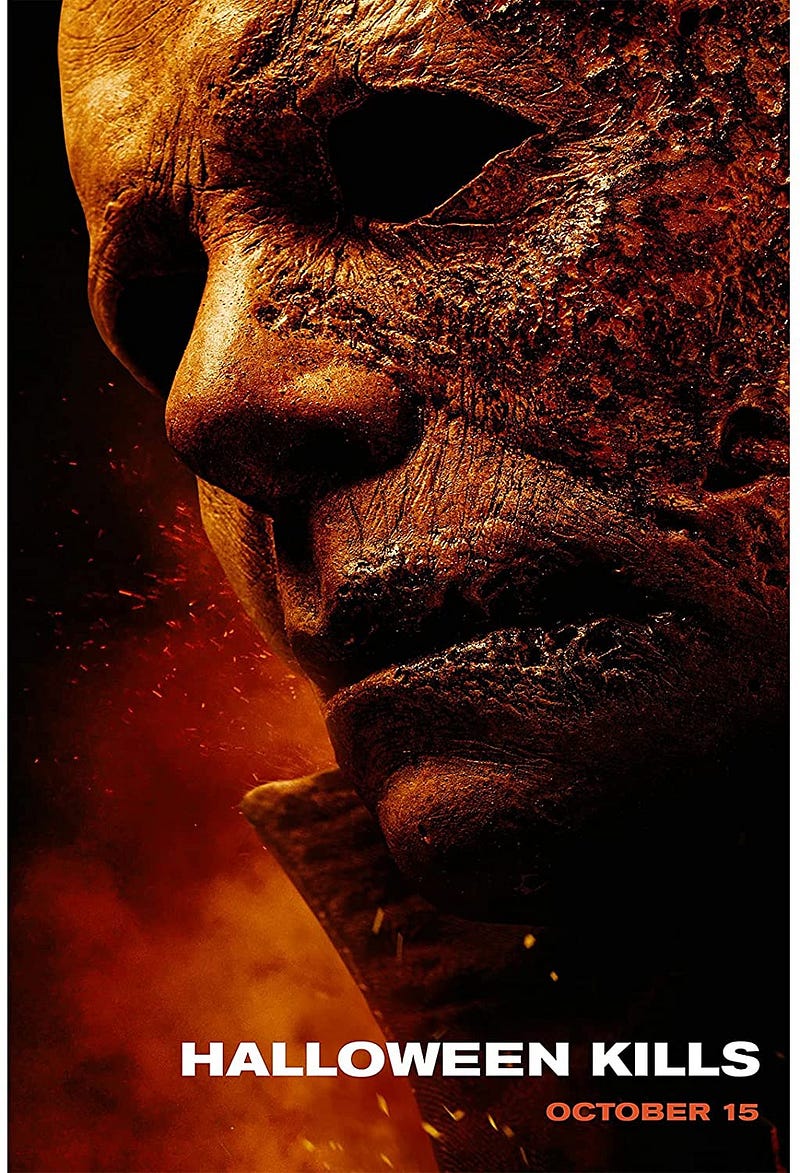
The sequel to Halloween (2018) is rather generically titled Halloween Kills and marks the 12th movie in the Halloween franchise. But it is actually the third film in this time line, given that the 2018 film retconned the 10 films that came before it and served as a direct sequel to the 1978 classic. Of those 10 films, I have only seen the 1981 follow-up Halloween II (which also starred Jamie Lee Curtis and had heavy creative involvement from the original’s masterminds John Carpenter and Debra Hill). What I gather is that the only major thing that was retconned from those 10 films is the revelation that sociopathic mass murderer Michael Myers targeted Laurie Strode because she was in fact his long-lost sister. (After all, it’s not like these movies are particularly plot-heavy to begin with.)
Halloween Kills has the same director (David Gordon Greene) and producers and most of the same writing staff as Halloween (2018), so it was foolish to expect a dramatic upturn in quality. But what I truly didn’t expect was something so lazy and nonsensical. This time, however, the critics have joined me in my disappointment (it has a 39% approval rating on Rotten Tomatoes and a 47/100 average rating on MetaCritic). The setup for the film is fairly straightforward, with the film picking up mere minutes after the previous film ended and following the havoc Michael Myers wreaks after he was (foolishly) left for dead at the end of the prior film.
As disappointing as I found the film to be, I feel I should give credit where credit is due. It does have three things going for it.
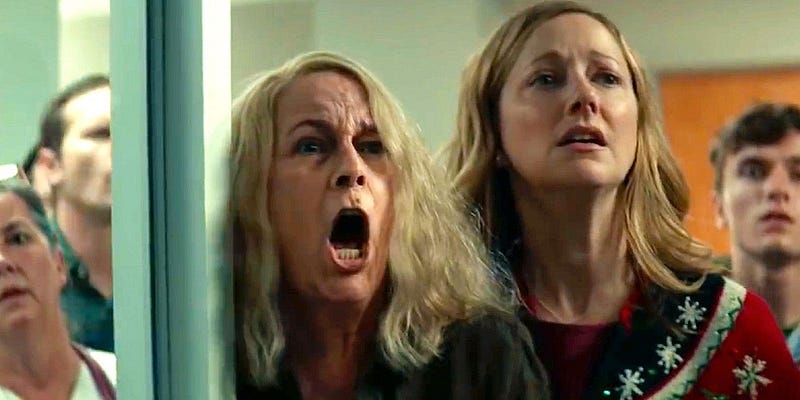
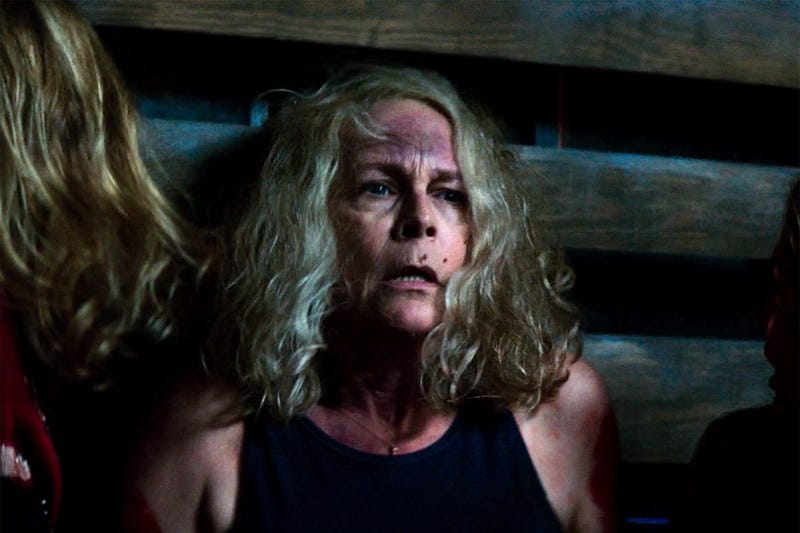
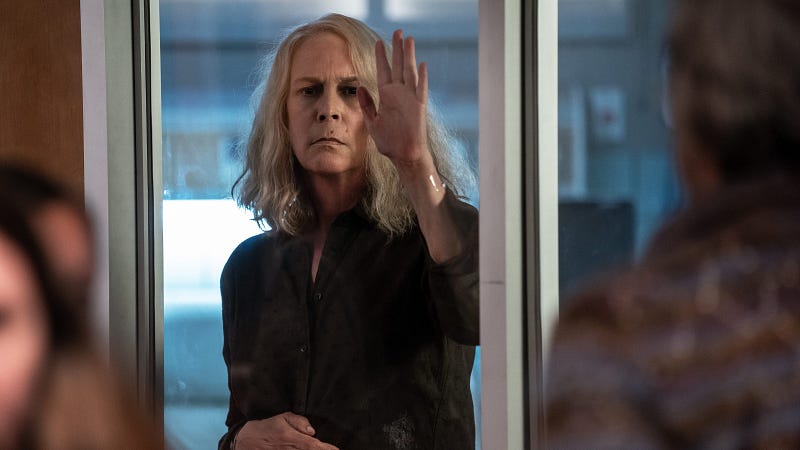
- Even though the screenplay gives them very little to work with, Jamie Lee Curtis and Judy Greer give admirable performances as our protagonist Laurie Strode and her estranged daughter Karen, respectively. Even when asked to deliver absolutely absurd dialogue (like when Laurie gives a head-scratching speech from a hospital bed that tries and fails to be profound or when Karen nonchalantly says “He’ll always be with us” regarding the beloved husband who died about an hour ago), they are believable and effective. I suppose I should not have been too surprised given that Curtis and Greer are two the most reliable and underrated actresses currently working, but I was nevertheless caught off guard by how well they sold such weak material.
- Although it is not clear to me how intentional it was, Halloween Kills fascinatingly echoes numerous aspects of the original sequel (1981’s Halloween II, which this film retconned). First, there’s the setup — both films take place the same evening of the original and follow Michael Myers as he continues his murder spree. Then there’s the setting — both films heavily take place at the Haddonfield Hospital while Laurie is laid up due to her injuries in the prior film. Then there’s the aesthetic — both films emphasized gore and horror over tension and thrills markedly more than their predecessors. For people who are invested in the franchise, these similarities were clever and thought-provoking narrative and aesthetic choices.
- It does have some good campy fun. I am not sure how much of the comedy is intentional, but the film has moments that are quite funny. And even though I generally prefer suspense to violence, some of the graphic kills are actually quite clever and perversely amusing.
But these positive aspects are far outweighed by the many, many things that didn’t work.
- Someone on Twitter described the screenplay for Halloween Kills as “underdeveloped fan fiction” and I haven’t stopped thinking about that since I read it. The way it unnecessarily incorporates numerous side characters from the original film and ineffectively tries to explore the inner life of Laurie Strode makes it feel like just that. The plot has so many holes that it would make a superb pasta strainer. The vast majority of the dialogue is cringe-inducing. And, as other critics and fans have pointed out, it really doesn’t have a beginning or an end. It feels like it starts and ends mid-scene.
- Whereas the subtle throwbacks to Halloween II were interesting (see above), the explicit throwbacks to the original Halloween were not. You can easily see during the early scene in the Open Mic Night where the bit characters that survived the original are ceremoniously introduced how much the writers thought that this was a clever idea that the fans would love. And, well, it doesn’t work as fan service or a plot device.
- Outside of Curtis and Greer, the actors fail to overcome the weak writing. Particularly unimpressive performances come from ’80s staple Anthony Michael Hall as a survivor from the 1978 massacre who leads the mob to hunt down Michael and Andi Matichak as Laurie’s vengeful granddaughter. When one of the best and most believable performances in your film comes from one of the Real Housewives of Beverly Hills (Kyle Richards, who is actually quite good), that indicates that there’s a problem somewhere.
- Arguably the two most entertaining murder sequences distractingly target the token minorities. Although I am all for representation in Hollywood and have written frequently on the topic, when movies and television shows incorporate diversity unsuccessfully it sometimes feels even worse than when they don’t try at all. A scene in which an elderly man and his black female companion are massacred is somewhat notable for some particularly creative kills and the subsequent scene where the middle-aged gay couple that bought and flipped the Myers house is slaughtered has some of the film’s only moments of tension, but these scenes end up just feeling icky because the film’s obvious attempt to present diverse characters results in watching painfully one-dimensional caricatures get gutted.
- It makes sense that the creative team decided to establish a link between Laurie Strode and Michael Myers in 1981’s Halloween II. Although whether or not Michael and Laurie have a connection is completely unnecessary for the success of the original film, it was arguably necessary to establish one to create a franchise (Michael Myers needed something to drive him and Laurie Strode needed a reason to stay in his path year after year). But now the idea that they are siblings has been retconned, their four decade mutual obsession with decimating each other just doesn’t ring true. And given that this is the driving tension of the film, that is a major problem.
- When a film has such a high body count and is so gory that you know that everyone is going to die and is so sloppily and obviously written and directed that you know exactly when everyone is going to die, there is virtually no tension or suspense. So the filmmakers rely on entertaining their audiences with exceedingly graphic and bizarre methods of murder that need to continually be one-upped. The result is a move that triggered my brain’s disgust reflex, not its fear network.
Halloween Kills is already an unqualified box office hit. It has grossed approximately $59 million in its first week in North America alone. Considering that the film wasn’t expensive to produce, didn’t have the buzz or buildup of its predecessor, was released during the ongoing pandemic, and simultaneously premiered for free on a subscription streaming service, these are extremely impressive numbers. And a sequel has already been secured, with Halloween Ends releasing in October 2022. (The film is supposedly the last chapter of the sequel trilogy.) Given its impressive box office and guaranteed sequel, my criticisms will do little to deter the success of the current film or mar the franchise’s legacy. And that isn’t my intention at all. I only have two goals with this article: 1) to reflect on why a sequel trilogy with so much potential failed to deliver so spectacularly and 2) to encourage people who may be on the fence that their time and money might be spent better elsewhere — like the original 1978 masterpiece or a number of recently surprisingly good horror films like Malignant, Hereditary, or Us.
Despite my disappointment with Halloween Kills, however, I know there’s no point in resisting its sequel. I will most certainly be watching Halloween Ends when it debuts in 12 months. But I no longer will be eagerly anticipating it.
Rating for Halloween Kills: 2.5/5 stars
Follow the author of this article on Medium and Twitter.
Read recent articles by this author about films:


