
Halloween, I Love Thee
A personal look at all spooks’ night
Before we begin, yes I know it’s still August. But it’s also Autumn here in Ireland, so that’s excuse enough to talk about my favorite calendar date. Samhain, All Hallows’ Eve or —
Halloween. The 31st of October.
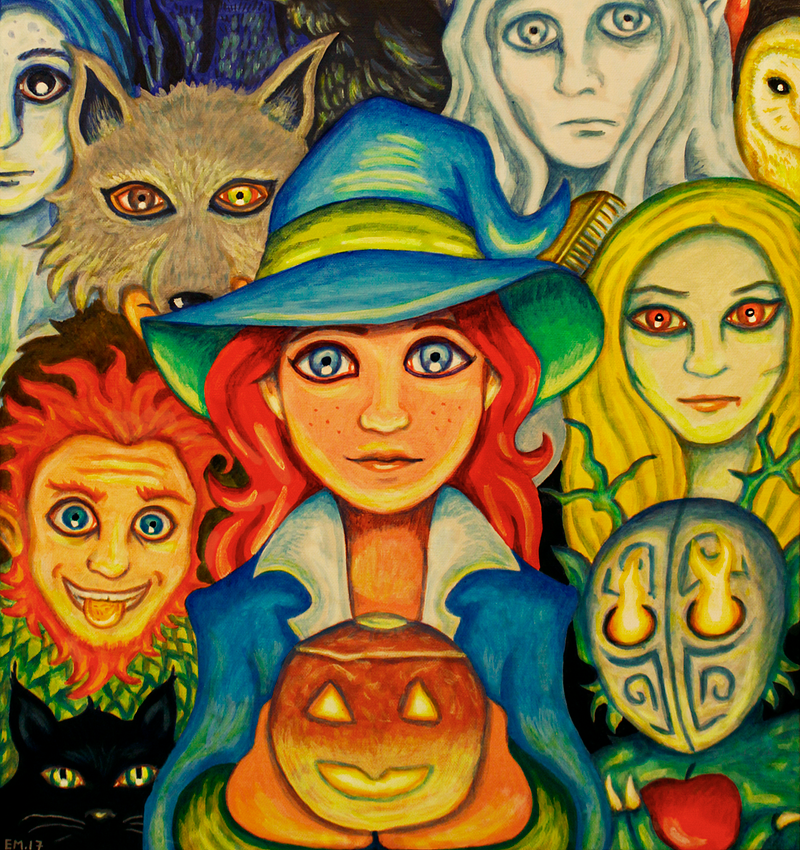
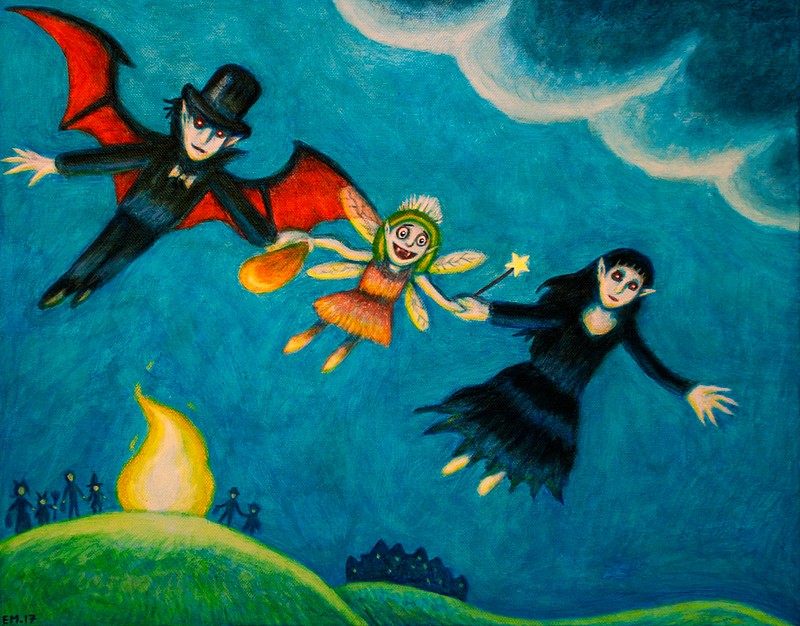
That night where the veil between our world and another is thinnest, and so ghosts and all manner of night-time denizens (witches, vampires, werewolves, ghouls, etc) can prowl freely through our streets, countryside and skies. A sort of day (night) pass for supernatural beings.
The word Halloween evolved from All Hallows’ Eve, the day before All Saints’ Day (November 1st). These dates had been designated by the Catholic Church, to mark its ‘triumph’ over paganism. The irony was that Halloween would become the ultimate pagan celebration.
The word Samhain (pronounced sow-in) is the original Gaelic word for Halloween. Ireland was the source of those harvest rituals that had so enraged the Church.
My love affair with Halloween began around 1986, when I had discovered Ghostbusters (a whole future article in itself) and so began a love of all things spooky. I still remember trick or treating around the cul-de-sac where I grew up in North Dublin, with my siblings and other kids. All of us wearing plastic masks, face paint and mostly makeshift costumes.
Trick or treating originates from 15th century Ireland and Britain. When poor folk would go from home to home looking for cakes, apples and other food. It was pretty much a form of begging.
The term trick or treat itself comes from 1930s America. After youth gangs had caused mayhem every Halloween, some cities decided to take action — by offering candy to any kids who called around in Halloween costume, and said ‘trick or treat’. In other words, a treat to prevent tricks. The idea proved successful and soon spread.
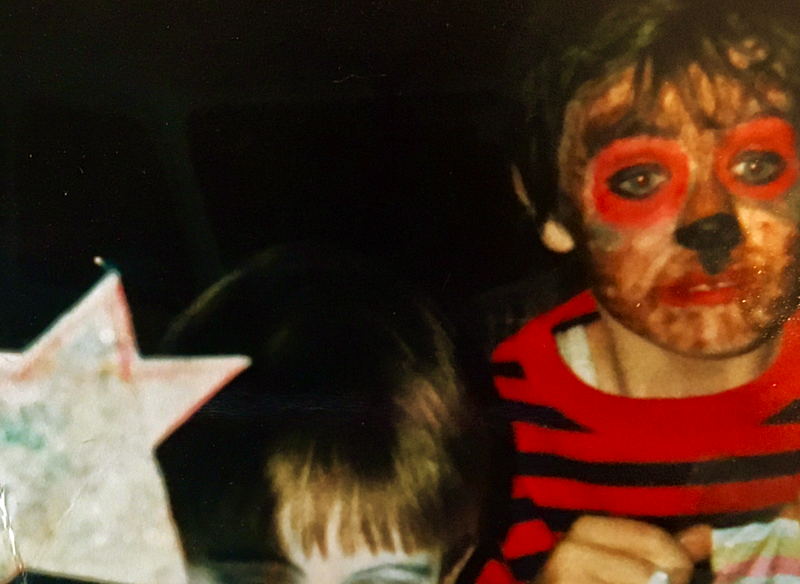
I can’t recall exactly what I dressed up as most times . . . bar one year when a neighbor face-painted me as a werewolf, and I wore a Freddy Kruger-like stripy jumper (that I wore most other days ). I also had a rubber Frankenstein Monster mask (the Karloff type) that night, so I could switch between lycanthrope and reanimated corpse with ease. Perfect.
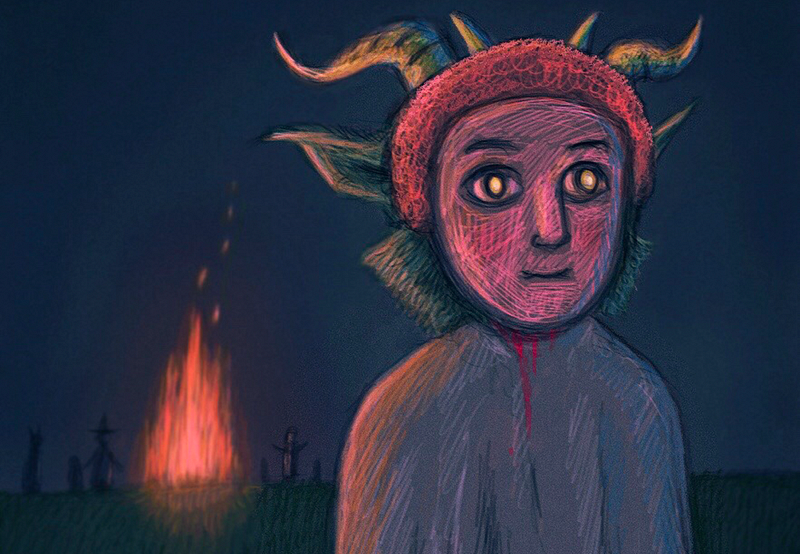
Masks may have originated from the tradition of ‘guising’. That if you donned a scary disguise on Samhain, then any supernatural entities could not tell you were human and so leave you alone.
In ancient Ireland and Britain these entities would most likely be fairy creatures, and not the cute ones Disney would later popularize. No, these were malevolent beings — usually man-sized, black as night, and always with burning eyes. More akin to demons, they haunted lonely roads, ruins and even the attics of some truly unfortunate folk.
A notable example is the púca (pooka), a shapeshifter that would take the form of some dark animal with fiery eyes (usually a horse or goat). A Samhain harvest offering would usually pacify it.
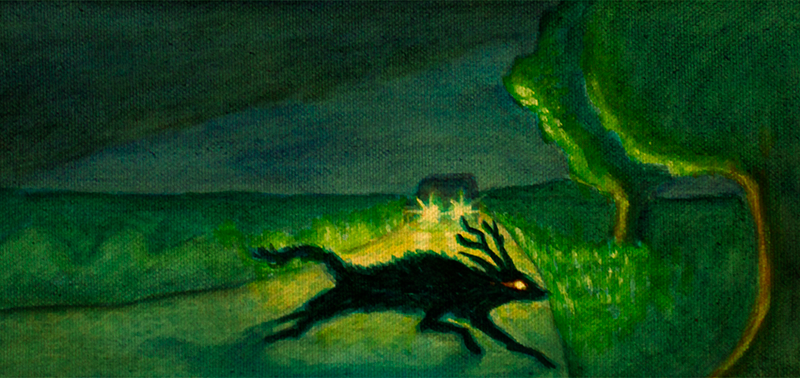
So after everyone had finished trick or treating, we would then attend a massive bonfire at nearby grassland. The crackling flames always seemed wondrous to me, if also dangerous of course. The night air would also be alive with the sound of bangers (Irish slang for fireworks), this of course never being good for local pets.
The bonfire symbolizes another sort of protection on Halloween night, the flames meant to scare away any creatures that might spirit you away and back to their lair. Middle Ages ‘need fires’ were said to keep away witches, demons and scariest of all — the plague.
Unfortunately many innocent people would lose their lives to fires, due to the witch trial frenzy that blighted Europe then and over the next few centuries. The modern use of fireworks may have semi-supernatural origins too. For example, loud noises were said to keep vampires at bay in certain parts of Europe.
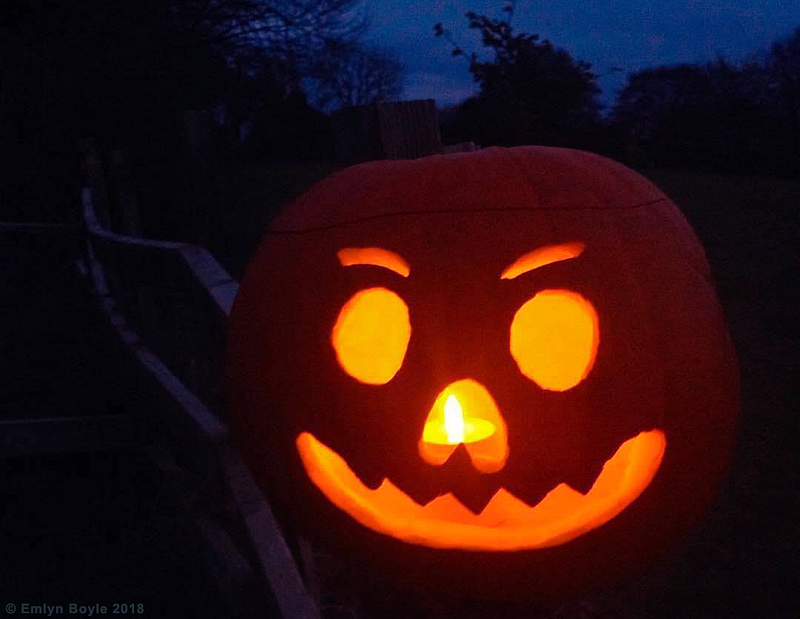
And so after the bonfire, we would all go home, eat about 75% of whatever goodies we had collected and have sick tummies going to bed. Of course, by next morning all Halloween decorations and paraphernalia would be taken down . . . my saddest moment being the binning of the jack o’ lantern, which I still carve out a few days before the big night.
The term jack o’ lantern comes from Irish folklore. There was once a unpleasant character named Jack who, when he died, was barred from Heaven and so went straight to Hell. The Devil took pity on Jack however and resurrected him as a wandering spirit. To roam the earth with a carved turnip — containing an ember from Hell’s fires, this weird lantern lighting Jack’s way as he journeyed through the night.
Turnips were the original jack o’ lanterns. But when Irish immigrants came to America, there were no turnips there and so the local pumpkins were used instead . . . thus the pumpkin became the modern day symbol of Halloween.
I wanted every night to be Halloween . . . and while that was not possible, I could cast a little Halloween magic on the other 364 days of the year. Oh yes, I could channel that inner spookiness into my own creativity.
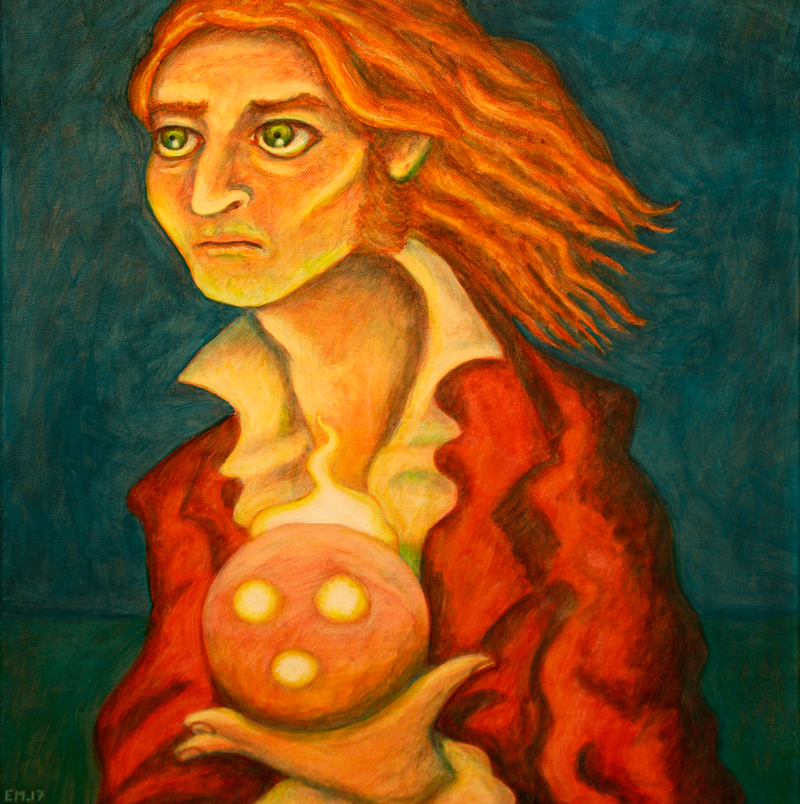
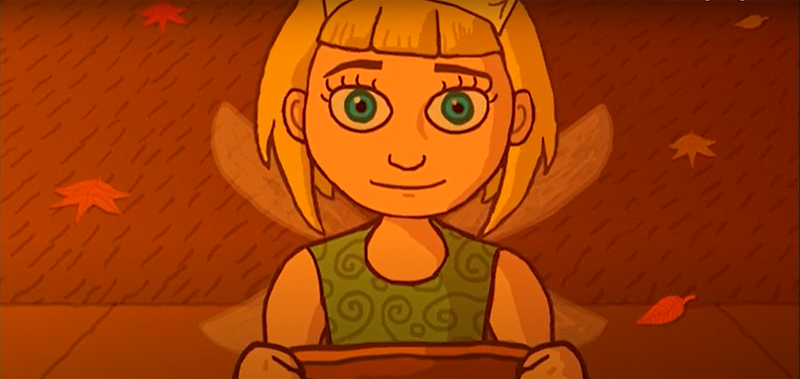
And Halloween has certainly influenced my drawing, painting, photography, animation and writing. I had a Halloween-themed art exhibition — titled October — in October 2018, and it proved to be a dream fulfilled (some of those pieces illustrate this article). In 2019 I made a Samhain-themed animated short called Twilight Offerings (based on the pooka legend). Last year, I made a visual poem called End Of October. So the playful spirit of Halloween continues to haunt my work yearly.
Covid had obviously affected how Halloween was celebrated (or not) last year. Here in Ireland, our second lockdown kicked in just before the end of October; thereby restricting Halloween activities to indoor only.
Now whether any sort of normality resumes this year, that remains to be seen. But either way I will quietly celebrate Halloween with a lit jack o’ lantern, glass of red wine and a scary movie (or three). Thanks for reading.