CREATIVE WRITING 101
Halfway Between Plotting and Pantsing
How flexible planning can work for you.
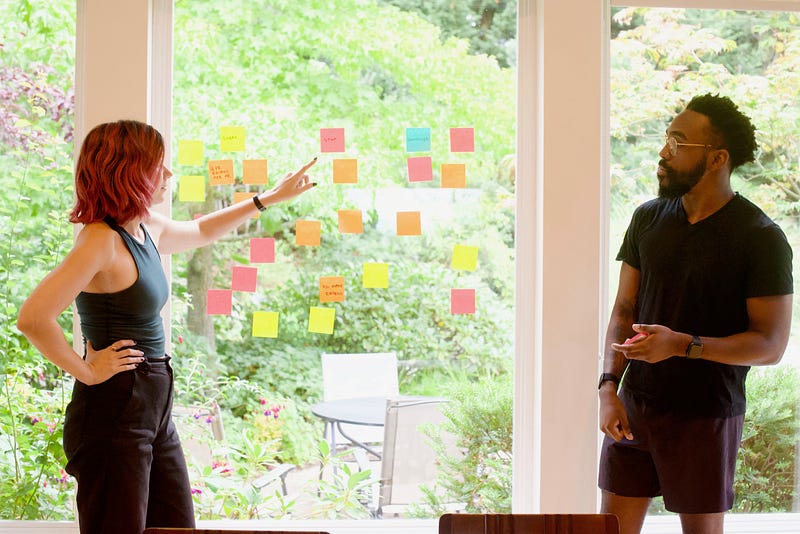
If you’re a creative writer, you’ve probably heard people talking about ‘plotters’ and ‘pantsers’:
- Plotters are those who plan out their stories and novels in great detail, figuring out plots, summarizing scenes, and digging deep into characters… and all before page 1 is written! Some write a very detailed outline that can extend to multiple pages per chapter.
- Pantsers (as in flying-by-the-seat-of-your-pants-ers) are the opposite. They flip open the laptop and start typing, getting deep into the novel before they’ve given any real thought to how the thing is going to ending (Joanna Penn prefers to call this group ‘discovery writers’, as they discover the plot as they go along).
Personally, I’ve always been fascinated by planning, but yet find myself tending to fall closer to the pantser category again and again.
There is something about planning a novel in advance that seems to take half the fun out of it, you know? I do enjoy that bit of freedom!
And even when I do have a plan in mind, I often change it radically. What can I say? The characters take on a life of their own, and start doing weird things that I didn’t expect.
In fact, I genuinely believe that I couldn’t fully plan until I got to know the characters. But I get to know the characters by writing about them.
That’s a bit of a dilemma.
A resolution
Despite this difficulty, I think there is a resolution, or half-way house between plotting and pantsing.
But hey, don’t get me wrong — if other writers prefer to carry on as pure plotters or pure pantsers, that’s good with me.
Each to their own.
But I do think there are considerable advantages of each that can be combined:
By planning:
- You avoid massive plot holes, or writing yourself into a corner.
- You ensure that endings are satisfying, because you have been moving in that direction from day one. Readers will sense on some level that the story has been carefully crafted.
- You avoid wasting time writing and then cutting lots of scenes that didn’t turn out to be relevant to the final draft.
By pantsing:
- You maintain the freedom in the creative process for longer, meaning that you can be more open to new ideas that come later in the process.
- Your writing can feel more surprising. If you didn’t see the ending coming, your readers won’t either!
- As mentioned above, you get to know the characters before making decisions about what’s going to happen to them. This can make their actions feel more natural.
- It can be more motivating as a writer. After all, people go to their 9–5 to follow a set of instructions. One of the reason that we are doing creative writing in the first place is because we have the freedom to explore.
How do we combine these benefits?
In essence, I am suggesting a fuzzy or out-of-focus plan (borrowing slightly from the idea of fuzzy logic). There is a plan, yes, but the details can be tightened up as you go. A great many details don’t need to be specified. Variables can be left in place. Your outline can be something of a pencil sketch, with scope to change things later.
It’s a guide, not a blueprint.
What form should this take? I’d advise against writing out lengthy, detailed chapter-by-chapter outlines. In essence, I think these are a bit of a waste of writing time. Why spend weeks on an outline? You could be finished the novel in that time!
I still think the heart of the plot, the purpose of the story should in some way be set out in advance, though. To some extent, at least, you should know what story you are trying to tell.
I’d therefore suggest that the main functional sections of the story are written out, each in about a 1-paragraph level of detail. As shown in Freytag’s pyramid, that would typically include:
- Setup
- Inciting incident
- Rising action
- Climax
- Resolution
I’d also suggest that further planning is undertaken to follow the arcs of each main characters. That would include at least the main protagonist and the main antagonist, but often key supporting characters would be included too. For example, it could include a team of allies in an adventure novel, or the main suspects in a mystery.
I hope that helps — and saves you a bit of time. Happy writing!
A couple of things. First, a shoutout to fellow LitRPG author Samuel Kenneth Kauffman, whose deep dive into methods of plotting is well worth a read, if that approach appeals to you:
Secondly, you can get my posts direct to your inbox.
Do that here, and don’t miss out!