
Hair Loss Taught Me That Being Sick Is A Spectacle
When I began to lose my hair to chronic illness, my body became a fascination for everyone I knew
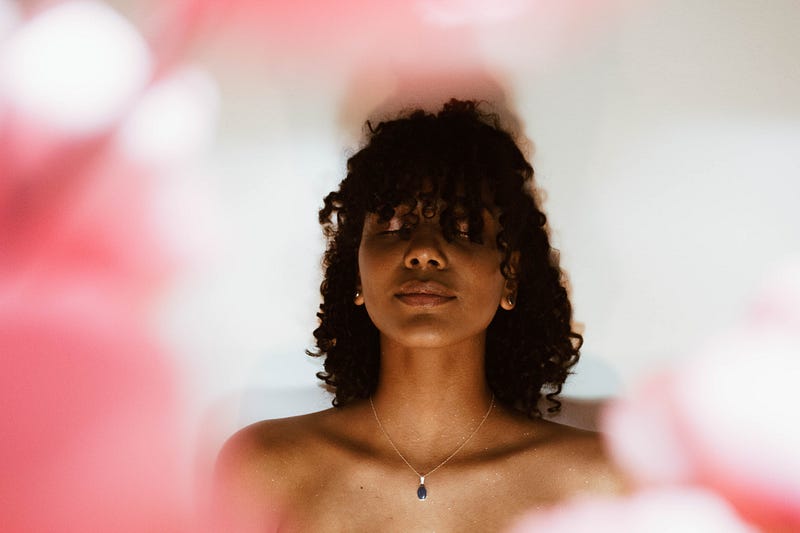
I was sitting in Maude down in Old Herndon when the stylist walked up behind me. “Uhm. What would you like me to do?”
I watched her face in the mirror. I recognized the emotions she was trying to hide behind her mask. Confusion. Horror. Pity. I’d seen it all before.
“I have thin hair. Is there anything you’d recommend?” I asked.
I felt her run her fingers over my head, trying to think. but I knew she’d have nothing.
Being sick is a godawful spectacle. When I was twenty-three, I sat in the bathroom, running my fingers through my hair, watching it fall in bunches. I’d just started treatment for small vessel vasculitis — six months of corticosteroids — and I couldn’t walk because my legs had swollen like melons. But that didn’t bother me as much as my hair did.
Suddenly, there it was: hair in my hands. Hair on my comb. Hair on the kitchen floor. Hair on my pillows.
It is temporary, I remember the doctor saying, it’s normal.
But doctors don’t understand the poetry of bodies. They are far too concerned with the mechanism and functionality of skin and flesh. Beauty isn’t a physician’s dilemma. It is the patient’s alone. I’m Tamil and communities like mine revere women with long hair.
Back home in India, my mother dried and brewed hibiscus flowers to make hair oil in our kitchen. In high school, I slathered my head with coconut oil and henna and curd. I actually liked the femininity of it all; the way my hair fell against my shoulders during a shower. The way it bounced after I walked out of Naturals or Body Craft after a blow dry. My hair was me and I was my hair.
No disease was going to steal it from me.
Or so I thought, until the first time I wrestled with long, stubborn strands tangled in my hairbrush. The more I combed, the more it fell. The corticosteroids had done their work; my blood vessels stopped rupturing. My legs shrunk back to size. But my sense of self disappeared. My hair became so sparse and thin, a hairband couldn’t hold it together. The worst of it was that wherever I went, I had to deal with health advice: Did you try amla oil? Heated massages? Deep conditioning? Curd and lime?
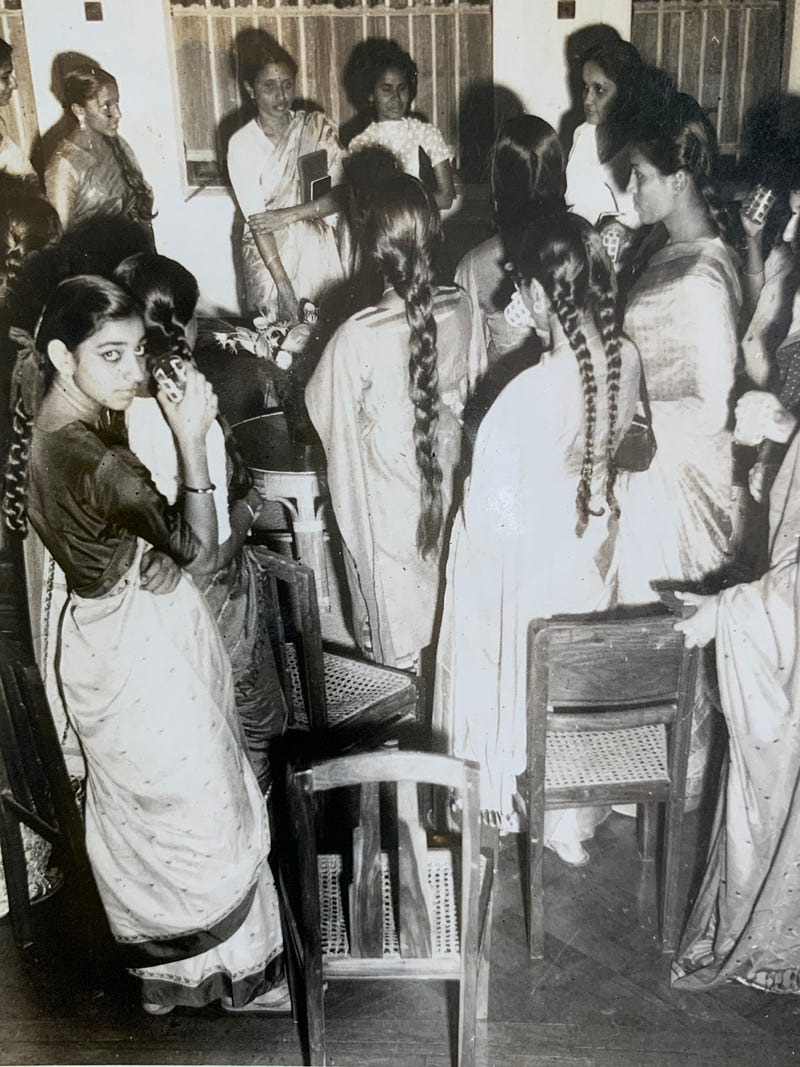
There’s something about our cultural obsession with beautiful hair. The way women are persuaded that they must weave and braid and massage and lather and condition the hair they were born with. If they aren’t born with good hair — god forbid — then they must try the alternatives on the market; wigs, extensions, clip ons, or perhaps, those head pieces that sit neatly on mannequins.
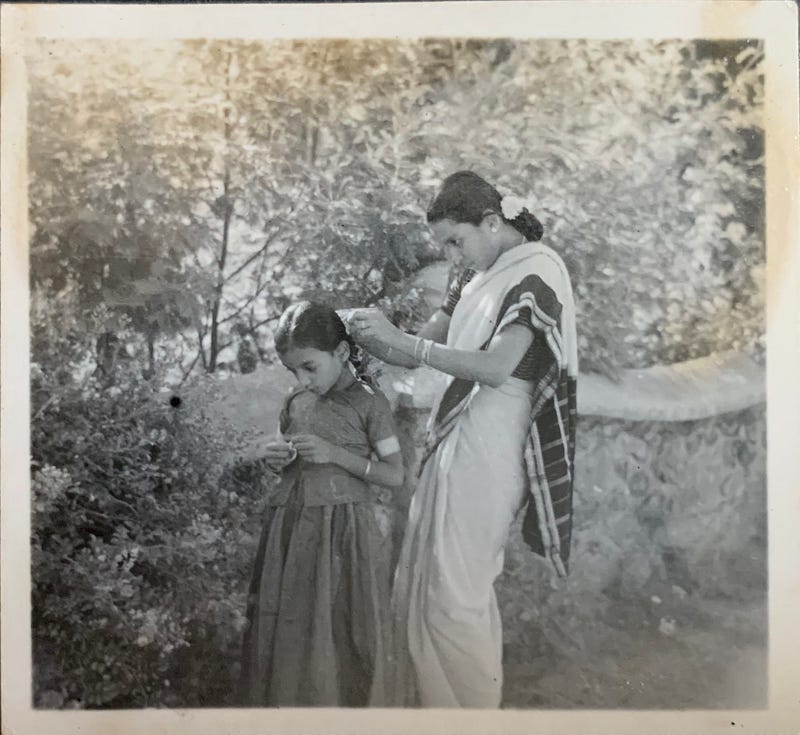
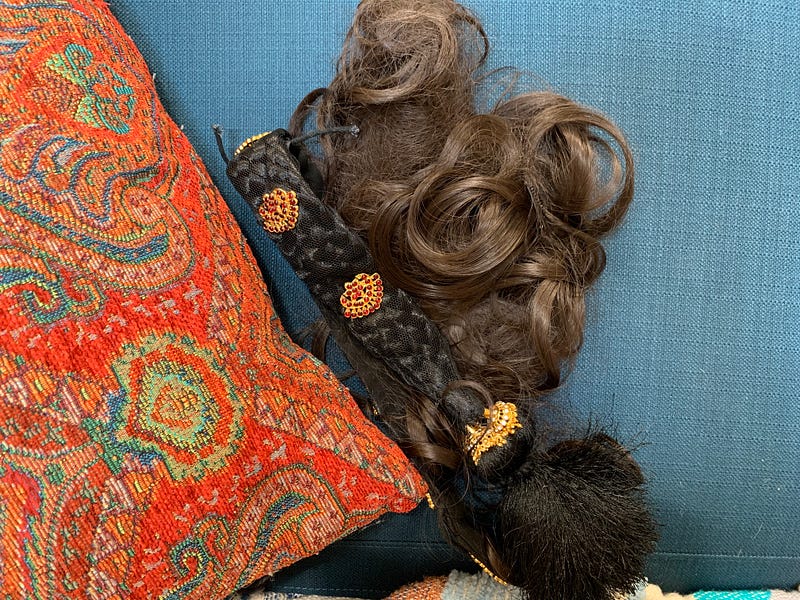
It’s a religiosity that I still find unsettling. In Quilon, my grandmother’s ancestral home, I found boxes of hair extensions and wigs that she wore back in the 70s and 80s. I found it amusing, even terrifying. Masses of woven hair in braids and buns just tucked away in the cupboard. I don’t remember my grandmother wearing them but years after she died, I inherited an album filled with photos of my grandmother with a marvelous head of hair. Not her own, I suspect.
The year I started college, I sat in the living room watching my mum get her head shaved. She was in her thirties, my young mother, and her hair fell in clumps on the floor. Black waves against brown mosaic. Black shadows in the afternoon sun. My dad stood outside our apartment — who knows what emotions he felt then — and opened the door and handed me a yellow silk scarf through a crack. Turns out silk scarves tickle bald heads, so my mum made a choice that I didn’t think was possible: she chose to walk around bald.
Almost immediately, the world knew that my mother was fighting cancer.
Her sickness became, all at once, a spectacle.
I’ve heard many women say that they do not care for how they look. I don’t know if that’s true. But I think it’s a good-enough lie to tell myself. I’ve learned that walking around with my hair, the way it is, is a personal and political statement. Personal because it speaks to war that I, a woman, am waging with my own body — combing, straightening, clipping, curling — and political because communities like to believe that women’s bodies must be publicly protected, no matter what.
When I became sick, people not only seemed to feel responsible for the way I looked, they felt I had to be responsible for the way I looked. One of the most heart-wrenching conversations I’ve had about this was with my father.
“Appa,” I called him, three months postpartum, “I want to shave my head.”
He didn’t know that I’d begun to worry about my hair fall so much that the doctor has increased my dosage of anti-depressants. Many nights, while my baby was asleep, I’d stood in the kitchen with a pair of scissors, close to chopping off all my hair. I was tired of the dermatologist visits, the vitamins, the bottles of Rogaine, and hair masques.
I didn’t want it.
“Go ahead and shave it,” he teased, “But remember it might not grow back.”
I’d heard this threat before.
My husband, Dan, who knew about the struggle was absolutely appalled at the idea that I might shave my head. No, he said, I don’t support that at all. My husband is Canadian, and my father is Indian, but their racial differences were bound by a single fear that my loss of hair would mean the loss of me — as they see me, know me, love me.
Honestly, I don’t care for a chronological account of how I lost my hair. I care that I lost it, a lot of it, all at once. One May evening, a day before I turned thirty-two, I ran my finger through my hair to find a bald patch. Scalp against skin. Horrified, I ran to the bathroom and held up my little mirror.
Now what?
I called Dan. I screamed. I googled. What now? Symptoms of cancer? Lupus? An hour later, a nurse put an IV needle in my arm in the ER, and told me that I’d be okay. No, I was not dying. Turns out I had alopecia.
Three days later, a dermatologist, a Colombian woman with flawless skin and dyed hair injected my scalp several times with corticosteroids.
For months, I rubbed the patch with hot oils and spent hours in the shower till the water sunk into my follicles and I emerged, renewed and refreshed. My mood swung — low to lower — each time I ran my brush through my hair, and found strands entangled in my fingers. Dan suggested that I come along with him for a work trip to Montreal. But there I sat, in the hotel room, taking photos of my scalp. Patches of hair against skin. Patches of skin against hair. I combed my hair, again and again.
Early this year when we moved into our new home, I kept the vacuum cleaner near the doorway. There will be hair, I knew, all over the carpets, the sofas, and the bathroom floor. But I didn’t want to fight my body any longer.
When I walked out of Maude that day, I reminded myself that I’d walked out of salons feeling this way too many times before.
Ten years.
It just doesn’t matter anymore.