
Facts About Space
Top 5 Most Habitable Exoplanets: Are We Alone in the Universe?
The search for life beyond Earth is one of the most fundamental and enduring questions in human history.
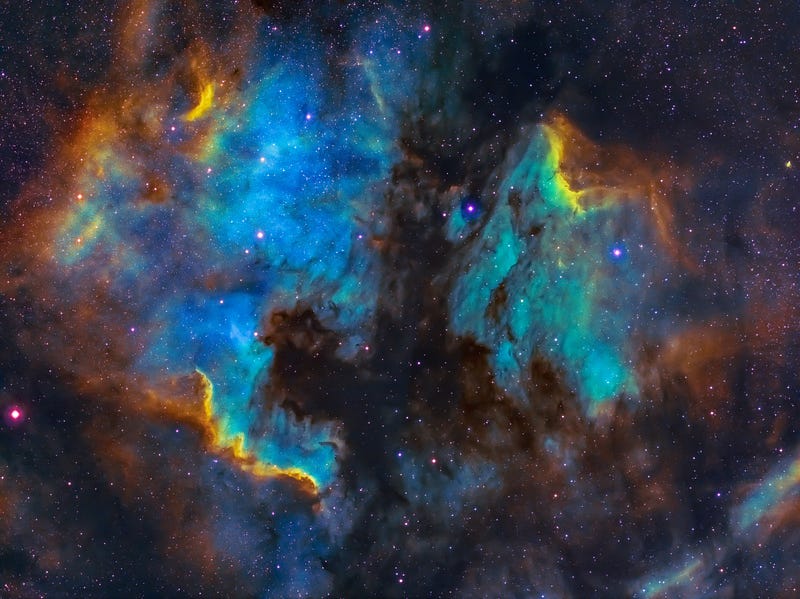
In recent years, astronomers have made significant progress in this area, discovering thousands of exoplanets, or planets outside of our solar system. Some of these exoplanets are located in the habitable zone of their star, meaning that they could potentially support liquid water on their surface.
In this story, we will take a look at the top five most habitable exoplanets known to science. These planets are all located within a few hundred light-years of Earth, and they have the potential to be home to life as we know it.
1. Gliese 667Cc
Gliese 667Cc is a super-Earth exoplanet located just 22 light-years from Earth. It is at least 4.5 times more massive than Earth, and it orbits a red dwarf star. Gliese 667Cc is located in the habitable zone of its star, meaning that liquid water could potentially exist on its surface.
2. Kepler-22b
Kepler-22b is another super-Earth exoplanet located in the habitable zone of its star. It is about 2.4 times more massive than Earth, and it orbits a sun-like star. Kepler-22b is located about 600 light-years from Earth.
3. Kepler-69c
Kepler-69c is a rocky exoplanet located in the habitable zone of its star. It is about 1.7 times more massive than Earth, and it orbits a star slightly cooler than the sun. Kepler-69c is located about 2,700 light-years from Earth.
4. Kepler-62f
Kepler-62f is a rocky exoplanet located in the habitable zone of its star. It is about 1.4 times more massive than Earth, and it orbits a red dwarf star. Kepler-62f is located about 1,200 light-years from Earth.
5. Kepler-186f
Kepler-186f is a rocky exoplanet located in the habitable zone of its star. It is about 1.1 times more massive than Earth, and it orbits a star similar to the sun. Kepler-186f is located about 500 light-years from Earth.
Conclusion
The discovery of these potentially habitable exoplanets is a major step forward in the search for life beyond Earth. It suggests that our planet is not unique in the universe, and that there may be many other worlds out there that could support life.
You may like this:
Happy Learning!


