
Haber-Bosch: The Process Behind the Ammonium Nitrate That Exploded in Lebanon
The Haber-Bosch process powered population growth but at what cost?
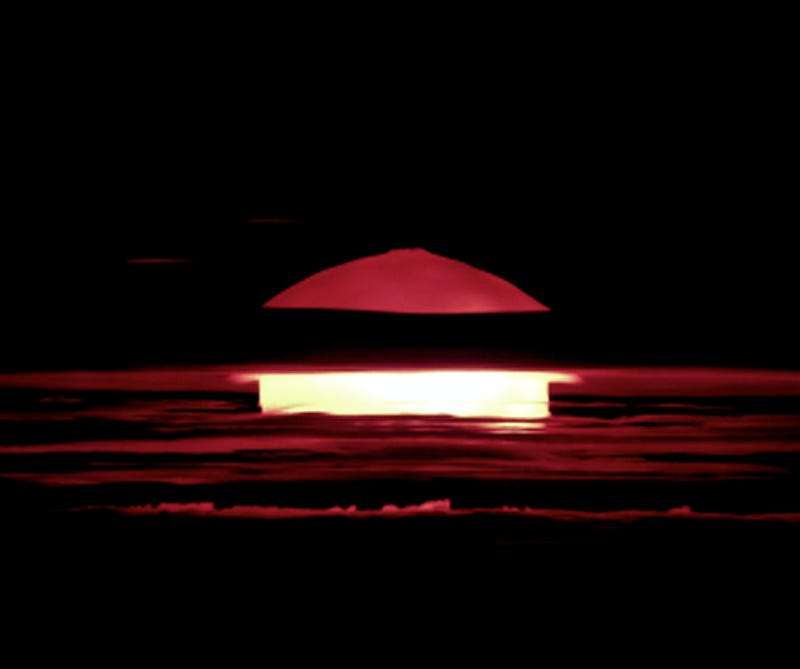
Earlier this month, an enormous industrial explosion induced widespread destruction in Beirut, the capital of Lebanon. Onlookers initially did not know the explosion’s cause, but investigative efforts soon made it clear.
2,750 tons of ammonium nitrate — equivalent to about 1,200 tons of TNT — sitting in a warehouse in the port were ignited by workers welding a nearby door. So far, the explosion has led to over 200 deaths, 6,000 injuries, and ten to fifteen billion U.S. dollars of damage.
Ammonium nitrate is one of the most critical substances behind the 20th-century population explosion. With the substance in the headlines because of a major tragedy, let’s take a look at the process behind the industrial creation of ammonium nitrate, one of the world’s most explosive widely produced substances.
Nitrogen gets bat shit crazy:
Nitrogen is by far the most abundant element in the atmosphere (comprising ~78% of the air you breathe), but given its extreme inertia, it tends not to change easily. Nitrogen is the crusty, cranky grandfather of the elements: it’s totally cool not doing what other elements want.
Although nitrogen is readily available in the atmosphere, plants cannot use it unless it is ‘fixed’ in the form of a water-soluble compound like ammonia or various nitrates.
Unfortunately for nitrogen, the world craves it. With the Industrial Revolution, the human population grew considerably. Looking to increase agricultural production, farmers yearned for economical ways to add nitrogen to the soil.
One of the best natural sources of usable nitrogen is guano (aka bat shit). Nitrogen might be a chemically stable element in the atmosphere, but in solid form, it literally gets bat shit crazy.
Guano — technically a byproduct of bats and seabirds — is ecologically critical. Entire cave ecosystems are often wholly dependent on guano to provide nutrients — nitrogen, phosphorus, and potassium.
Those nutrients also help plants grow. Thus, guano is an excellent plant fertilizer.
Alexander von Humboldt first ‘discovered’ guano in Peru in November 1802, right as the Industrial Revolution took off in Europe. Soon, the European quest for guano — aka White Gold — was off to the races.
Humans began to mine guano in industrial quantities. From the 1820s to the 1860s, the tropical Chincha Islands of Peru were exploited for their high-quality guano deposits. The United States, United Kingdom, and France particularly reaped the spoils of Peruvian guano. Evidently, Peru had some of the world’s best bat shit.
In typically American fashion, Congress passed the Guano Islands Act in 1856, which enables U.S. citizens to take possession, in the name of the United States, of unclaimed islands (i.e. not occupied and not within another government’s jurisdiction) containing guano deposits. I’ll stop with the bat shit jokes.
Clearly, Peru’s guano was very valuable. The guano boom boosted Peru’s economic activity temporarily. In 1877, A. J. Duffield noted “it is only in Peru that we find an epoch of Gold and Silver juxtaposed with an Age of Manure.”
But once Peru’s 12.5 million naturally occurring tons of guano were exhausted, industrial powers needed to look elsewhere for nitrates to be used in industrial fertilizer production.
Luckily, they had another readily available source of nitrate in South America: saltpeter deposits in the Atacama Desert, one of the world’s driest and most desolate regions.
Germany, we have a problem:
The Atacama, at the time part of Peru, contained significant deposits of saltpeter. Saltpeter is typically used to refer to potassium nitrate, but Chilean saltpeter refers to the sodium nitrate that was available in abundance in the Atacama (which became part of Chile during the late 19th century).
Thus, by the turn of the 20th century, sodium nitrate was in high demand as a workaround for nitrate production.
The world’s biggest powers depended on Chile for regular shipments; Chile controlled most of the global supply. But why rely on cumbersome mining in one faraway country subject to geopolitical tensions (remember, this was before airplanes and the Panama Canal) to produce a substance essential for the production of both food and weapons?
Meanwhile, chemists had known ammonia to be a nitrogen compound. A few scientists attempted to synthesize ammonia during the late 18th and 19th centuries. None succeeded.
Germany was the world’s largest importer of Chilean nitrates. The country needed fertilizers to enhance agricultural production from its poor, sandy soil. And Kaiser Wilhelm II had his sights on starting a war to establish Germany’s “rightful place” in the world order (in the words of Scooby Doo, ruh roh). The Kaiser knew that in a war, he could not rely on Chilean nitrates.
A German chemist named Fritz Haber got to work. Originally a Jew, Haber renounced his religion to find work as a scientist. He was “aching to be accepted as a German patriot,” a decision which would prove prophetic.
It enabled the discovery of one of the most revolutionary but environmentally destructive practices ever created.
Haber and Bosch begin making ammonia out of thin air:
In 1905, Haber published a book called The Thermodynamics of Technical Gas Reactions. In it, he established the necessary criteria for a successful system to industrially produce ammonia.
By 1909, Haber had designed a process that took nitrogen gas from the air and combined it with hydrogen gas from fossil fuels at high pressure using a metal catalyst to produce a steady stream of ammonia. Upon visiting Haber’s laboratory, another German chemist named Carl Bosch developed a cheaper iron-based catalyst that made the process more scalable.
In September 1913, Haber and Bosch opened an industrial plant in Oppau, Germany that began to industrially synthesize ammonia. No longer would the world have to rely on Chile.
Haber and Bosch had struck gold; they had figured out how to fertilize the world out of thin air. Their process became the most important industrial chemical process of all time.
A year after the Oppau plant opened, the first World War began. By then, the plant produced 20 tons of usable nitrogen per day. Instead of being used for plant fertilizers, that nitrogen found its way to the battlefield in the form of explosives for trench warfare.
Munition production during World War I required a lot of nitrates. British companies controlled the large Chilean nitrate deposits Kaiser Wilhelm II knew he couldn’t use in a war. Thus, the Haber-Bosch process proved essential to the German war effort.
Of course, however, innovations in chemical production could not overcome the Allied forces.
Once the war concluded, the Haber-Bosch process was used for a less violent purpose: food production.
Haber-Bosch powers population growth, but at what cost?:
Today, the Haber-Bosch process might produce more ammonia than the sum of all natural or biological nitrogen fixation. It directly enables about half of the world’s food production. About half of the nitrogen cells in your body come from Haber-Bosch.
Haber-Bosch has produced “plenty of food for lots of people.” It has thus been called the detonator of the population explosion. With the techniques available before the process was created, the Earth could support about four billion people.
Unfortunately, the ammonium nitrate derived from the Haber-Bosch process isn’t entirely benign. As we sadly saw last week, industrial quantities of ammonium nitrate can lead to massive explosions. Thousands have died from ammonium nitrate disasters like the tragedy in Lebanon, including a 1921 explosion of 450 tonnes of ammonium nitrate at the original Oppau plant in Germany which killed 561 people.
Terrorists have also used ammonium nitrate-based explosives. Examples include the 1995 Oklahoma City bombing and the 2011 Oslo bombing.
But the biggest negative impact of Haber-Bosch may be the destruction it unleashes on the environment. The process is scientifically ingenious but extremely resource-intensive. The high pressure (150 to 350 atmospheres) and temperatures (350 to 550 degrees Celsius) needed to break nitrogen’s bonds require a lot of energy. The process uses 3% of the world’s natural gas production and generates 3% of global carbon emissions.
And the damage goes far beyond fossil fuel-related impacts. Half of the nitrogen in today’s synthetic fertilizers is not properly disposed of; instead, it ends up in the atmosphere or the hydrosphere as volatile chemical compounds.
Conclusion:
If you walk down the street and ask random strangers if they’ve ever heard of Fritz Haber or Carl Bosch, you’d get a lot of blank stares. But those two men, both of whom won Nobel Prizes for their work (in 1918 and 1931, respectively), are as responsible as any other for many of modern society’s biggest advances and challenges.


