
Gut Microbiota: An Entity That Connects to Distant Organs
Gut microbes intertwine with 12 organs of its host and they are revolutionizing healthcare.
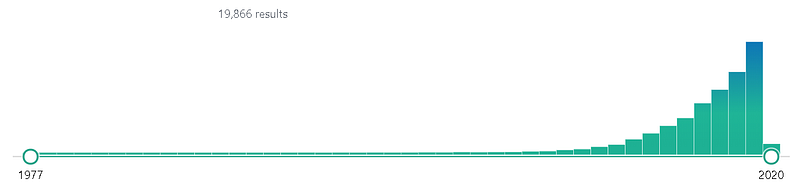
In 1907, Élie Metchnikoff — the father of natural immunity and probiotics — published a book detailing the health benefits of live bacteria in yoghurt. But it was only after 100 years that research on the gut microbiota (or microbiome) bloomed and gained momentum (see image). Extensive research heretofore has identified 11 gut microbiota axes: Microbiota-gut-brain, -liver, -adipose tissue, -heart, -skin, -bone, -lung, -thyroid, -pancreas, -kidney, and -eye axes. As gut microbes also affect the gut itself, I think 12 axes exist, for now.
We are as much microbial as humans. Microbial and human cells exist in a 1:1 ratio in one host. Trillions of microbes reside in the human gut, forming the gut microbiota. Its genomic content — the gut microbiome — is 150 times larger than the human genome. That is why humans have been called, or are, holobionts “in the sense that the fitness of the host depends on and cannot be seen separate from its microbiota,” explains Maarten van de Guchte, PhD in his 2018 publication in Microbiome).
Symbiosis
A symbiotic gut comprises microbial communities in its natural balance wherein ‘good’ microbes outnumber and dominate the ‘bad’.
Microbes of the Firmicutes phylum ferment undigested carbohydrates and fibres to produce short-chain fatty acids (SCFAs). The most abundant SCFAs are butyrate, propionate, and acetate. SCFAs can disseminate into the blood circulation to act on distant organs/tissues/cells. Physiologic benefits provided by circulating SCFAs are manifold:
- Systems-wide anti-inflammatory effects.
- Promoting the browning of white adipose tissue to generate heat (or release energy) more readily.
- Enhancing bone formation by regulating activities of bone cell precursors and liver production of insulin-like growth factor-1 (IGF-1).
- Facilitating the growth of SCFAs-loving microbes in the skin and lung microbiota — supporting the symbiosis therein.
Bifidobacteria and enterococci are some examples of gut microbes that synthesize vitamins — e.g., thiamin, pantothenic acid, niacin, menaquinone, and cobalamin — required for enzymatic cofactors in essential biochemical reactions in the host. DNA replication, cell proliferation, and energy production are a few examples.
Lactobacilli and bifidobacteria in the gut can manufacture brain neurochemicals — e.g., GABA, glutamate, dopamine, and serotonin — in physiologically-relevant amounts. The vagus nerve is probably the conduit by which these microbial neurochemicals communicate with the brain. Manipulation of the gut microbiota can readily alter the brain neurocircuits and cause behavioural changes in mice. But this phenomenon may not be so obvious in humans, as Prof. Sarkis Mazmanian — an expert in gut microbiome research from Cal Tech — puts it: “I don’t think your microbiome can make you think or feel something, it is more like a modifier.”
As gut microbes synthesize numerous brain neurochemicals, loss of symbiosis would adversely affect the brain. This is reflected by the extensive list of brain disorders linked to gut dysbiosis (see below). The microbiota-gut-brain axis is indeed a hot research field. Even I had recently authored a review article on it in the Frontiers of Neuroscience.
Dysbiosis
Gut dysbiosis results whenever deviations from the normal gut microbial communities occur. Populations of ‘bad’ microbes, alongside its harmful metabolites, overgrow and outgrow the ‘good’ microbes. Sources commonly inducing gut dysbiosis are psychological stress, antibiotics, poor diet, sleep deprivation, and preexisting health conditions.
Dr. van de Guchte and colleagues described dysbiosis as: “When a system is pushed to its limits (by stochastic movements, perturbations, changing conditions, or a combination of these factors), it can reach a ‘tipping point’ from where it can easily be propelled to a different state.” Western dietary habits, for instance, have already shifted the gut microbiota from the ancient Prevotella-predominant state into one enriched with Bacteroides. In other words, the native Prevotella enterotype has been propelled to a Bacteroides enterotype by changing dietary patterns.

(i) Dysbiosis means the absence of symbiosis. Generation of symbiotic gut microbial metabolites — such as SCFAs and neurochemicals — plummeted. Their physiologic benefits (see above) are lost until dysbiosis is resolved.
(ii) Gut dysbiosis also initiates a local inflammation that disrupts the gut lining, causing a leaky gut. This permits bacteria and its endotoxins (lipopolysaccharides) to translocate from the gut into the blood circulation, causing low-grade, sustained systemic inflammation in the host. A dysbiotic gut may thus initiate or exacerbate existing inflammatory conditions, which essentially comprise the majority of human diseases. Systemic inflammation furthers add salt to the wounded gut lining; a vicious cycle inevitably ensues.
(iii) As populations of ‘bad’ gut microbes overgrow, harmful microbial metabolites are synthesized in abnormal amounts. An excess of microbes generating TMA from dietary choline and carnitine is transported into the liver via the portal vein to be converted into TMAO. Excessive TMAO is a known toxicant to the liver, heart, and kidneys. Particularly the heart as TMAO is a confirmed risk factor for cardiovascular diseases.
Another example is free phenol and p-cresol — generated by clostridial species in the gut — that can accumulate in the skin and disrupt the epidermal barrier and differentiation therein. Other clostridia metabolites include 4-cresol and 4-hydroxyphenylacetate that inhibit dopamine-β-hydroxylase, an enzyme that converts dopamine to norepinephrine in the brain. The resulting excessive dopamine then becomes toxic to neurons. These (and other) noxious gut microbial metabolites normally do not cause any complications at low doses. But the story changes during gut dysbiosis.
To summarize, the following happens during gut dysbiosis:
- (1) Diminished production of gut microbial metabolites pertinent to symbiosis.
- (2) Excessive translocation of bacteria and its endotoxins from the gut into the circulation.
- (3) Excessive production of noxious gut microbial metabolites.
For these reasons, it is not by chance that gut dysbiosis has been found to contribute to diseases/disorders of various organs/tissues in the body:
- (1) Brain: Major depression, memory impairment, anorexia, addiction, Parkinson’s and Alzheimer’s disease, autism, and schizophrenia.
- (2) Liver: Alcoholic and nonalcoholic fatty liver diseases, cirrhosis, and hepatocellular carcinoma.
- (3) Adipose or fat tissues: Obesity and nonalcoholic fatty liver disease.
- (4) Heart: Atherosclerosis and congestive heart failure.
- (5) Skin: Acne, atopic dermatitis, and psoriasis.
- (6) Bone: Osteoporosis.
- (7) Lungs: Allergies, asthma, cystic fibrosis, and chronic obstructive pulmonary disease.
- (8) Thyroid: Autoimmune thyroiditis.
- (9) Pancreas: Type 1 and 2 diabetes, pancreatitis, and pancreatic cancer.
- (10) Kidneys: Chronic and diabetic kidney diseases.
- (11) Eyes: Autoimmune uveitis and age-related macular degeneration.
- (12) Gut or intestine: Irritable bowel syndrome, inflammatory bowel diseases, coeliac disease, and colorectal cancer.
Causality can be drawn to a certain extent with research documenting that transplantation of the gut microbiota from depressed, but not healthy, people into rats make depressed rats. Depression is just one example; the similar research outcomes have been observed with Parkinson’s disease, schizophrenia, irritable bowel syndrome, and obesity, to name a few.
“All disease begins in the gut.” - Hippocrates Asclepiades, father of medicine (c. 460-c. 370 BC).
“The majority of diseases begin in the digestive tract when ‘good’ bacteria are no more able to control ‘bad’ bacteria.” - Élie Metchnikoff, father of probiotics and natural immunity (1845–1916).
From Hippocrates to Metchnikoff to this day, nobody can now disagree that a symbiotic gut microbiota-host ecosystem is the cornerstone of health and wellness. Deciphering the workings of this ecosystem is starting to revolutionize healthcare and how we might prevent or treat diseases.
“Microbiota and host should be in tune, implying that only correcting the one or the other may not work (and clinical experience shows that often it does not work).” - Maarten van de Guchte et al. (2018).
The Grey Areas
But every change or implementation brings forth challenges. In probiotic treatment, for example, lactobacilli only colonized the gut of recipients who initially had low baseline levels of lactobacilli; otherwise, lactobacilli did not confer any health benefits. The same was observed with Bifidobacterium longum. This may explain why probiotics work for some people and not others. Likewise, for dietary interventions, Dr Hills and colleagues in their 2019 review paper published in Nutrients concluded that “inter-individual variation in gut microbiota could explain the disparity in outcomes often observed with lifestyle interventions and why one-size-fits-all diets are not always effective.”
“There is no way that anyone has enough information to be able to reshape your microbiome in a meaningful and healthy way, that is tailored to you,” explains the Cal Tech professor, Sarkis Mazmanian. “… and, since my microbiome configuration is based on my genetics, diet, and life experiences, healthy for me is totally different from healthy for you.”
Second, the majority of gut microbes cannot be cultured due to limitations in the current research techniques; their function(s) is, therefore, an enigma. Published in Nature in 2019, Alexandre Almeida, PhD from the European Bioinformatics Institute and his team identified 1,952 novel putative bacterial species from the human gut. This has extended the known human gut microbial diversity by 281%. Who knows what bacteria could be lurking underneath the gut that can affect our physiology, for better or worse.
With the gradual progress in research and technologies, there is no reason to be too pessimistic about the present complications in leveraging the gut microbiota to improve healthcare. Research has already made it this far; it can only go further. As Prof. Sarkis Mazmanian commented in a 2019 interview: “But, I do know that if we do the right experiments, if we ask the right questions, if we translate the findings from mice to humans and show clinical efficacy in people, it will validate the field.”


