
Gum Trees: Bane and Glory.
Australian gum trees glorious and yet dangerous in fires.
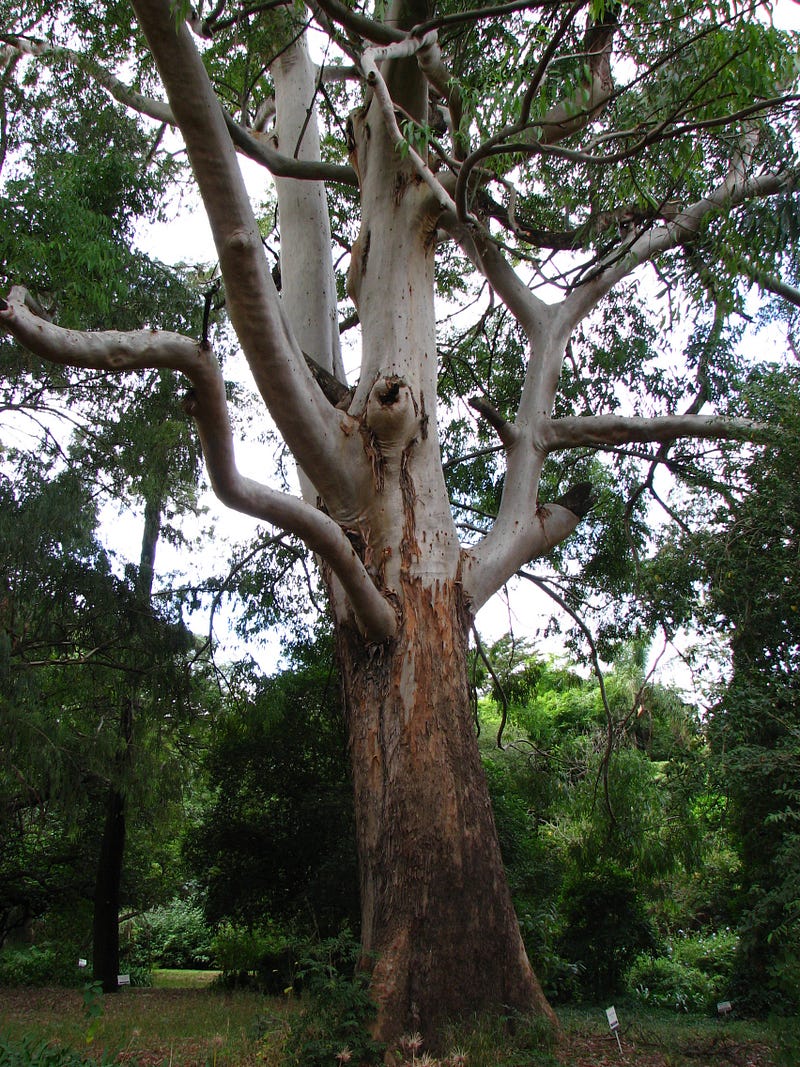
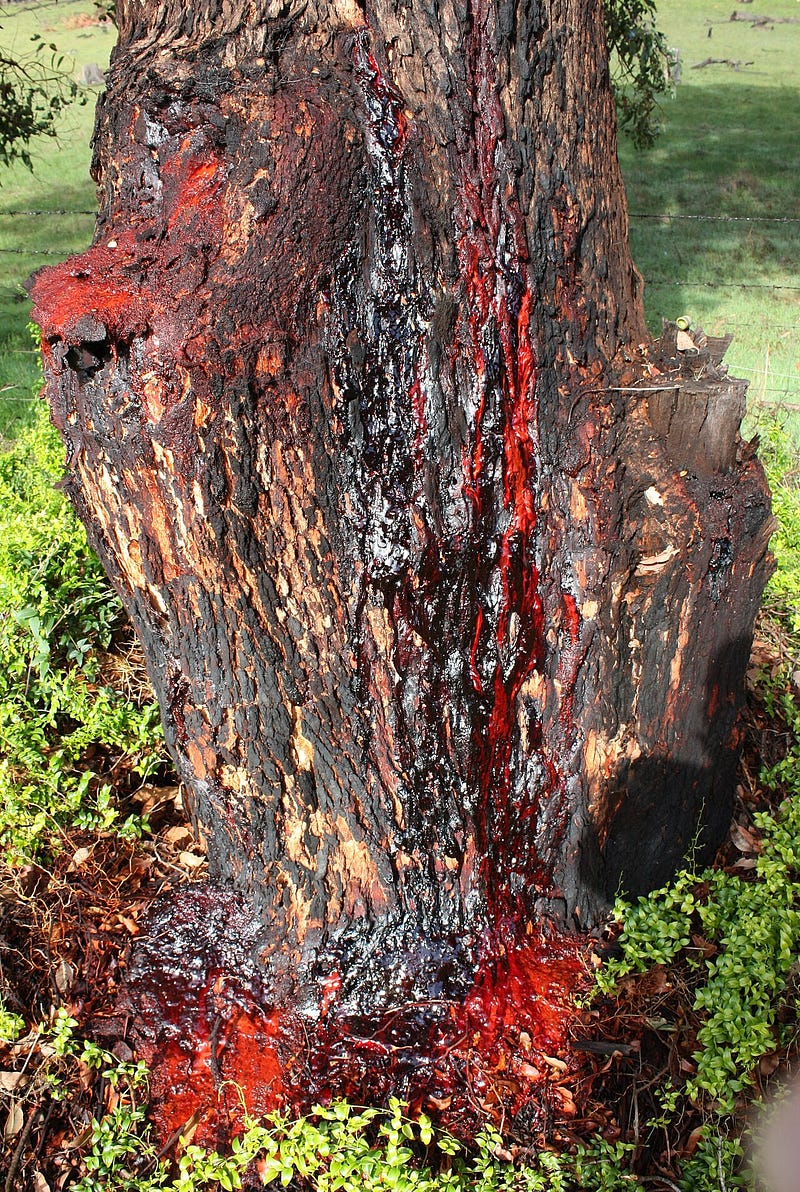
Gum trees so called because they exude copious and sticky gum (kino) from breaks in their bark, Generally gum trees referred to as “eucalypts”.
Eucalypts from fire-prone habitats adapted to withstand fire, Seeds held in insulated capsule called gumnut, Opens only after bushfire, Once cooled land becomes freshly fertilised seed bed.
Eucalyptus oil in gum tree leaves evaporates and makes fire more damaging to other species, Giving evolutionary advantage to eucalypts.
Epicormic buds under thick bark ready to quickly sprout new stems and leaves after fire.
700+ eucalypt species dominate landscapes all over Australia, Grew up with Gums, Local park specimen trees, Family trips to blue mountains, During summer’s heat gum’s eucalyptus oil evaporates creating blue haze, Smell of gums bring fond reminders of childhood picnics.
Eucalypts grown in plantations outside Australia because they’re fast growing having valuable timber pulpwood and essential oils, These highly flammable trees often close planted creating issues around managing bark shedding and dropping limbs Increases danger of devastating forest fires.
Ironbark in my Local forest.
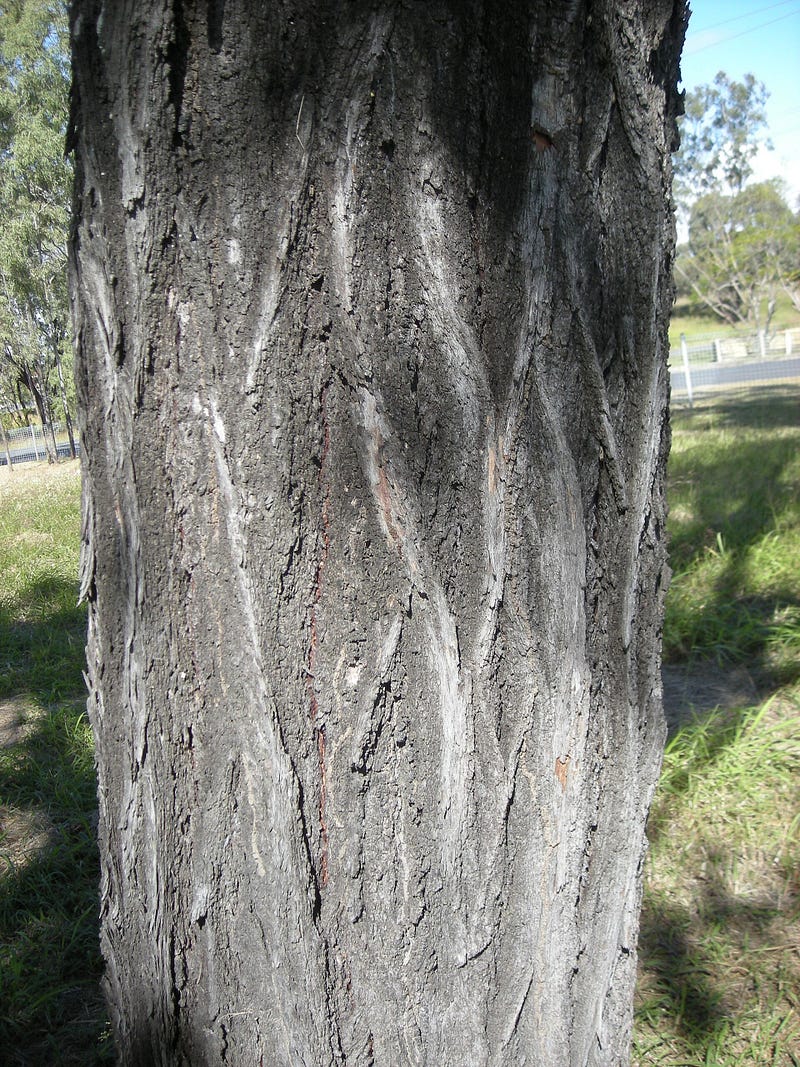
Ironbarks don’t shed shed bark annually, Dead bark accumulates on tree forming fissures, Becomes rough after drying out and resembles iron slag, Glorious contrasts with Spotted and Blue gums in my little forrest.
Bark resistant to fire and heat protects living tissue within trunk and branches, Extreme fire removes leaves and shoots, But protected buds quickly reshoot.
Ironbark very dense hard wood ideal for demanding conditions, Protect ships from shipworms, Bridge and wharf piles, Long lasting railway sleepers.
Gum Trees in California.
Thoughts.
Growing up Aus had bushfires but not disastrous fires like those of 2019/20.
Now climate change, Higher more intense rain, Higher summer temperatures, Decrease in hazard reduction burns due to cost and smoke complaints, Create ideal conditions for uncontrollable fires, Back to basics, Community management controlled burns.
Have 12 little flowering gums Plant them as single tree specimens, Enabling easy management and ensuring enjoyment of Australian bush.

Blessed be.


