
Guanajuato, a city of legends, tunes, and tombs
By Robert Knight
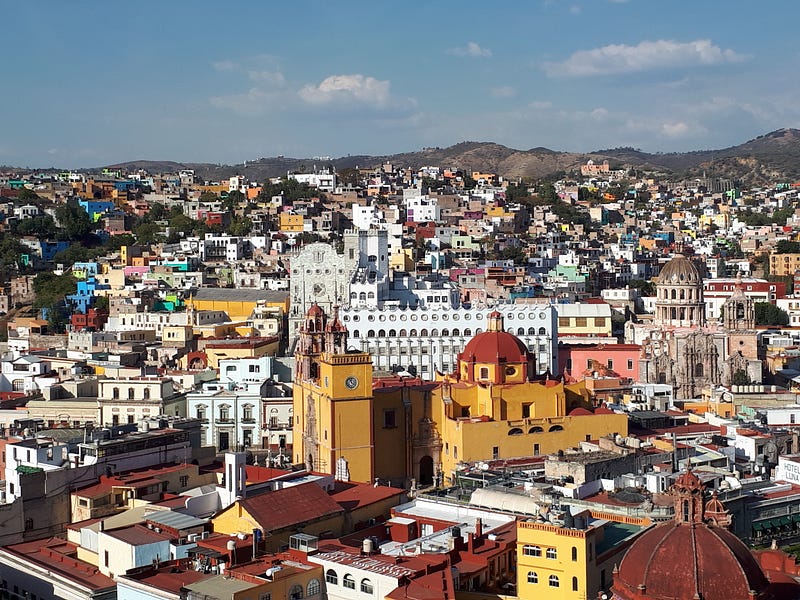
Guanajuato, Mexico, is a city like no other I have ever known.
In 1548 a prospector discovered silver in the mountains surrounding what today is the capital of the state by the same name. By the mid-1700s, Guanajuato had become the wealthiest city in Mexico. The owner of La Valenciana mine paved the path from his house to the nearby church with gold so his daughter would not have to touch the soil on her way to be married.
The city, built in a narrow valley between the mountains that made it rich, is a beautiful example of the art and architecture of the age of the Viceroys.
One imposing edifice is the Alhondiga de Granaditas. Originally built as a grain storage facility, it played a key role during Mexico’s independence from Spain. Spanish forces had occupied the building to use it as a fortress against the insurgents. On September 28, 1810, a group of the revolutionaries led by a worker from the mines nicknamed “El Pipila” stormed the fort. From the safety of this nearly impenetrable building, the soldiers shot and hurled fire and rocks at the mob trying to enter. “El Pipila” strapped a large slab of rock to his back, and carrying a torch, made his way to the door of the fortress. He burned the door down, and the intruders took the fort. Today a colossal statue of “El Pipila” overlooks the city from a nearby hill.
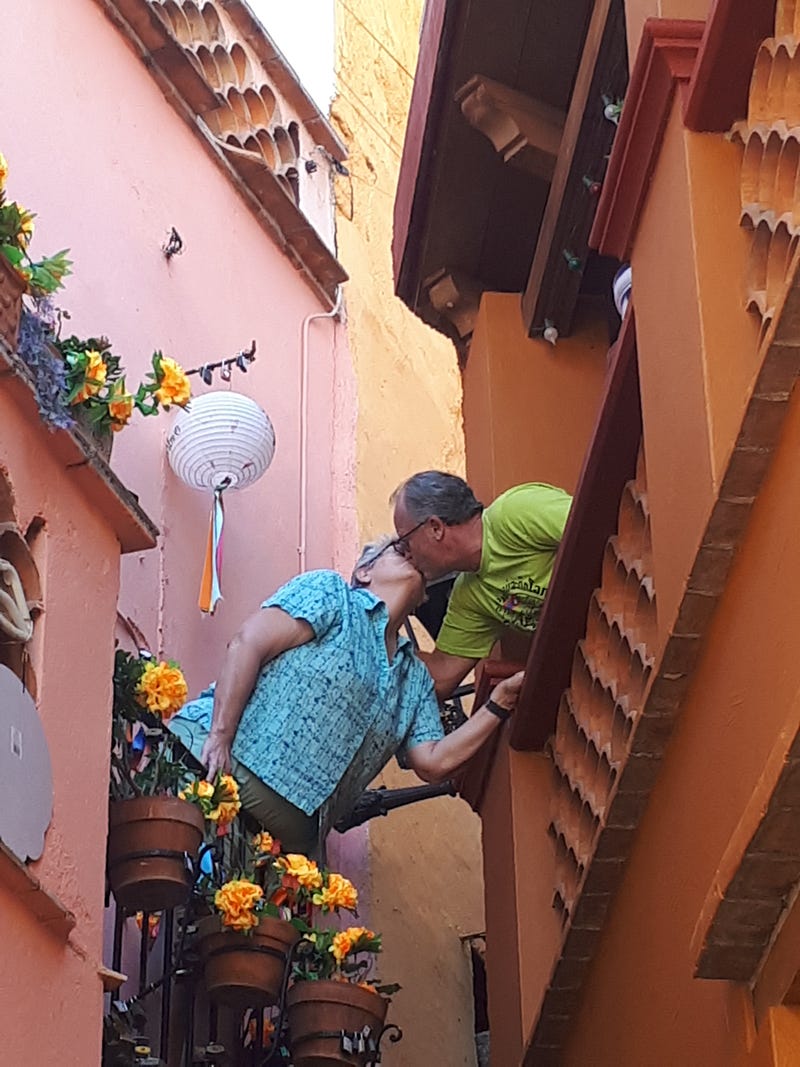
Guanajuato features a series of narrow alleys that wind their way through the center. The most famous of these alleys is the alley of the kiss. A Mexican Romeo and Juliet story takes place in this alley. A wealthy mine owner and his daughter lived in one house. A simple miner lived with his son in the house across the alley. Only 27 inches separated the balconies of the two homes. One day the young girl’s father caught her kissing the neighbor’s son across their balconies. Furious, he told her if he ever saw such a thing again, he would rather kill her than see her marry beneath her station. But young love would have its way. Once again, the two were found leaning across the 27 inches and kissing. In a rage, the father stabbed his daughter, killing her. Soon after, the lovestruck young man also committed suicide rather than live without the love of his life. Legend says that if two lovers kiss on this spot, they will be together forever.
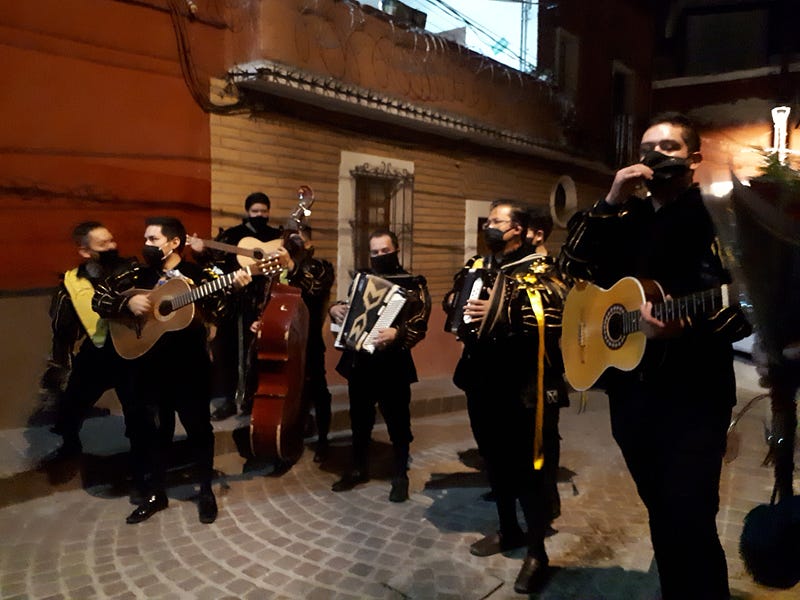
Today, Guanajuato’s alleyways come alive with merry tunes as groups of minstrels and troubadours wind their way through the streets. These groups of mostly university students dressed in the costumes of the 1800s accompany tourists on rounds playing, singing, and generally creating a festive atmosphere every evening.
Guanajuato’s tunnels were initially constructed to divert the river’s waters, preventing flooding of the town. Eventually, they were paved and today provide a rabbit warren of underground roads that serve to relieve traffic congestion in the city above. Tunnels provide over 3 kilometers of roadway and are a unique attraction to Guanajuato. The original archways and brickwork were maintained, giving this part of the city a distinct and somewhat spooky look. Residents claim the tunnels are perfectly safe day or night.
Perhaps Guanajuato’s most famous attraction is the exhibit of the mummies of Guanajuato. Between 1870 and the mid-1950s, a local tax was levied to pay for maintaining the cemetery. The bodies of families unable to pay this “eternal rest” tax were disinterred to make room in the cemetery. The soil’s quality and the climate in the area caused the natural mummification of these corpses. Today 119 of these mummies are on display in a museum. The exhibit includes the youngest mummy on record, a six-month fetus. The fetus and mother both died in a cholera epidemic. Many of the clothes on the corpses are still intact after more than 100 years. One woman appears to have been buried alive by accident. The position of her body and the expression on her face would indicate she faced a horrific end.
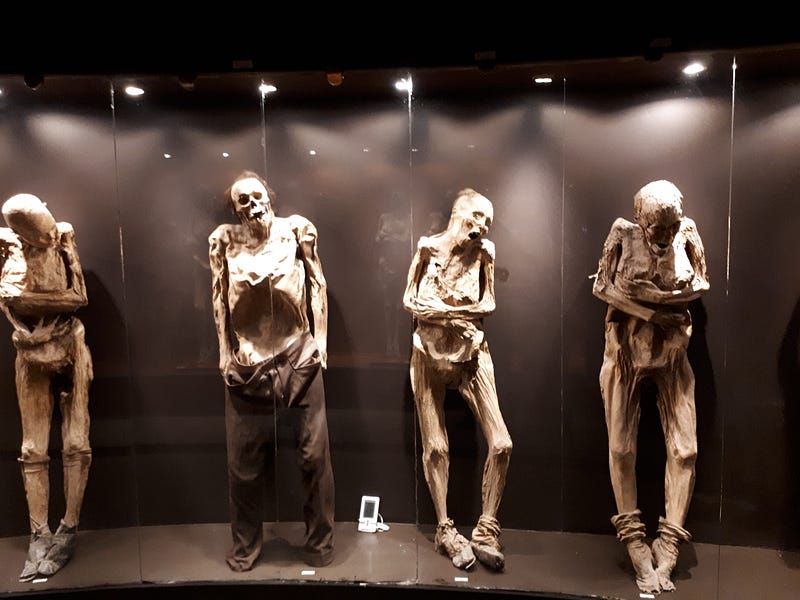
Even though the exhibit has been well-curated, it is an unusually morbid museum. After half an hour with the mummies, I was more than ready to leave.
The University of Guanajuato is an imposing neoclassical structure of green quarry stone erected by the Jesuits in 1832.
Just down the street from the University is the childhood home of Diego Rivera. This home has been converted into a museum that showcases the progression of Diego Rivera’s art.
In the heart of the city lies the Juarez Theatre. Constructed in the neoclassical style, bronze statues of the Greek muses top the facade. Juarez Theatre has been in continuous use since its opening in 1903.
Today it is a venue for many activities during the Cervantes Festival in October each year. The International Cervantes Festival or “Cervantino” boasts acts from all over the world and is a prime attraction for lovers of all branches of the arts.
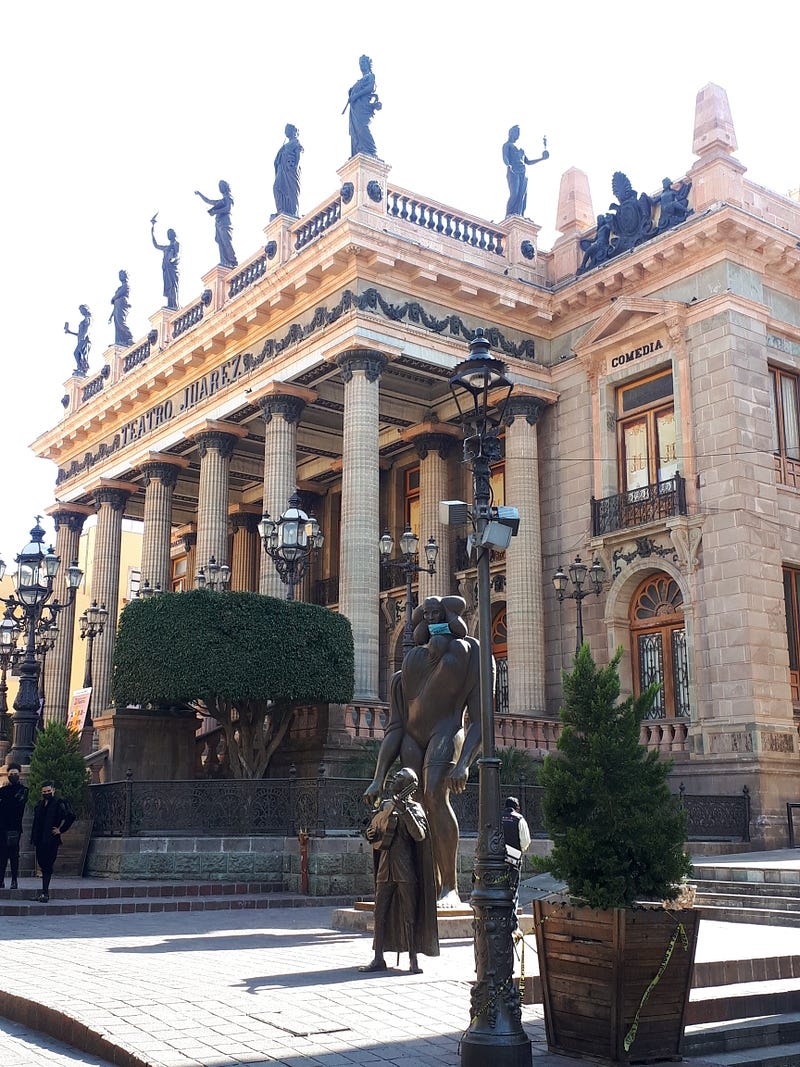
In front of the Theatre is the Jardin de la Union. This pleasant triangular plaza is flanked by numerous restaurants and is a popular meeting place for residents and tourists. During the dinner hours, Mariachi bands entertain throughout the area.
Travel tips
While there are many excellent restaurants all over the city, two of my favorites are Truco 7 and La Vie en Rose. Truco 7 is an affordable Mexican restaurant on Truco street next to the Basilica of Our Lady of Guanajuato. Legend has it that at one time, Truco 7 was a place where men came to drink and gamble. One night a local man who was losing, bet a stranger his wife against the stranger’s pot. The man lost his wife to the stranger, who turned out to be the devil.
Whenever I eat at Truco 7, I often have the garlic soup with an egg. It’s always good. There’s no gamble there.

La Vie en Rose is a small French bistro that looks like it was transported from a Paris street. The owner is a young French woman who came to Guanajuato to study. She married a Mexican student at the university, opened a restaurant, and serves the most authentic French food in the state of Guanajuato.
Whenever I’m in Guanajuato, I try to stay at Casa Bertha. There are many more upscale hotels in town, but Casa Bertha offers the best value for the money. It is well located near the heart of the city. The rooms are clean and ample. Most of the rooms have a full kitchen, and private bath, and best of all, cost less than $40us per night.
If you drive to Guanajuato, I would suggest parking outside the city and taking a taxi or bus into town. It is a walking town anyway.
However you get there, GO!


