
RACE | FAMILY | SOCIETY
Growing Up White in a Brown Family
As a child I knew nothing of race, my family was just my family. Until society showed a little girl otherwise.
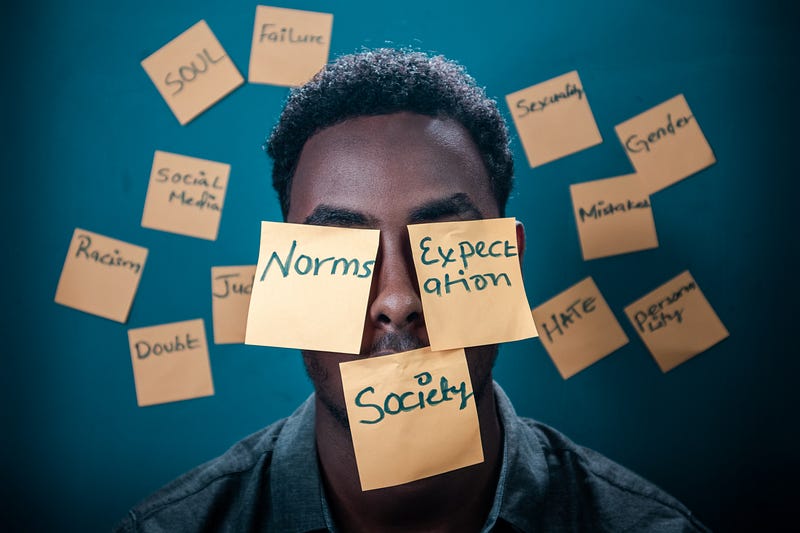
My father is Moroccan and Muslim, naturally, he has dark skin. My mother is English and Christian. Despite their differences, they found love. Perhaps their differences increased through time, or maybe they just fell out of love. Nevertheless, my parents split when I was little and both remarried.
My father married a Moroccan woman and had four more children. My brothers and sister. All of which were dark-skinned.
I have green eyes, blonde hair, and pale skin, but if you’ve got a good eye for ethnicity, my eye and nose shape will tell you that there is more to my heritage than England.
As a child, I never even thought about race. I saw no difference. My father was my father, no different from any other. He loved me and I loved him. That’s all that matters, right? I happily went to Mosque and Church, I enjoyed both; it was just something that I did. As I grew up, I realised that the world around me had a problem with it.
So many things happened which stripped me of my beautiful innocence and naivety towards race and society.
The first of which occurred when I was eight years old.
Me and my family went out shopping for new toys. A lovely day, I recall. Until I got lost, I wandered off, something I’ve always had a tendency to do. This time, though, I had strayed far from my father’s side. I panicked and burst into tears. A white lady and her family saw me and immediately came to my rescue.
I said, “I can’t find my daddy.” She vowed to help me, calmed me down a little, and we walked through the shopping centre slowly looking for my daddy. I saw him, and it filled me with joy. I jumped up and down and yelled, “That’s my daddy!”
She was not convinced. She asked me repeatedly, “are you sure that's your dad?” her doubt was increasing as my family came closer into view. How could this blonde child belong to that Arabic family?
I insisted he was my father. Even after my obvious elation, she did not want to hand me over to him. My father reassured her he was my dad, I can’t recall exactly what he said, but I remember embracing him and not wanting to let go. Like any little girl would.
So she gave me back. As we walked off to find some lunch, I turned my head to wave goodbye to her. I remember seeing the look on her face, I will never forget it.
She looked terrified.
I imagine she was concerned that he was not my father and didn’t want to hand me over to the wrong family. Surely though she could see from my joy that he was?
Whatever happened that day, I know one thing; it changed me. Something inside me shifted, never to be reset.
I realised I was different from my family. There was a problem. I knew it was my skin. I was different, or he was, either way, society didn’t like it.
From that point onwards it was never the same. I saw myself more and more than an outsider. With an irreparable problem, I lacked the amount of melanin to truly be an equal member of the family.
It damaged our relationship. I just couldn’t handle being different, or my perception of our differences. I wanted us to all be the same so everyone else would stop staring. I wished for colour to disappear, to relieve me of this intolerable sense of inequality.
Now I’m 25 years old and I get it. I hold on to the fact that society is wrong, not my family. We were perfect. I have purposely tried to let go of the feelings of difference, but it’s hindered when I know that society isn’t ready to do the same thing.
April 2021
Delilah Brass


