
Growing Up in Spain Under Franco and the Opus Dei — My Spiritual Journey, Part 1
Sometimes privilege and oppression combine in strange ways
Dragged kicking and screaming to the Opus Dei
When I was seven years old, my father dragged me kicking and screaming up seven flights of stairs to a children’s club run by the Opus Dei. It was as if my current progressive persona had possessed my younger self. In reality, what happened was that I had overheard my parents say that Opus Dei would turn me into a good boy. I was having none of that.
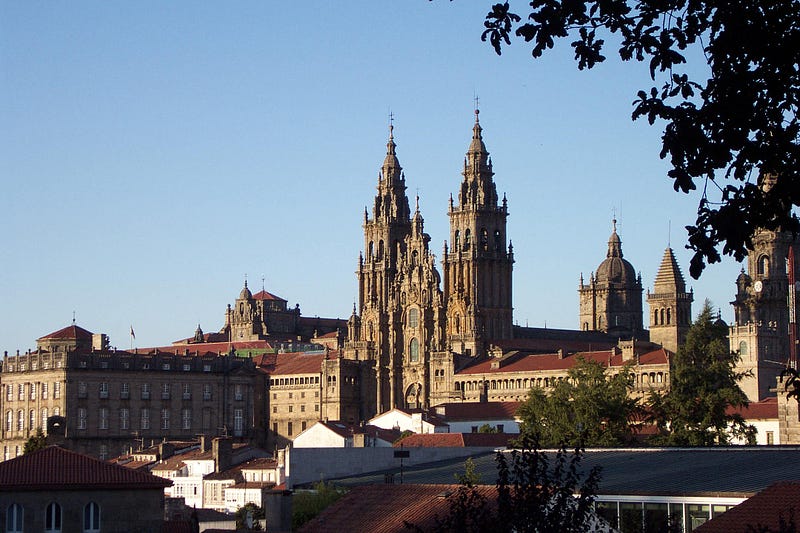
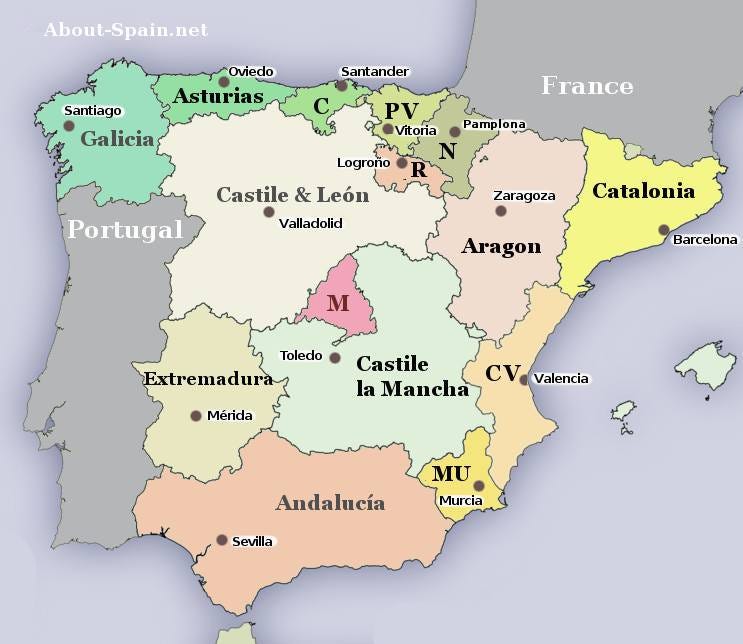
My temper tantrum stopped the moment they opened the door and I came face to face with Elías, a popular boy in my class who had become my best friend. I was short of friends, having moved to the town of Santiago de Compostela in the Celtic country of Galicia (northwestern Spain) just a couple of years before. So I stopped crying, played it cool and checked the place out.
That was the only time I saw Elías in that Opus Dei club, the Club Senra. I guess his parents were not as conservative as mine.
The Opus Dei
My father knew perfectly well what Opus Dei was: a Catholic conservative organization that had become a political powerhouse inside the fascist regime of General Francisco Franco. “Opus Dei” means “Work of God” in Latin. My uncle José Luis, my father’s youngest brother, was a “numerary” member of Opus Dei, living in the organization headquarters in Rome. Numerary members have to live in full chastity (meaning that they are not allowed to marry or have sex), poverty (they give their earnings to the organization) and obedience (they follow the instructions of the organization conveyed through their “spiritual director”). However, they do this as a contract with the Opus Dei and do not take vows, as monks do.
My father was a “super-numerary” member of Opus Dei, a category created for married people. They live in chastity inside their marriage, pay tithes to the organization, and obey their spiritual director (with more leeway than numeracy members do). Oh, and they had to offer in sacrifice their eldest son, which in this case would be me.
I am only half-joking. What really happens is that they are asked to put their children in clubs like the Senra, where they are carefully groomed and indoctrinated. Then, when they turn 14, they would be asked to join Opus Dei. My younger siblings would not escape that fate; my two brothers would soon join me at the Club Senra. My sister would follow a different path, since men and women are kept strictly separated in the Opus Dei, and she eventually did become a numerary member.
My father’s career
Being an Opus Dei member worked very well for my father. He was a Professor of Roman Law at the University of Santiago. Around that time, 1964, he became the Dean of the Law School. In 1968 the student demonstrations that started with the May ’68 troubles in Paris and elsewhere in Europe were rocking Santiago de Compostela, a small town full of college students because its main lifeline, other than the Cathedral, was the University. A group of students had locked themselves inside the President’s Office of the University and refused to come out unless their demands were met. Franco decided that the current Rector (President) of the university was too soft and that a strongman needed to be put in his place. That strongman was my father.
Recently, my Dad told me that his way to deal with the problem was not to send in the police, as Franco expected him to do. Instead, he offered them a place to meet in the Burgo de las Naciones, a set of barracks that had been built to lodge the pilgrims during that Holy Year.
I was eleven. Being the son of the Rector of the University put me squarely in the upper class in that provincial town. That was unusual because, before moving to Santiago, we had lived quite humbly, first in Rome and then in La Laguna, a college town in the island of Tenerife, one of the Canary Islands off Africa. But now we lived rent-free in a luxurious apartment on campus, surrounded by gardens and a short walk from the pine and oak forests outside of town.
The Club Senra
Ironically, being part of Club Senra was one of my greatest privileges. I went to the club ostensibly to participate in activities that included making model airplanes, photography, mountaineering, chemistry, drawing and electronics. Classes were taught by college students and even one of my school teachers. I really liked making the airplanes and go out to fly them, but I eventually participated in all these activities.
As I grew older, I was invited to go there every day after school to study and do my homework. These daily study sessions were interrupted by a half-hour of “meditation”, which consisted of reading “points” of Camino (The Way) — with long silent pauses between point and point. Camino is a book written by Monseñor Escrivá de Balaguer, the founder of Opus Dei and now a saint, consisting of 999 points or short paragraphs. The most controversial (points 387–400) encourage members to practice “saintly intransigence” (an exhortation to dogmatism), “saintly coercion” (“using force […] to save the Life of those who idiotically persist in committing suicide of the soul”) and “saintly shamelessness” (to boldly declare that one is a religious Catholic). These points provided a justification for the coercive methods used by the organization, including threats to lose a job or to have your reputation damaged. In a dictatorship that killed more than a hundred thousand people just because of their political ideas, this could be life-threatening. The Way seems oddly similar to Mao’s Little Red Book, with its 427 points.
Once a week I was called to a session of counseling with my spiritual director. This person was a member of Opus Dei, but not a priest. Confession with a priest was a separate activity. While confession has to be kept strictly in secret, the spiritual director was free to communicate what I told him to the Opus Dei hierarchy.
But the study room was great! I loved the discipline and the strictly enforced silence. I was surrounded by college students to whom I could ask for help on any subject. Math, chemistry, physics… no matter what, I always had an expert at hand. My grades, which had already been quite good, skyrocketed.
School, and political trouble in the streets
I had only one rival for first-of-the-class (yes, we were ranked by grades): my friend Elías. He was the cool guy: smart, wise, athletic and just rebellious enough. I was the nerdy epitome of the privilege of the ruling class. Everybody was rooting for Elías. I didn’t care.
I just didn’t get it. Something was going on around me that I could not fathom. My classmates talked in code about political things that escaped my comprehension, sometimes in Galician, the local language. College students were fighting the police on the streets. Red flags appeared on trees overnight and were quickly taken down. Likewise, graffiti with obscure political slogans were quickly painted over. And my Dad was on the phone every night, shouting orders about how to keep the students under control.
Some of my classmates despised me, others sucked up to me, but they all feared me because of my father. Even my teachers did. My classmates were regularly spanked and disciplined, but nobody dared to touch me. I lived in a fantasy world, reading science-fiction nonstop and falling in love with science. At 13, they started calling me “the Scientist” at school. I improvised a chemistry lab in the attic where I made stink bombs and some real explosives. I was knowledgeable enough and foolish enough to be a real danger. Fortunately, I never caused any real damage.
Groomed by Opus Dei
But the real danger, unbeknownst to me, was the Opus Dei. As I approached 14, my spiritual director started to slowly tighten the screws on me. I was warned to watch what books I read. That set off all kinds of alarms. I loved my reading, which had expanded from novels (Jules Verne, H. G. Wells, E. R. Burroughs, Lovecraft, Isaac Asimov) to non-fiction about science and mysticism.
I was also invited to participate in religious retreats. I was never told how much they cost, my father paid for everything behind my back. I went to one in Portugal, a summer one in a school in Vigo (also in Galicia) and a trip to Rome to meet Monseñor Escrivá de Balaguer, “The Father”.
The retreats involved long hours of prayer, but also hiking, swimming and other fun activities. Silent prayer agreed with my introverted nature and I started to do it daily of my own accord. I was also drawn to mysticism. However, I could never connect with the Catholic’s love for the Virgin and the saints. I found liturgy incomprehensible and unattractive. The Rosary bored me to tears.
Then again, I was Catholic through and through: born in Rome, my father promptly had me baptized at Saint Peter in the Vatican. And now I was living in Santiago de Compostela, the legendary burial place of Apostle Saint James (San Jaime, San Diego, Jacobo, San Yago and Santiago all turn out to be the same guy). Its impressive cathedral was built to make it the second most important Catholic pilgrimage destination in the world, after Rome.
Don Aurelio, my non-Opus Dei confessor
Four things prepared my exit from the tutelage of Opus Dei.
The first was don Aurelio, a priest who occasionally gave religion classes at my school. I once overheard Elías say that he gave confession and advice to students at his apartment, even sharing a glass of mass wine with them. I thought that that sounded really cool, so I gave it a try. I really liked don Aurelio and decided to make him my regular confessor.
At Opus Dei they had advised me to have a regular confessor, but they were not pleased when I told them that I had chosen don Aurelio, who did not belong to the Opus Dei. However, since he was a Catholic priest, they could not really object. Secretly, my decision was based on wanting to have an advisor who was not connected to my father and Opus Dei.
I was starting puberty and, not surprisingly, had a lot of trouble with sex. I was in an all-boys school, so I had little contact with girls. My sister and her friends seem to live in a separate reality from me. Sex scared the hell out of me, not just because I lived in a deeply repressive society but also because I had sadomasochistic fantasies that I found deeply disturbing. Talking about them to the Opus Dei crowd, whose religious practices included self-flagellation and the use of the cilice, was a no-go. Don Aurelio didn’t know much about sadomasochism, but he explained lots of other things about sex and told me not to worry.
Around that time I narrowly escaped sexual abuse by an old fisherman, while vacationing at the beach. Don Aurelio may have been the only person I told about it.
Don Aurelio was a progressive priest who celebrated mass accompanied by percussion and electric guitars. He encouraged me to start dating girls — and even introduced me to one. Although he did not dare to openly criticize Opus Dei, he pointed out a few things I should watch out for, like the way they used jobs and other perks to manipulate people.
The Morning of the Magicians
The second thing that pulled me away was reading the book The Morning of the Magicians, translated to Spanish as El retorno de los brujos. Again, it was Elías who recommended it. It was the first non-fiction book I read. It awakened my interest in aliens, ancient astronauts, alchemy, magic and all kinds of esoteric stuff that later would fall under the label of New Age. But what captured my imagination was the possibility of having mystical experiences that could unlock hidden knowledge about the Universe. That lead to my interest in Yoga and Buddhism, eventually creating an alternative outlet for my mysticism.
How apostolate backfired
The third thing that drove me away from Christianity was triggered by the Opus Dei itself. As I progressed in my religious practice, they started encouraging me to do apostolate, that is, to try to convert some of my peers to their conservative branch of Christianity. But it couldn’t be just anybody. The strategy of Opus Dei is to target only successful people, people who are smart, wealthy, well-connected and good-looking (preferably, all four). So they sent me after some of my most sophisticated peers.
That totally backfired. When I told my classmate Ramón that I wanted to talk to him about important stuff, he was thrilled. I didn’t realize that he was well-read in philosophy and politics, subjects in which I had gaping holes. But I had read enough to become deeply interested in what he had to say. We spent an evening walking round and round the garden of La Herradura (The Horseshoe) in the damp Galician weather, deeply immersed in conversation. The seeds that he planted in my mind were slow to sprout but eventually did.
My cool new neighbors
The fourth thing that influenced me was that we moved to a new apartment, also on campus, and we got new neighbors. Gabriel was one year older and José one year younger than me, but the two brothers fit well with my two younger brothers and me. We were into science, chess, aquariums and roaming in the forests. They introduced me to music, playing The Beatles and Simon & Garfunkel endlessly when we were together. Their father was a chemistry professor at the university, and Gabriel was as fascinated by science as I was. He would eventually come to some Opus Dei retreats with me. Gabriel was supposedly a target of my apostolate, but the influence went mostly the other way around.
Moving to Madrid
Then something happened that would mark the end of my careless childhood years in Santiago: my father got promoted. Ostensibly, he got a position as Director-General in the Ministry of Education, but that was just in preparation for a larger goal. He was to become the founding President of a new university that would encompass the whole territory of Spain, a university by mail modeled after the British Open University. Today, the Universidad Nacional de Educacion a Distancia (UNED) is the largest university in Spain.
I had to say goodbye to my new friends Gabriel and José, my on-and-off advisor Elías, and the wise guidance of don Aurelio. I faced new challenges in a big city. Unbeknown to me, I would also have to confront the growing cognitive dissonance between the conservative teachings of Opus Dei and my new ideas about science and mysticism. I will write about that in Part 2 of My Spiritual Journey: Leaving Catholicism During the Franco Dictatorship in Spain.
Please visit my blog Sex, Science and Spirit.


