
Growing Up During The War on Terror
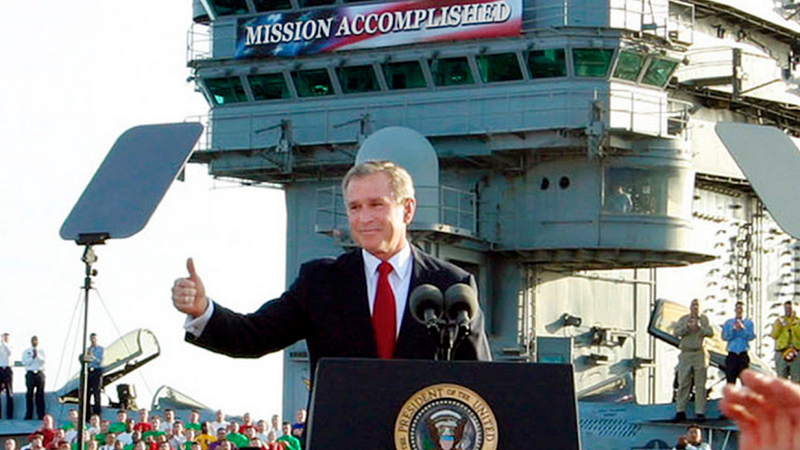
In the fall of 2001, I was two years old. I have not known a world pre-9/11.
Now being 23 years old, I have witnessed and can recall different debates on what should be taught in public schools, often from a conservative viewpoint. Whether it be the Lost Cause Myth, radicalizing kids to be communists, or as of recent, a college-level concept: Critical Race Theory.
“Is the point of history class to introduce young Americans to their heritage of heroes, the glories of American history? Or is history class supposed to make young people into critical examiners of their society? This true civic education teaches American young people to question every bit of received wisdom and be ready to change what needs changing?” — Adam Laats, Historian and Author of The Other School Reformers: Conservative Activism in American Education.
I remember being told that the United States was always the good guys and that everyone else was the necessary evil needed to be defeated. Malcolm X was dangerous, Nazis were non-existent after WWII ended, and Henry Ford was an innovator who could do no wrong (despite being a raging anti-semite). (Context: I am a product of the Michigan Public School system.)
Every year, my classes would revisit the Twin Towers falling through graphic footage, accompanied by our teachers hammering into our heads that we must never forget that day. Each year, my teachers would retell their version of events of that day, where they were, what they thought, etc.
May 2nd, 2011. I’m standing in the hallway, on my way to sixth-grade homeroom, while my classmates are cheering “USA! USA! USA!” in the wake of bin Laden’s death. Little did I know, it would be a decade more until we finally withdrew from Afghanistan. And it would be disastrous.
And Trump administrations and how they handled women’s issues. I read a book called “W stands for women: How the George W. Bush presidency shaped a new politics of gender (2007).” In this book, the authors examine the Bush presidency with a critical lens by looking at the correlations between gender, feminism, and security. It is echoed throughout that George W. Bush’s contribution to shaping American policies and the Republican party will outlive his presidency and life. The text primarily focuses on the administration in three parts: “Compassionate Patriarchy,” “Bush’s Masculinity,” and “Gendered War Logics at Home and Aboard.” Throughout the book, various feminist scholars hone in on specific moments or initiatives the administration devoted time to, like supporting women’s rights worldwide. The most publicized being the administration’s support for women’s rights and freedoms in Afghanistan and Iraq which justified their military intervention. On the surface level, many policies do not appear to have a relationship to gender but are related to a post-September 11 world.
My partner and I wanted to use this text to learn how the public reacted to the Bush administration’s choices. As a comedy fan, I knew all of Jon Stewart’s thoughts and opinions, but the average American and newscaster. September 11th was a turning point for the Bush administration, with a significant focus on security….and revenge, even if revenge wasn’t explicitly stated. Even if we do not want to admit it, The United States was a massive reason why al-Qaeda and the Taliban were so influential in the first place.
9/11 has become a justification for United States military intervention and a conservative talking point about why the U.S. needs to stick its nose where it doesn’t belong, literally everywhere. Of course, it is always “never forget” and “respect the troops,” but when they ask for help– we pretend they do not exist.
We have terrorist threats on our turf. Charlottesville. Dylann Roof. The January 6th insurrection. These attacks are not one-off incidents.
“It Can Happen Here” season one was Robert Evans’ warning about the possibility of a “second civil war,” which seems outlandish at first listen. But, I think we have been headed in this direction for a long time now. COVID misinformation, claims about election fraud, constant dog-whistling… it is only a matter of time before we begin to snap.
Subscribe for Blog Updates | Follow Zoe’s Social Media | Medium | Patreon | Zoe’s Shops | Contact Zoe | RSS | Follow WordPress


