avatarJanice Gill

Free AI web copilot to create summaries, insights and extended knowledge, download it at here

2831

Abstract

e they don’t travel (Mulberries, for instance) or store well or are not easily farmed in bulk.</p><p id="b74c">The taste is far better — properly ripe fruit, fresh on-the-day salad, and unusual varieties grown for flavour rather than yield.</p><figure id="08a5"><img src="https://cdn-images-1.readmedium.com/v2/resize:fit:800/1*-D-UIZY0PLvANmMnniY4bg.jpeg"><figcaption>Developing Medlar Fruit by Janice Gill. James Wong describes this as an alternative to tamarind in cooking or as a lovely dessert when baked.</figcaption></figure><p id="8189">The exercise you’ll get will cut out any need for the gym and keep you healthier for life.</p><h2 id="d754">No Dig Gardening</h2><p id="4424">When I first started gardening, the first thing you were supposed to do was dig over the entire area to remove perennial weeds and aerate the soil. This is considered by many to be unnecessary and often harmful, breaking up the soil’s natural microbial balance and bringing buried seeds to the surface to germinate. Breaking up perennial roots also spread the problem.</p><p id="5db8">Instead, a system of covering the soil with a light-excluding layer is used to smother the weeds and <a href="https://charlesdowding.co.uk/new-no-dig-allotments/">create a bed to grow crops.</a></p><h2 id="9069">Resources</h2><p id="2a74">We have access to a vast amount of material on the internet to help us learn when, what, and how to grow. Find out what grows well in your area among the things you like to eat. Quick successes will enthuse you to continue.</p><figure id="3668"><img src="https://cdn-images-1.readmedium.com/v2/resize:fit:800/1*xK1fgiZ60bMvNeDzhehUPA.jpeg"><figcaption>Chilean Guava with developing berries grows well in the UK climate. Photo by Janice Gill.</figcaption></figure><p id="9f9b">Two of my favourite sources are <a href="https://www.jameswong.co.uk/">James Wong</a> and <a href="https://charlesdowding.co.uk/">Charles Dowding</a>. James Wong works at Kew Gardens, so he knows his stuff. He advocates organic gardening and gives lots of hints and tips on chemical-free methods, plus information on growing more unusual crops. Charles Dowding uses the No Dig Organic method over a large space and runs courses demonstrating just how effective the system can be.</p><p id="1568">When I first started gardening, I found Geoff Hamilton’s no-nonsense, down-to-earth approach invaluable. I still refer to his books for information on propagation and making your own items, but not the bits about double digging!</p><figure id="7cda"><img src="https://cdn-images-1.readmedium.com/v2/resize:fit:800/1*1gnXor9jEH0LDN7BMsj8Jw.jpeg"><figcaption>A tub on the steps houses chives — and bumblebees. Photo by Janice Gill</figcaption></figure><h2 id="54a3">Space</h2><p id="6872">The smallest of spaces can be pressed into service for growin

Options

g food. It really depends on how much you can spare. A kitchen windowsill can grow salad leaves and micro veg. A cupboard can house sprouts such as Alfalfa, Mung beans and peas, all highly nutritious. Got space for a box? Try growing mushrooms!</p><p id="c4c8">A couple of raised beds 6ft by 3ft can house a collection of veg. Make sure you grow what you like to eat; if you don’t like cabbage, don’t grow it just because it’s traditional.</p><h2 id="f695">And the Planet?</h2><p id="4ecd">Imagine if every garden was used to grow food; how much of a difference could we make?</p><p id="c3bf">For example, how many bags of salad do you buy? Do you know you can grow your own all year round in a temperate climate? Think of all the waste you could save, not to mention the carbon footprint and miles of travel.</p><p id="d650">The impact on our planet of changing our green deserts (lawns) and concrete slabs to living, breathing gardens could be immense. Here, in Great Britain, over a million acres of land are taken up with garden space. How much of this could be utilised growing our own?</p><p id="81f6">Growing your own can also help wildlife.</p><p id="ad6e">Our insect populations have undergone a dramatic decline. This impacts food production as plants often rely on them for pollination. Insects are food for a myriad of other creatures which are struggling as a result of the decline in numbers. That includes our beautiful birds.</p><p id="34ee">Gardens could become a network of safe havens, joining up populations and helping them increase in numbers.</p><figure id="43a0"><img src="https://cdn-images-1.readmedium.com/v2/resize:fit:800/1*_aEuNrF2xlRJr5l0yQXg5Q.jpeg"><figcaption>Bumblebee on Blackberry by Janice Gill</figcaption></figure><h2 id="f6db">Living the future that I want for my Grandchildren.</h2><p id="1459">Born in 1962, I’m at the end of the baby-boomer generation (please don’t hold that against me — I’m an atypical boomer with no money, no property and paying extortionate rent),</p><p id="0a44">So much has happened since we were born.</p><p id="49d6">Landing on the moon, improvements in medicine, the cold war and Mutually Assured Destruction, home computers, mobile phones, the world wide web, and way too much to mention.</p><p id="7968">The world population has risen from just over 3 billion to over 8 billion. That’s unbelievably massive and a huge strain on the resources of the planet.</p><p id="6598">It’s our grandchildren who will inherit the world and suffer the consequences of our actions (or inactions).</p><p id="30c1">Let’s help bring about changes that will help the planet, starting with our own backyard.</p><p id="96a4">In the words of Maya Angelou</p><p id="5e7c"><i>“Do the best you can until you know better. Then when you know better, do better.”</i></p></article></body>

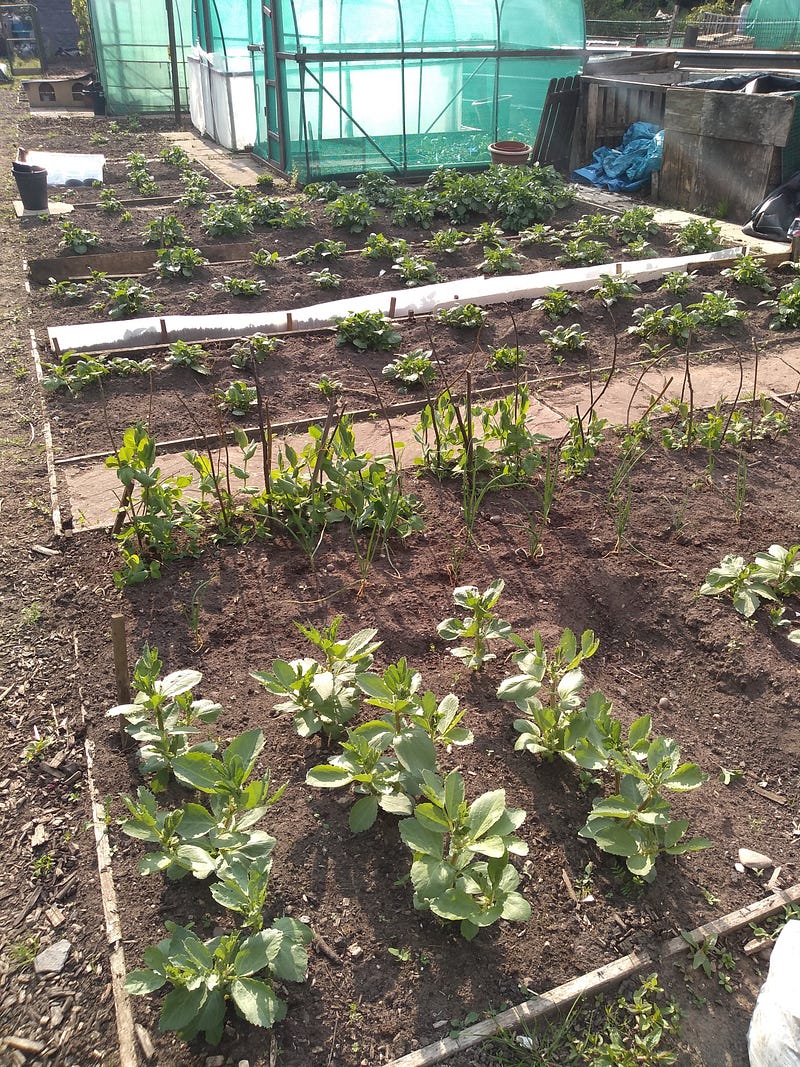
My Allotment by Janice Gill

Growing for the Planet

Every day there is something in the news about the effect our changing climate has on the planet, on the human race, on communities, and on individuals.

We are shocked by the devastation in Australia, California and now Canada caused by fires, stunned by the ferocity of storms around the world, unable to comprehend directly lethal temperatures in India, Texas and Phoenix or those recorded in Antarctica that may prove more insidious and far-reaching than anyone would like to contemplate.

Some may conveniently deny the existence of Climate Change. It’s easier than contemplating the huge changes we need to make across the globe to slow and then stop the rise in temperatures.

Some may lobby and demand change from our governments.

Some may simply shrug their shoulders and move on exactly as they always have.

But can we do more?

What direct action can we take ourselves?

Supermarket Shopping

Looking in the fresh produce aisles at my local supermarket is heartbreaking.

Extra packaging on fruit and veg that really doesn’t need any.

Under-ripe and tasteless produce with poor food value.

What is the carbon footprint on that bag of Asparagus? Or the apples from New Zealand? Or corn from Egypt? Potatoes, carrots, and peas were the only items regularly from these shores here in the UK.
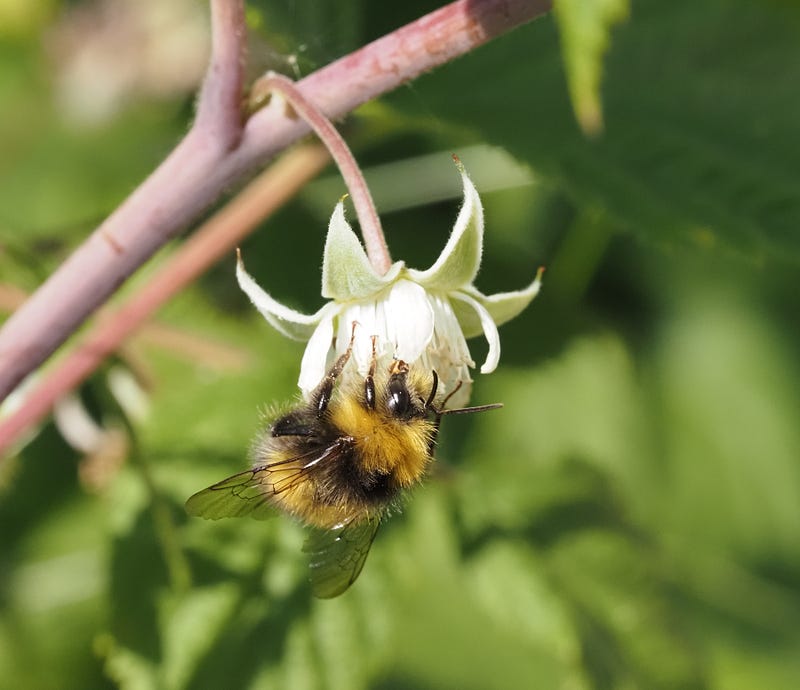
Bumble bee on Raspberry flower by Janice Gill. Raspberries are easy to grow in the UK.

Most of the produce has travelled more miles around the globe than I have ever flown in my life (Ok, so that’s not difficult, I’ve only flown once in my 60 years, and that was to Riga in Latvia) or most people in theirs.

I thought the frozen vegetable section might be better. But no, food imported from as far away as Chile.

We are all too used to being able to eat whatever we fancy, any time of year.

But we can make a change.

Grow Your Own

OK, so it’s not as convenient as popping into town, but it’s nowhere near as onerous as you might think. And the advantages far outweigh the disadvantages.

You can grow a huge variety of crops that are considered luxuries and many things of which you may not even have heard. Delights that aren’t on supermarket shelves because they don’t travel (Mulberries, for instance) or store well or are not easily farmed in bulk.

The taste is far better — properly ripe fruit, fresh on-the-day salad, and unusual varieties grown for flavour rather than yield.
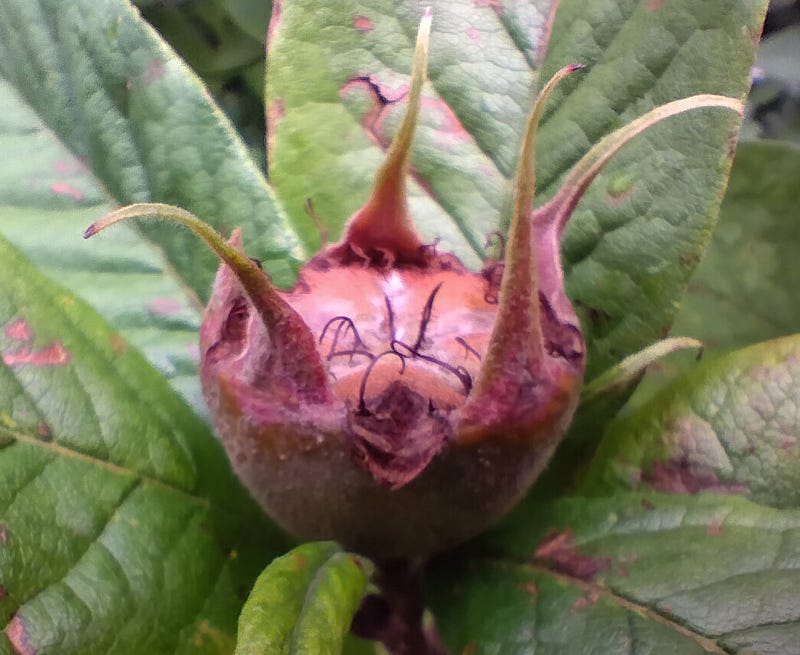
Developing Medlar Fruit by Janice Gill. James Wong describes this as an alternative to tamarind in cooking or as a lovely dessert when baked.

The exercise you’ll get will cut out any need for the gym and keep you healthier for life.

No Dig Gardening

When I first started gardening, the first thing you were supposed to do was dig over the entire area to remove perennial weeds and aerate the soil. This is considered by many to be unnecessary and often harmful, breaking up the soil’s natural microbial balance and bringing buried seeds to the surface to germinate. Breaking up perennial roots also spread the problem.

Instead, a system of covering the soil with a light-excluding layer is used to smother the weeds and create a bed to grow crops.

Resources

We have access to a vast amount of material on the internet to help us learn when, what, and how to grow. Find out what grows well in your area among the things you like to eat. Quick successes will enthuse you to continue.
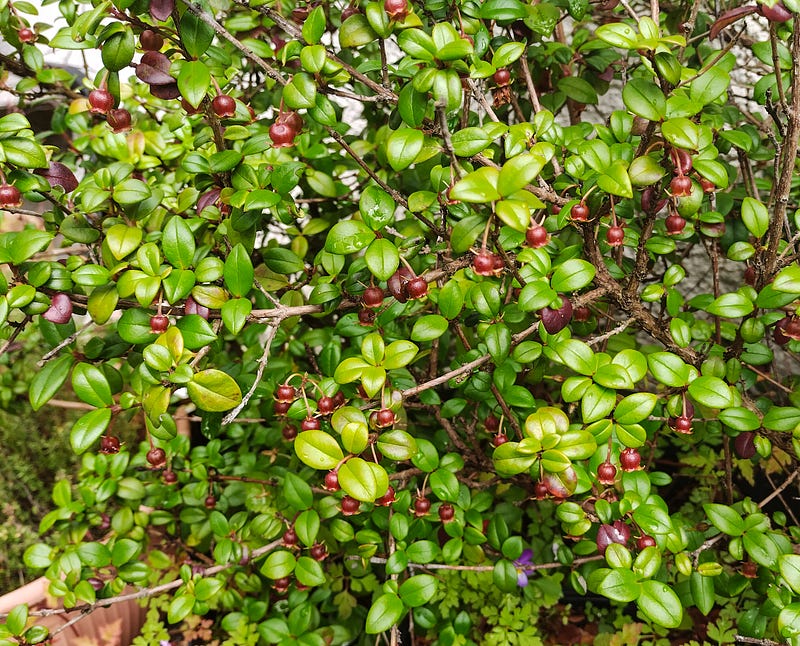
Chilean Guava with developing berries grows well in the UK climate. Photo by Janice Gill.

Two of my favourite sources are James Wong and Charles Dowding. James Wong works at Kew Gardens, so he knows his stuff. He advocates organic gardening and gives lots of hints and tips on chemical-free methods, plus information on growing more unusual crops. Charles Dowding uses the No Dig Organic method over a large space and runs courses demonstrating just how effective the system can be.

When I first started gardening, I found Geoff Hamilton’s no-nonsense, down-to-earth approach invaluable. I still refer to his books for information on propagation and making your own items, but not the bits about double digging!
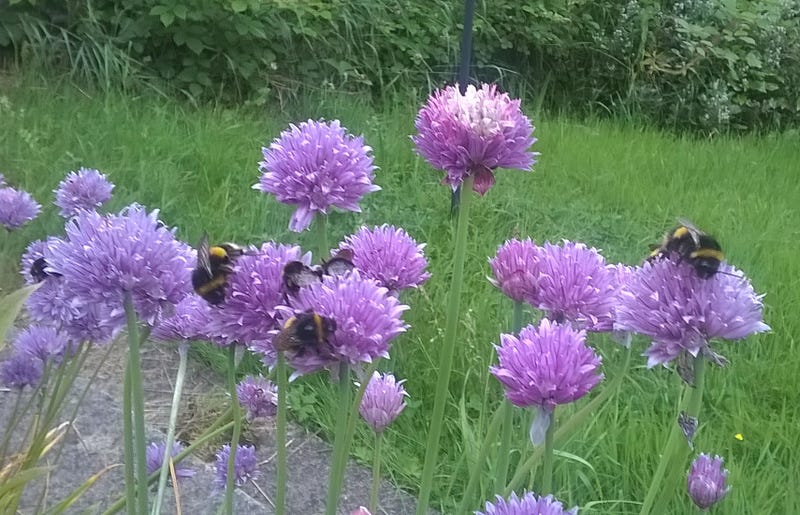
A tub on the steps houses chives — and bumblebees. Photo by Janice Gill

Space

The smallest of spaces can be pressed into service for growing food. It really depends on how much you can spare. A kitchen windowsill can grow salad leaves and micro veg. A cupboard can house sprouts such as Alfalfa, Mung beans and peas, all highly nutritious. Got space for a box? Try growing mushrooms!

A couple of raised beds 6ft by 3ft can house a collection of veg. Make sure you grow what you like to eat; if you don’t like cabbage, don’t grow it just because it’s traditional.

And the Planet?

Imagine if every garden was used to grow food; how much of a difference could we make?

For example, how many bags of salad do you buy? Do you know you can grow your own all year round in a temperate climate? Think of all the waste you could save, not to mention the carbon footprint and miles of travel.

The impact on our planet of changing our green deserts (lawns) and concrete slabs to living, breathing gardens could be immense. Here, in Great Britain, over a million acres of land are taken up with garden space. How much of this could be utilised growing our own?

Growing your own can also help wildlife.

Our insect populations have undergone a dramatic decline. This impacts food production as plants often rely on them for pollination. Insects are food for a myriad of other creatures which are struggling as a result of the decline in numbers. That includes our beautiful birds.

Gardens could become a network of safe havens, joining up populations and helping them increase in numbers.
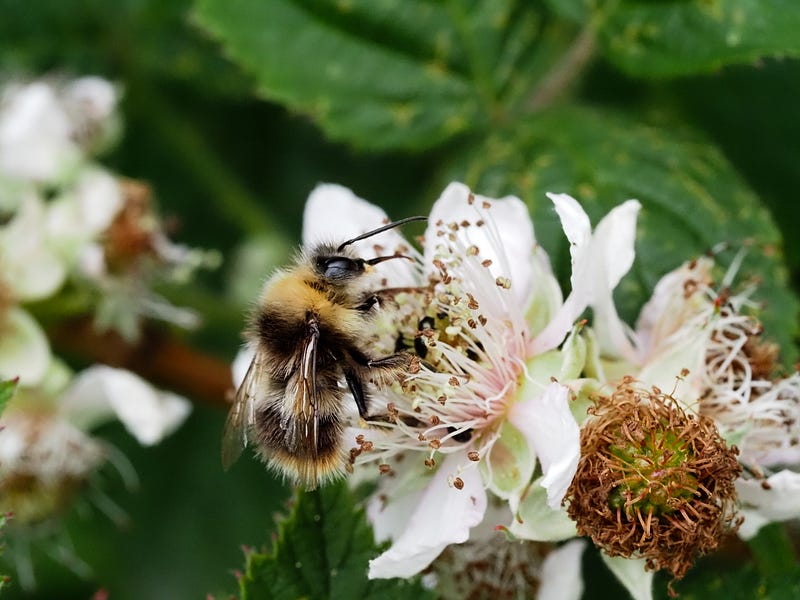
Bumblebee on Blackberry by Janice Gill

Living the future that I want for my Grandchildren.

Born in 1962, I’m at the end of the baby-boomer generation (please don’t hold that against me — I’m an atypical boomer with no money, no property and paying extortionate rent),

So much has happened since we were born.

Landing on the moon, improvements in medicine, the cold war and Mutually Assured Destruction, home computers, mobile phones, the world wide web, and way too much to mention.

The world population has risen from just over 3 billion to over 8 billion. That’s unbelievably massive and a huge strain on the resources of the planet.

It’s our grandchildren who will inherit the world and suffer the consequences of our actions (or inactions).

Let’s help bring about changes that will help the planet, starting with our own backyard.

In the words of Maya Angelou

“Do the best you can until you know better. Then when you know better, do better.”

Gardening
Conservation
Environment
Grow Your Own Food
Fruits And Vegetables
Recommended from ReadMedium