
Grounding Myself In Life — Making Maple Syrup
Extracting exquisite sweetness from the land.
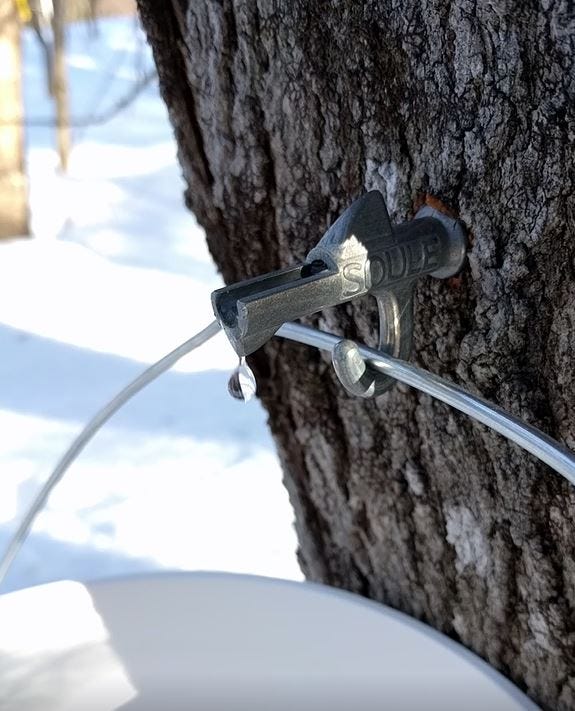
This morning is overcast and the snow is hard on the surface. It’s fairly easy to walk unless you break through and sink down a foot. I could use snowshoes, but I’m too lazy to put them on this morning. It is mid-March here in Maine and the winter has started to wane. Sap starts moving in the maple trees near our house — invisible but certain.
The weather has been below freezing at night and above freezing in the day — perfect weather for maple sap collection. The two empty five gallon food-safe sap collection buckets bob around carelessly at my side as my feet crunch toward the wood line. The maple sugaring season lasts only two to three weeks, so you have to make hay when the sun shines. I don’t want to spill any, so my buckets have lids.
I pause and breathe deeply at the edge of the woods and look at the forest. Nine plastic pails hang on the side of 6 trees scattered throughout this grove. I mostly tap the same trees each year. Their drill wounds heal nicely over the years. I could find another 50 suitable trees if I wanted to trudge through the woods, but these 6 trees give enough sap for our needs.
Most of the trees I tap are red maples. One is a sugar maple. They’re both great for giving sweetness.
I approach the first pail and see it’s half full of sap from the previous day. Most of the two gallon plastic pails are about half full. The sap is clear with a layer of ice on top. It looks like water and tastes like water.
This morning’s sap harvest will be about 9 gallons. It will take all day to boil it down to around a pint or two of syrup. Pausing at the edge of the woods before making my way to the house, I realize that I’m addicted to all things wood. I often create things from maple. My wife uses my skills to get support equipment for weaving. Some of the maple trees in our woods — those that are dying or fallen — make their way into our wood stove to help us stay warm all winter.
Trees are incredible resources in or lives. I’m guessing that we just wouldn’t exist without them. I think about this and make my way inside. If you ever want to gain an appreciation for what trees do for us, and their incredibly complex life, I recommend two books;
A Splintered History of Wood — Belt Sander Races, Blind Woodworkers & Baseball Bats, Spike Carlsen
The Hidden Life of Trees, Peter Wohlleben
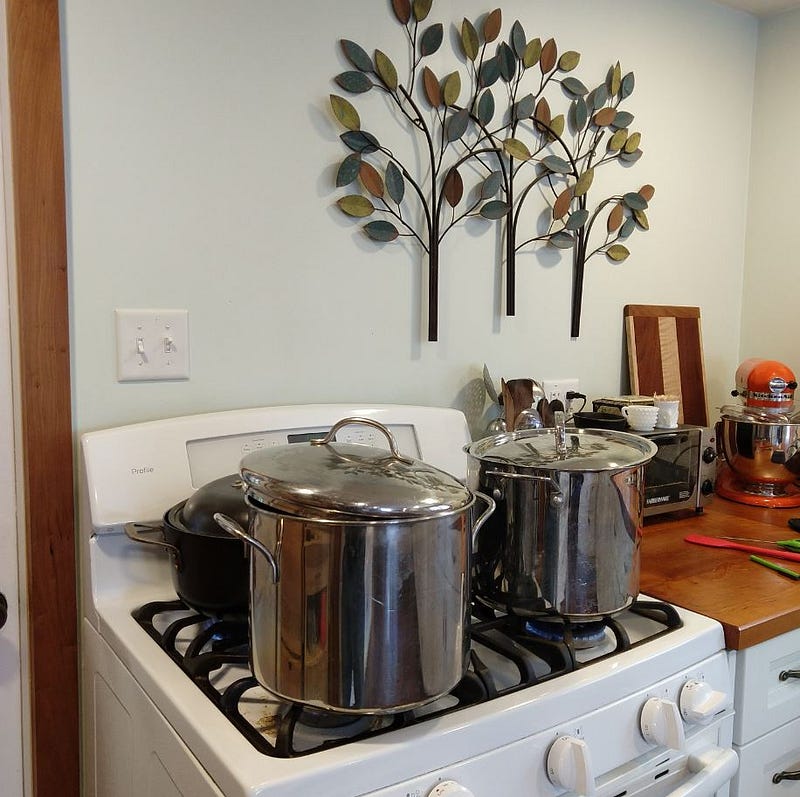
In the kitchen, the stainless steel and aluminum pots anxiously wait for the sap on our gas kitchen stove. Today, three pots will be full of sap and boiling. We pour it through a screen to get bark bits, spiders and other debris out and start the boiling process. The incredible thing for me is that you don’t need to do anything else to maple sap but boil it down to liquid sugar. There’s no secret process. It’s so simple. Just watch it boil all day as you go about life. Most of the time, later that day, you’ll have what you want. Sometimes it takes more than a day, but that’s OK.
Pure natural maple syrup is so good on pancakes, waffles and cereal. My father loved it so much he’d drink it straight from the bottle. I love it too, but I try to take things in moderation. My wife and I make about 2–1/2 gallons of syrup each year. That’s enough to enjoy it ourselves and give some away to family.
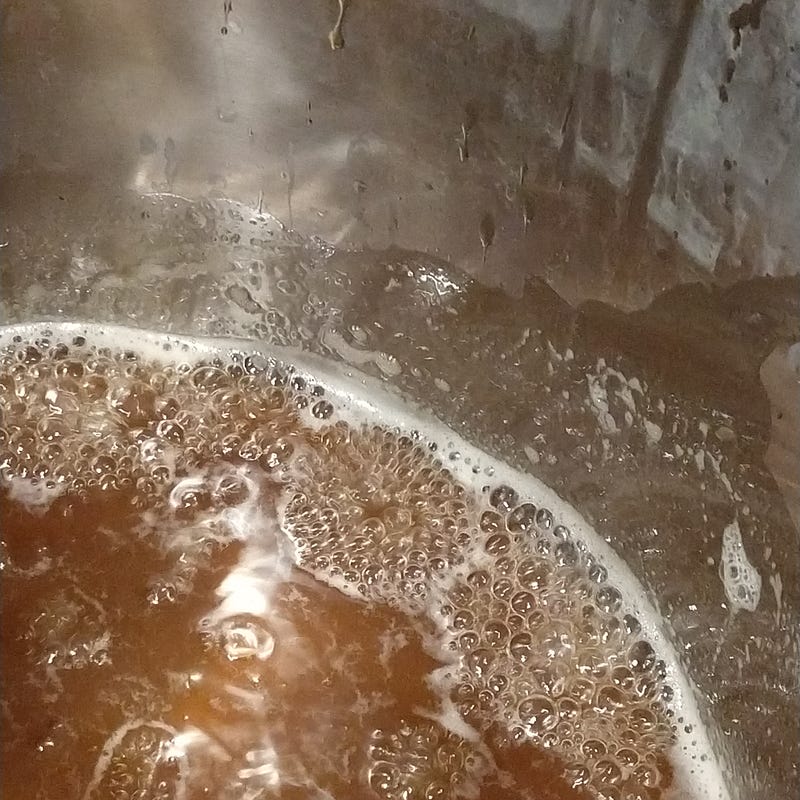
As the sap boils down to being close to syrup, the humidity in the house rises so we open windows and keep our wood stove fire burning to compensate. Much of the wood we burn is maple with ash, apple, birch and poplar added to the mix.
Outside the kitchen walls the temperature drops. The sap in the pails freezes over. The sap spiles freeze up and the trees brace for the frigid starry night — no doubt dreaming of tomorrow’s warming sun.
The house fills with the aroma of maple. The golden brown color of the finished liquid fascinates me. My wife readies the storage jars and funnel covered with cheesecloth. I swish the candy thermometer around the sap looking for a constant temperature of 217 degrees Fahrenheit. At higher temperatures the syrup will start to crystalize after it cools. Liquid syrup is what we’re after, so at 217 degrees we stop boiling and pour.
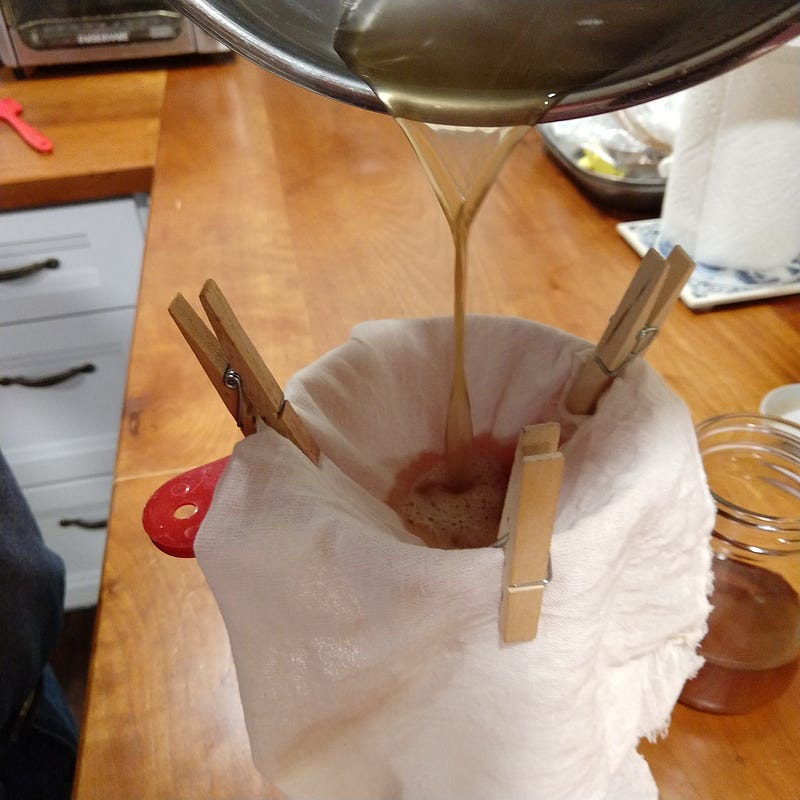
As we pour the syrup into the jars, there’s a feeling of completion, goodness and life flowing from the forest from these pans. A basic peace flows over me as I know I’m gaining sugar directly from the land.
Why do I do it? It costs time (I’m retired), and dollars for the propane. It’s definitely not free, but not expensive.
I do it for the pure satisfaction of making a natural product and the connection it gives me with the trees.
I do it to make myself realize that not everything should come from a grocery store.
And I do it because I love maple syrup.


