
Dealing with Loss and Grief in the Age of COVID-19
Hint: It helps to name, normalize, and share it with others.

COVID-19 pandemic has changed our lives in many significant ways. We are working remotely when possible, canceled in-person classes, and if you live in California, the last time you were able to go out for indoor dining was in early March!
Apart from everything else, we are missing out on rituals that can help us process loss, changes, and transitions. We have missed out on many of the traditions and milestones over the summer — postponed weddings, canceled graduations, no proms, no musical performances, delayed or virtual-only award ceremonies, no concerts, no in-person funerals, and the list go on and on.
The loss of normalcy, the fear of potential economic toll, and the loss of connection is hitting us hard, and we’re grieving. Psychologists have studied mourning loss and grief, and some lessons can help us make sense of the ongoing uncertainty and loss.
Perhaps the most influential framework for grief counseling was proposed by a Swiss-born American Psychiatrist, Elisabeth Kübler-Ross, who suggested that death or loss be considered a normal stage of life. She described stages she believed were experienced by those nearing end or experiencing a significant loss — Denial, anger, bargaining, depression, and acceptance. Kübler-Ross has since come to propose that these stages might not be stages at all. Not everyone experiences them all, and there is no specific order in which people grieve.

Instead, when facing loss and mourning, it is not uncommon to experience a range of difficult emotions. In no particular order emotions — such as Denial ( also avoidance, confusion, shock or fear); Anger (even frustration, irritation, and anxiety); Bargaining ( struggling to find meaning, telling one’s story and reaching out to others); Depression ( feeling overwhelmed, helpless, fight or flight state) and occasional acceptance where it feels possible to move on and explore options.
Grief is like experiencing waves of sadness — You may feel fine for a while, then become overwhelmed when you think about the loss.
Grief also has a profound effect on our brains, often leading to disruptions, including confusion, disorientation, detachment, and increased forgetfulness. A 2016 study found that people who had persistent, intrusive grief experienced disrupted activity in the prefrontal cortex during tasks that involved emotion processing.
Studies even suggest that grief stimulates key areas of the brain, including the amygdala and cerebellum, which are associated with coordination, balance, emotions, and cognition.
Grief also appears to affect the cingulate cortex, an area in the brain that is involved in interactions between emotions and memory, and the parahippocampal gyrus, which plays a role in memory. It likely explains how daily reminders of loss may repeatedly activate the body’s fight-or-flight response, leading to disruptions in sleep, distressing dreams, and rumination.
An understanding of neurological and emotional states that often accompany the experience of a loss can help us inform ways to support those in mourning. It starts with providing information and communication, emotional support, working with a counselor if needed, finding opportunities for personal expression, and guidance to meaningfully engage with fulfilling activities.
So, as we try to understand a sense of loss and grief in the age of COVID-19, perhaps an approach that starts with naming, normalizing the response, and extending and seeking connections with others offers a path forward.

Name and Claim
We are experiencing collective and anticipatory grief, and if we can find a way to name it, perhaps we can find a way to manage it. Journaling can be quite a therapeutic way of naming and claiming the loss without the filter of social constraints.
Grieving loss of loved ones — Losing a loved one is hard in any circumstance, but losing them when you haven’t had a chance to say goodbye or not being able to be there during their final moments can be incredibly difficult. In the global world, losing a loved one meant that we would get together with family and friends, and not being able to do so now can mean feeling the loss alone.
Grieving loss of “normalcy” — However you define, we were used to doing things a certain way — go to work, travel for leisure, celebrating successes, and comforting losses — much of this involved being with others. For now, getting together with others is no longer possible. While many of us have adapted to these changes, it would be remiss not to acknowledge the loss of what existed before — a new normal while ok is still not the same as before.
Grieving loss of possibilities — Maybe there was a plan to take that vacation you planned for a long time, or to meet that new exciting date, or to take a year off for traveling around the world. At least for now, that is not possible, and with that comes a moment to grieve the loss of what we thought was previously possible.
Grieving missed milestones — First day of Kindergarten, Starting day of your college career, doctoral defense — these are just some examples of milestones that are impacted by the COVID-19 crisis. Milestones are accomplishments and celebrations, markings of the closure of an era, rights of passage, and beginnings of new chapters in ones’ life. They serve an important role in our lives as we often look back at these times with fondness, pride, and nostalgia.

Normal to feel “not ok” or even awful
In addition to being an epidemiological crisis, COVID-19 is also a psychological one, one involving significant loss and sorrow. One way to describe what we are collectively feeling is a sense of anticipatory grief — the feeling you get about what the future holds when we are uncertain. The feeling that washes over us when someone gets a dire diagnosis, or when we come to know of the imminent death of a parent, or a variety of anxious feelings that something terrible is happening or is about to happen.
While we have likely faced anticipatory grief individually or even in small groups, there are few parallels to collectively facing a sense of uncertainty and a loss of safety. We are fearful of what is going on, unsure of what’s to come and grieving the loss of a sense of security we used to look for in our health-care, education, and economic systems.
Given the unprecedented nature of this crisis, it is normal to feel a sense of loss, even mourn what we are missing. It is a normative response to the extraordinary situation that we find ourselves in. It is ok not to be ok!

Don’t go at it alone.
Amid the coronavirus health crisis, we are experiencing grief in a profoundly collective way that we have rarely ever experienced before. There is healing power in connection, and we need to exercise this power. Technology can help provide a way — zoom with friends, facetime family, join a google meets classroom to learn a new hobby, or share your story via writing on medium. Join a virtual book club, and while you are at it, join a meditation or a prayer group.
We are learning new ways of staying connected, online Zumba classes, socially distant quartet practices, online cooking classes, or a unique virtual flower design with real flowers that get delivered right to your doorsteps.
The power of social connections is how we are going to find new meaning and path forward. We are going to mourn what is lost and connect even more so with what is left behind. A process that will take time, and we are in this together — you are not alone — so reach out to a friend, acquaintance, therapist, neighbor virtually for now to make plans for the future!
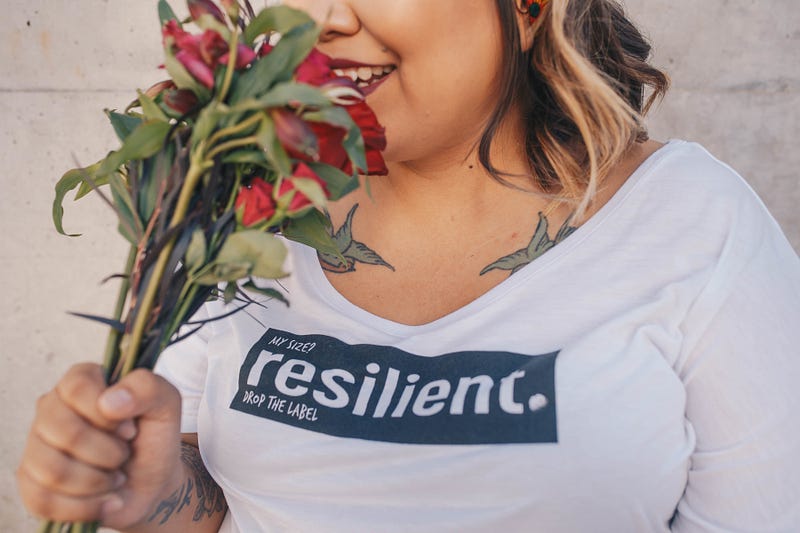
It is helpful to remember that we are resilient. We only need to look at our individual and collective past to get the comfort that we WILL get through this. It WILL take time, we will worry about it, we will talk about it, we will act out of fear and anger at times, BUT we WILL come out of this with a renewed sense of purpose and meaning — one that brings us closer and more unified and in the meantime, it’s ok not to be ok!
Take your time and, most importantly, do not make any significant long term decisions, rather stay in the moment and do something creative each day — take care of your health, keep it light and tight with your loved ones and find a way talk about your story as you go through this pandemic.