Grieve For Your Loss But We’ll Help You Bounce Back
DEP Veterans Day Contest prompt by DR Rawson — The Possibilist
“If you could speak directly to a soldier who is now disabled, what would you say?”
Scene: Orthopedic Rehab Unit at Army Hospital in USA. Conversation between Army nurse and patient, Matthew, severely wounded in Iraq. (Both arms have been lost plus one leg below the knee due to an IED explosion.)
Patient sitting in dark room while staring at the night sky through window. A lieutenant making rounds sees dejected patient in a wheelchair & enters the room.
LT: What’s bothering you, Matthew? (She pulls up a chair to sit beside him.)
PT: (hesitant) I’ve been doing a lot of thinking.
LT: Are you worried about going home?
PT: (angry) Look at me! I’m not a whole man anymore!
LT: What does that mean? I think you’re a beautiful person. Society puts too much emphasis on physical appearance. What really matters is what’s in your heart.
PT: I’m not the man my wife married. How can I support my family? (Sobs)
LT: Your wife has stood by you every day. She loves you, Matthew. Why do you keep trying to push her away? Your kids don’t see a father who lost his arms or leg. They see their DAD who has come home to them.
PT: I’ve done some horrible things. I shouldn’t be alive.
LT: War is horrible. You were trying to survive. Be grateful you’re alive. You’ve been spared for a reason.
PT: Who will hire a disabled vet?
LT: First of all, I hate that word. You’re an able-bodied person. There are many employers that hire veterans. They know you’re disciplined, responsible, willing to work. Most employees aren’t committed these days.
PT: What can I do like this? (Referring to his disfigured body.)
LT: We’ll line you up with a career counselor before discharge. You can take advantage of the GI Bill if you want further education.
PT: What about health insurance, bank loans, how can I drive?
LT: Someone will cover all veteran’s benefits before you leave. You won’t be thrown to the wolves, Matthew. We’ve got your back.
PT: There are things I want to do! How can I hike, go biking, swimming, skiing, . . . . play with my kids? (Embittered, he stamps his good foot on the floor.)
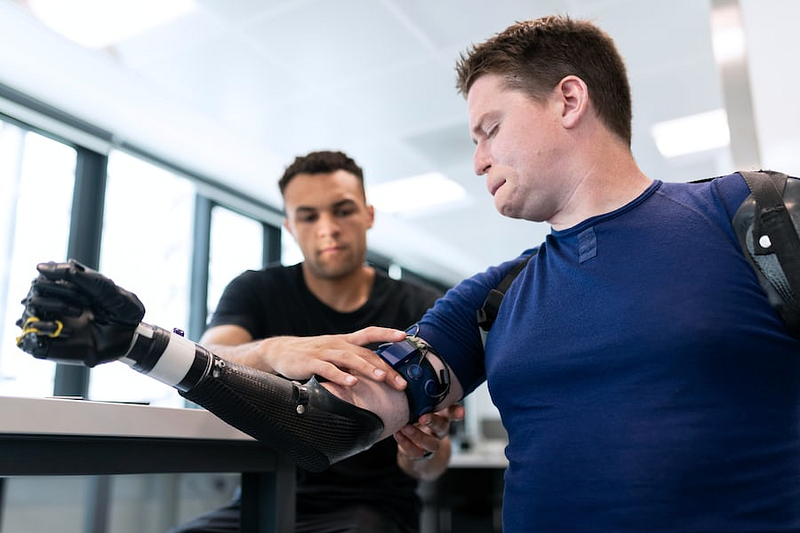
LT: Really, what’s preventing you? People worse off than you are doing those very things. There are adaptive sports equipment and wheelchair basketball games. Haven’t you heard of the Paralympic Games? It’s common to see people walking on prosthetic legs and using wheelchairs now. No one gives it much thought anymore.
PT: Matthew hangs his head. I’m sorry. I needed to hear what you’re saying. I feel some hope now.
LT: You’ve been fitted with prosthetic arms and hands. They’re creating the right prosthetic leg for you now. Physical therapy will help you be totally independent before you go home. Your wife will be included in your rehab sessions. You two will do just fine. I have confidence in you.
(She feels it’s time to end the conversation.) Are you ready to go back to bed now?
PT: He nods his head.
LT: I’ll go get someone to help me and we’ll settle you for the night. Be right back.
The Afghanistan, Iraq and Iran wars have left many of our men and women with horrific injuries. As a military nurse and years after, working in Burn Units, I saw plenty.
They are young, unwilling to be cripples, and desire to live like the rest of their generation.
This has prompted a surge in engineering adaptive devices and sports equipment. The loss of arms, legs and disfigurement from burns is similar to experiencing a death. Once they get past the stages of grief, you won’t encounter a more committed generation.
They’re entering politics and participating in sports with gusto. They want to make this world a better place. I salute their contagious zest for life. Fortunately there are many resources available to help them do this.
I ran a 5K race once with a wheelchair athlete on my heels. It sure spurred me to pick up my pace. I won a trophy at that event and shook his hand afterwards. “I want to thank you for dogging me. It was my best time I’ve ever run in a race.” We both had a good laugh over that.
Terry Day has written an article listing those resources:
Please remember our veterans on Nov 11th, especially those having difficulty with PTSD episodes. Hope this post gives you some idea of the challenges they face and the courage involved in overcoming them.


