Greatest Oscar Injustices: The Last Picture Show
Dying towns and writing about them
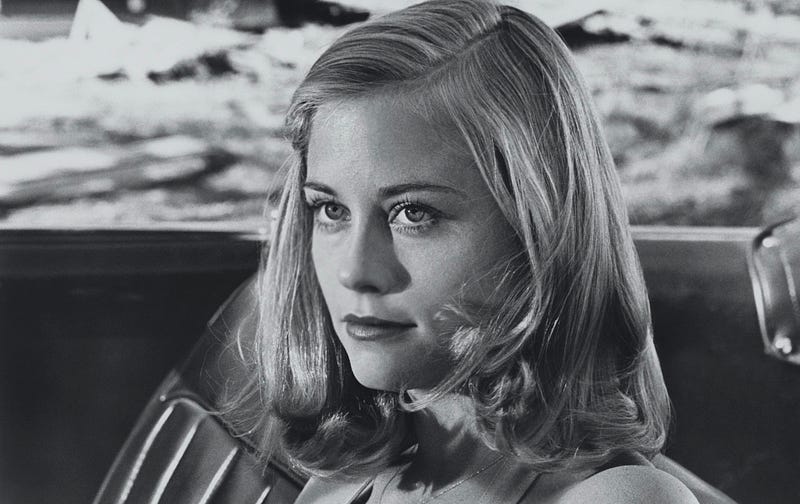
I would never argue that 1972 posed the absolute greatest outrage in Oscar history, because I know what happened to Citizen Kane (RKO), and I know that Dennis Hopper won for Hoosiers (Orion) in 1987, when his role as “Frank Booth” in Blue Velvet (De Laurentiis Entertainment) was a legitimate killer. Besides that, I really like Gene Hackman, William Friedkin, and The French Connection (20th Century Fox).
That these three won in their respective categories, again, brings me little pain, even though I would have voted The Last Picture Show (Columbia) as Best Film. Still, I understand why a person would have chosen The French Connection: its raw power, its cinematography, its examination of international drug trafficking and police corruption speak to us even now, and like so many critics and viewers, I understand that it contains the greatest chase scene in film history.
Chase scenes certainly get my blood pumping, but what exactly do I learn from them other than to get out of the way when anyone named “Popeye” gets behind the wheel?
So okay, it won and my favorite lost for Best Picture. But what about Best Adapted Screenplay category? Surely The Last Picture Show grabbed that one.
Nope, The French Connection, specifically Ernest Tidyman, did it again, also beating out A Clockwork Orange (Warner Bros/Columbia). And this, as they say in some quarters of Hollywood, is history.
I call it a travesty.
Certainly I get that any story about international crime will have plot twists, subplots, and anyone scripting it will be dancing on one foot to make all the ends meet. And in that end, those of us who know nothing about such crime syndicates will leave the theater thrilled, but not necessarily moved or even enlightened. Most of us won’t really have any touchstone of reference.
I will reiterate: nothing against Tidyman’s script. It’s fine, finished, and it works. But I am not moved by it, nor do I reflect on it — its rhythms, its characters, and the way its story connects with the most basic, and base, human impulses, the ones I know from living in a small and somewhat dying Southern town.
Peter Bogdanovich and Larry McMurtry worked together to adapt McMurtry’s novel to the screen. The story, if you don’t know it, concerns a dying town in Texas, Anarene, and focuses on a group of high school seniors in 1951–2 who are about to graduate and then set sail for nowhere, or maybe college in the case of “Jacy” (Cybil Shepard) or the Army in the case of “Duane” (Jeff Bridges).
As this year plays itself out, “Sonny” (Timothy Bottoms) must decide what he’ll do and whom he’ll love. I won’t get into all his possibilities, except to say that seventeen year-old kids don’t always make the wisest decisions, and even when they do things that raise every eyebrow from here to eternity, or at least Wichita Falls, we might find that the formerly unwise decision makes a difference — a positive difference — for a few lives, that is until that same Sonny gets his head turned again and falls into the worst mistake he could make — Jacy, again.
My essential question about this story, about any small town that thinks it’s got its head and its morals on straight, is how and why it thinks this? How and why it, the townspeople, manage to go on with life, go about their meagre business and believe that everything is and will be all right, when all signs point to the contrary?
Or, in The Last Picture Show’s case, that the problems are a result of those “dumb kids” not being able to get out the street to keep from being hit by a logging truck, or not being able to tackle in the losing football game that basically humiliated all those who attended it and many who didn’t.
Most unlike The French Connection, the pacing of McMurtry and Bogdanovich’s script is slow, and some might say catatonic. I don’t, because I love a script that lets me linger on fading scenes, on a character’s face. I love quiet moments where someone, let’s say Ben Johnson’s “Sam the Lion” tells us of a woman he once loved who could have made all the difference in his life. He didn’t leave her anywhere or forget about her. No, she’s still right there in town, and though anyone can figure out who this woman is, she also gets to reflect on that time when she found and then gave up what would have made her happiest.
Gave it up for money and comfort — those things that make some happy, but no one in The Last Picture Show.
So I love the lingering, languishing moments that some script writers understand are perhaps the truest experiences in life.
I also love and understand that desperation will lead someone, say a coach’s wife, to look for love not exactly in the wrong place, but in the nearest place. That this woman, Cloris Leachman playing “Ruth Popper,” feels such despair and tells us so plainly and simply that she got married to the coach in the first place because her parents didn’t like him kills me. I die again when I see how she paid and keeps paying the price of living in such close quarters to him. This is all too real.
I shudder to imagine her sharing that little bed with that oaf of a man, even though the script never forces us to see the coupling. It shows us others, instead, but never that one. It doesn’t need to; we see it all too well.
That’s what also kills me about this script — it’s wise enough to make suggestions, to give us glimpses through curtained windows, but refuses to show us in every case what surely goes on that we can’t and will never see.
What I’m suggesting is that in small towns like Anarene, sordid affairs play out all the time, but they are never quite mundane. No, they’re depicted in living black and white to show us that in reality, so many stories lead us back to ourselves — our desires, our failures, and those momentary glances we get from characters/people we shouldn’t make mistakes with, but so often do anyway.
The script for The Last Picture Show withholds and then slowly tracks through lives that should cause us to consider our own. It begins and ends with what it is — a picture show of life as so many of us know it.
I’ve known teenagers who have fallen for and consummated affairs with much older men and women. This goes on, and in 1971, a film and its script writers were brave enough to tell us so — to show us a world that is, or should be, hauntingly familiar to our own.
I was just 16 when I saw The Last Picture Show for the first time.
Even then, I felt it and knew its story was true.
And I still feel the outrage that though nominated for eight Oscars, it won only two — Best Supporting Actress and Actor (Leachman and Johnson).
So maybe the script was too literary; maybe it was too real for its audiences in the Academy to take.
But it should have won because in the end, it’s dying towns and not car chases that kill me.
Thanks to Simon Dillon and FanFare for publishing.