
“Gratitude Makes Optimism Sustainable”
How this quote by Michael J. Fox is sustaining my relationship
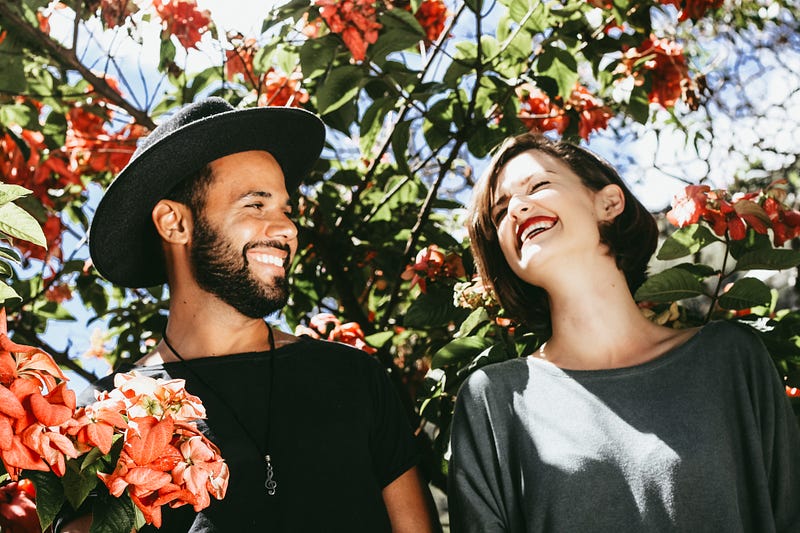
My husband John is the optimist in our family. I don’t know how your relationship works, but in mine we polarize. I go towards the dark side and John goes towards the light. So, in the last 14 years I’ve slowly moved closer to the pessimist pole. Being a pragmatist or realist took a lot of effort, and I’m more comfortable in pessimism. We’re old friends. But recently, like Kylo Ren, I have been feeling “the pull to the light.” Actively practicing gratitude has made optimism feel more realistic to me.
Defensive Pessimist
As a young child, I landed in “defensive pessimism” in opposition to my single mom whose optimism seemed incredibly far-fetched. Even as a young child I couldn’t believe her fantasies. The new land she would soon buy, the houses she would build once the money came out of thin air… they were castles in the sky. When her dreams wafted away like smoke, only to be replaced by more, she was somehow surprisingly fine. She would spin a new tale, draw up new plans. I discovered that was her coping mechanism: the optimism itself sustained her.
Unfortunately, my mind didn’t work that way. A hard pit grew in my stomach with each broken promise. The grander the imagined life, the harder it was on me if I allowed myself to believe it. I was a serious, logical kid. The imagined stability of a fancy dream house did nothing for me as we packed our belongings in trash bags for the next move to a shared apartment. I felt I’d been fooled. I wanted my reality to be good enough. Then, I wouldn’t be bitter about that reality.
I set goals that were achievable. As I grew up, my goals were financial independence and never living beyond my means. I just didn’t want to go hungry. That was an achievable goal.
I also didn’t want to be disappointed by anyone ever again. That was only achievable if I never opened up to anyone again. Of course, I could still be disappointed or betrayed by life’s circumstances. While independence felt good, I wanted a full life. That meant letting in people and uncertainty. I knew I could support myself. With that experience bolstering me, I let others in a crack. There was always a back door open, though. I planned an escape route from every situation, in case it derailed. I had to have my own back.
“Defense pessimism was designed to be a tool, useful in certain circumstances, but using it repeatedly turns it into a way of life: a habit of looking for the bad things just in case.” -The Positive Psychlopedia
Recovering Pessimist
I already excelled at ‘good enough,’ and had healed enough that I found the courage to leave my lucrative but unfulfilling career to pursue something less practical and more beloved. I was a yoga teacher, and still I managed to be financially independent and to live within my means. I made realistic goals and worked hard to achieve them. Yes, I had a lot of privilege and was grateful. By then, I had worked through much of the bitterness of my childhood disappointments in therapy.
When John and I moved in together, each of us arrived with just a little baggage. Still, the slide towards polarization happened. He was clearly the optimist, so here I am — in the pessimist corner. I ruminate. I prepare. I wait and see. That way, I am less often disappointed. When we disagree, that continuum is often where we get stuck. John doesn’t understand why I can’t simply believe everything will work out the way we want it to. He wills himself to believe and wishes I would do the same. I do try. Brené Brown’s books have really helped. I’m now a recovering pessimist.
“Joy is vulnerable. That’s why we’re afraid to let ourselves feel it. Don’t squander joyful moments by waiting for the other shoe to drop. Lean in and practice gratitude.” -Brené Brown
Logical Optimist
Then, about five years ago, John was diagnosed with Parkinson’s Disease. His optimism took on a whole new intensity, and he really needed me to join him in it. I saw how essential hope was to him. We learned from his doctor that it could actually affect his health outcomes positively to be more positive!
“Hope is not blind optimism or just wishing for things to get better. Hope is having a plan and the willpower to see it through.” -John Andrejack
I’m allowing his optimism to infect me! Looking at the world differently doesn’t change what needs to get done. At the same time, we might as well look forward to a positive outcome from our efforts. We don’t fantasize about castles in the sky, passively expecting everything to work out. We do actively stay hopeful and control what we can to make positive outcomes happen. As for those things we have no control over, optimism is the most logical response.
What has helped me convert to optimism is a practice of gratitude. That is why I was struck by Michael J. Fox’s simple quote, and I put it on our fridge:
“Gratitude makes optimism sustainable.”
Active Gratitude
Gratitude was the missing piece in my upbringing. Sometimes, if something worked out as planned my mom would call it “a miracle” but that wasn’t gratitude. She had come to expect miracles, and like Blanche DuBois she “relied on the kindness of strangers.” while I did my best to rely on no one.
As a leader in the Parkinson’s community, Michael J. Fox has inspired us with his advocacy, using his leverage to fund research into better outcomes for the millions of people living with Parkinson’s Disease.
“To me, hope is informed optimism.” -Michael J. Fox
My gratitude practice is active and consistent. It doesn’t happen only on the good days. Finding something to be grateful for even on the disappointing days is the consistent practice I need in order to feel like an active yet humble participant in hope, rather than a gullible victim of baseless optimism.
John says hope is a verb. I say, gratitude is a verb.
It isn’t magical thinking, but it does help me feel happier with my current circumstances, no matter what they are. Also, an attitude of gratitude allows those who choose to give to us to feel generous. Then, they will feel good about it and want to do it more often!
Try These Simple Gratitude Practices to Activate Your Optimism:
Gratitude Mudra
Take your hands together in front of the center of your chest and open them as if you’re making a cup or bowl. Bring this cup in close to your chest with your elbows relaxed by your sides. The pinky sides of your hands will press together like you’re holding water in your hands, and not allowing it to spill.
Let your eyes be a slit open, gazing past your nose into the cup. You can visualize something you want pouring out of the sky into your hands and overflowing infinitely.
Again, this is not about magically making something happen. It is about strengthening the pathways in your brain associated with gratitude, so that it becomes easier to feel grateful.
Continue to observe the overflowing cup. It is okay if your eyes end up closing. Allow yourself to become very relaxed as you gratefully receive.
Then, when you feel full, begin to scoop the contents of your cup right into your heart center, crossing your palms over the center of your chest. Relax into receptivity.
Notice how you feel after practicing Gratitude Mudra.
Gratitude Reflection
Write down 3 things you’re grateful for. Do it as a daily practice, ideally at the same time of day. If you skip a day, simply start again. Continue your gratitude practice for a week, then try for 6 weeks. Notice how you feel over time.
How Will You Make Optimism Sustainable?
What’s your relationship with optimism? Do you have a plan and the will to back it up? Maybe, like me, you will surrender to the pull to the light. Maybe, like me, you will see the logic in informed optimism. I agree with John now. Hope makes the hard days easier. Gratitude as a daily practice makes optimism sustainable.
Kate Lynch has been teaching yoga and cultivating community since 2002. She empowers parents with simple self-care strategies so they can feel calmer and kinder no matter how intense their atypical kid is in the moment.


